Skin tone decides which off-white works: ivory is the safest pick for most brides, pure white can wash out paler skin, and champagne, cream, blush and mauve sit in the same family.
The list runs from a strapless gown and a satin silhouette to floral lace, a beaded high neck, bishop sleeves and an embroidered lehenga, so you can compare very different necklines and fabrics side by side.
1. Strapless Off-White Bridal Gown
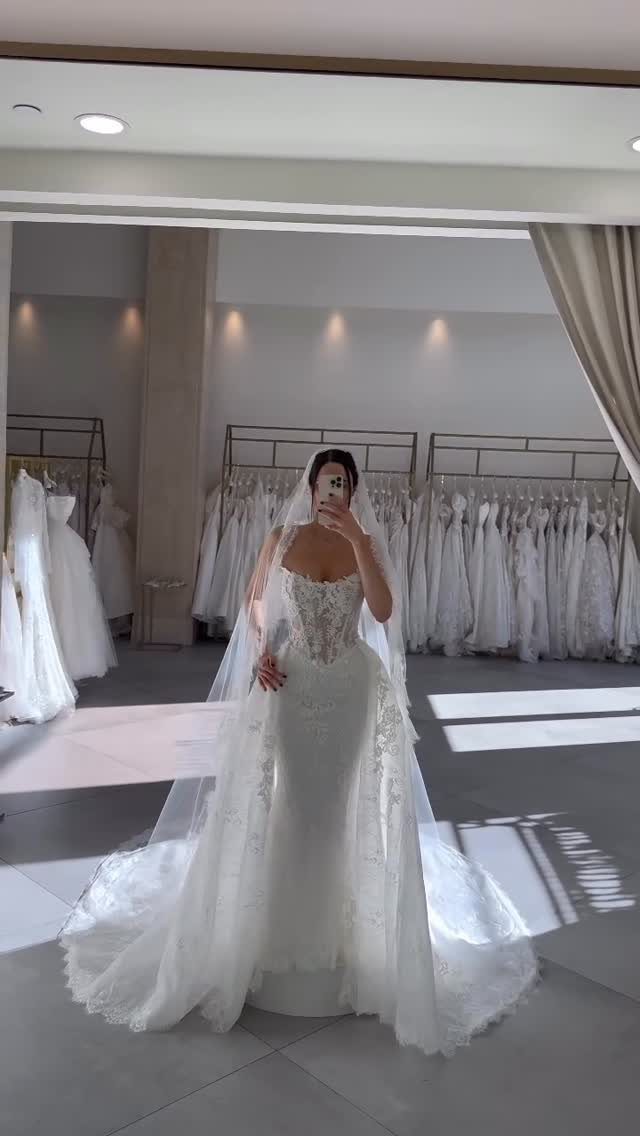
Strapless necklines leave the shoulders, collarbones and neck bare, so the dress does its work through cut and fabric alone.
Off-white lace paired with a veil is the version I’d pick for a bride who wants quiet and classic over dramatic.
Because nothing frames the face, a veil or hair worn up carries the look. Try the dress with your veil and your planned hairstyle together before deciding.
Off-white also reads softer than stark white against skin, which helps a simple gown feel warm rather than flat.
2. Off-White Satin Bridal Gown
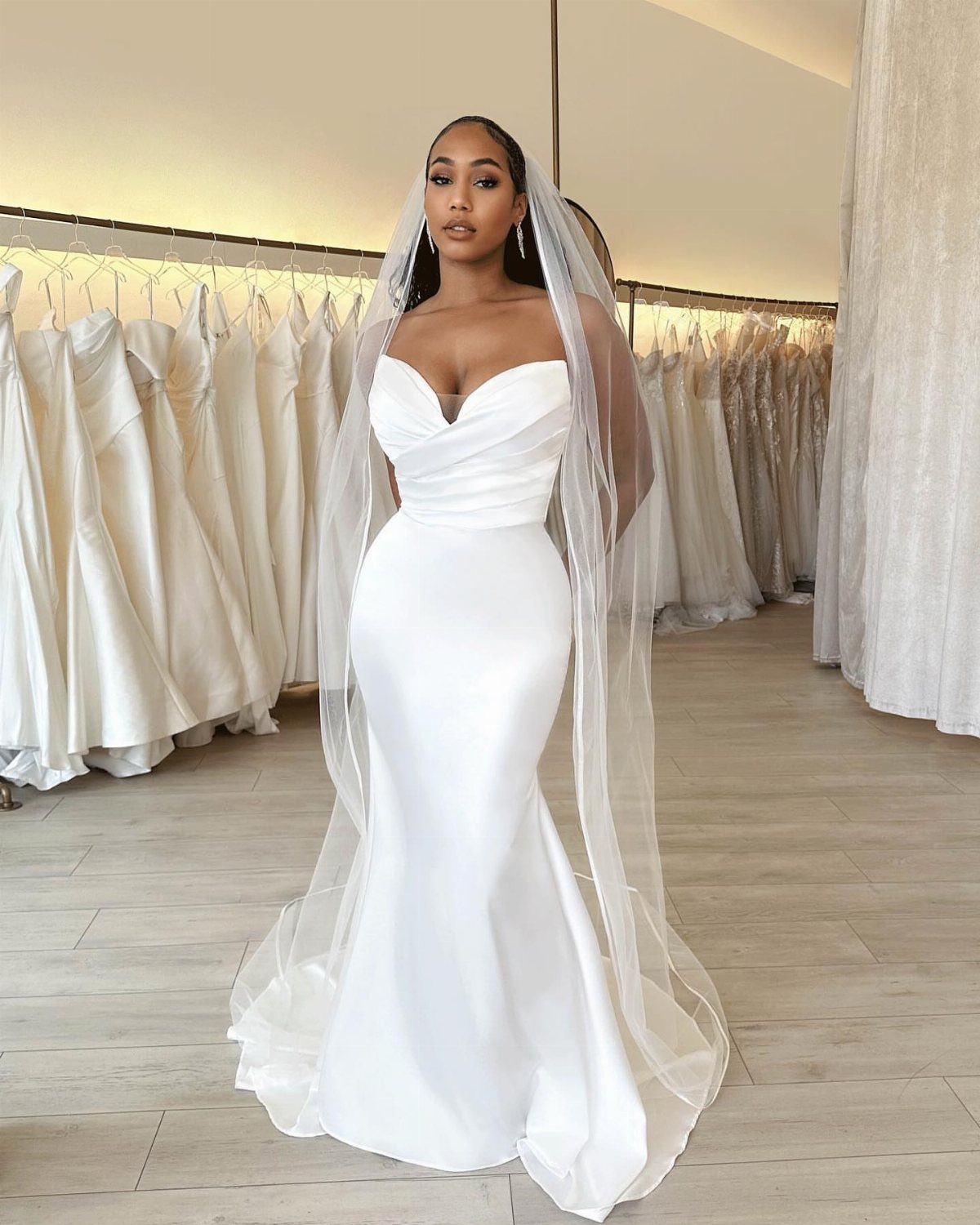
Satin that falls in one long, fluid line is what makes this dress right for a coastal wedding.
A strapless mermaid cut follows the body through the hip and then releases into the skirt, so the satin does the styling and you can skip heavy accessories.
With a cut this clean, I’d skip heavy jewelry and keep the veil simple. Off-white satin looks richer and less severe than bright white.
Check that you can sit and walk comfortably in the fitted shape, since a mermaid cut asks more of movement than a looser skirt.
3. Off-White Floral Lace Dress
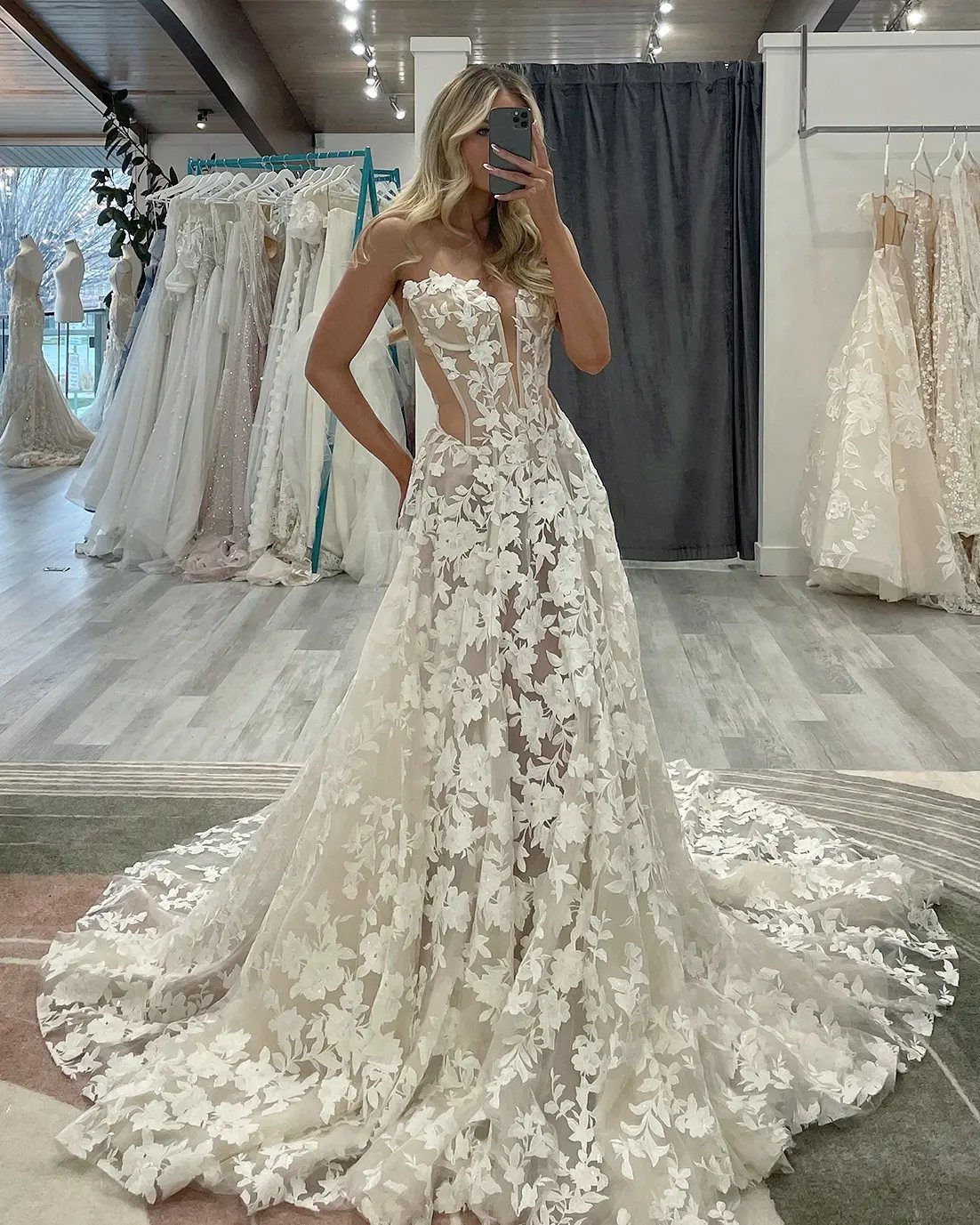
Raised floral appliqués give this gown a texture you can see from across the room. The 3D lace flowers on the strapless bodice and long train mean the dress needs little else: no belt, no heavy necklace.
For a budget-minded bride, a dress with this much built-in detail can save money on accessories. Keep earrings small and hair simple so the lace stays the focus.
The long train adds drama, but it also adds handling, so ask how it bustles before you commit.
4. Embroidered Off-White Bridal Lehenga
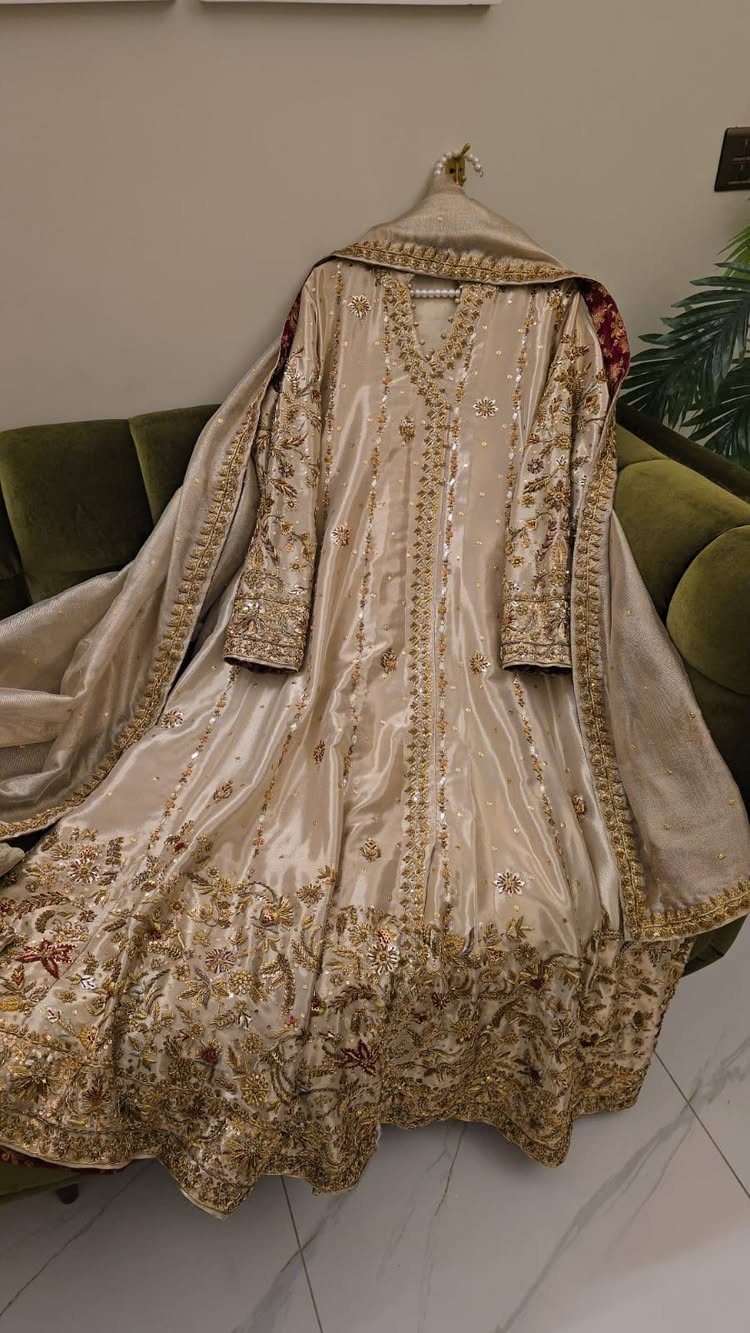
Gold embroidery and a matching dupatta on an off-white lehenga bring ceremony and warmth, and the softer base color avoids the starkness of pure white. Gold thread on a softer base looks warm and festive rather than severe.
If you want a bridal outfit with real occasion built in, this is my pick over a plain gown. The dupatta can be draped over the head or shoulders, so you get two looks from one set.
Pair it with simple jewelry if the embroidery is already dense. Let the stitching be the statement.
5. Beaded High Neck Off-White Gown
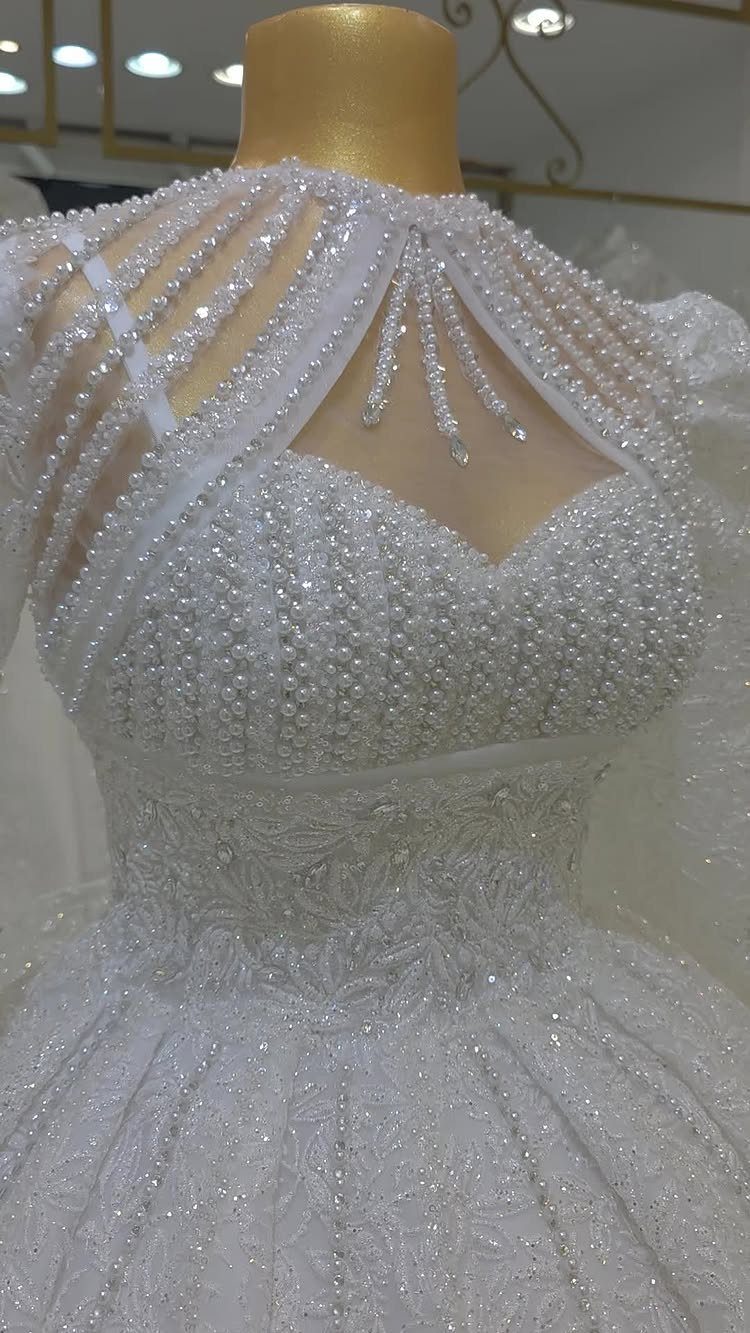
Heavy beadwork, sequins and sheer panels set this gown apart, and the high neckline keeps all that sparkle covered and formal.
Sheer panels let skin show through while the beading does the coverage, which I find more interesting than a plain solid bodice.
This style suits a bride who wants coverage up top without giving up glamour. Skip necklaces entirely; the neckline and beadwork already fill that space.
Beaded gowns are detailed, so expect them to be a bigger investment than simpler styles, and ask about alterations before buying.
6. Off-Shoulder Off-White Ballgown
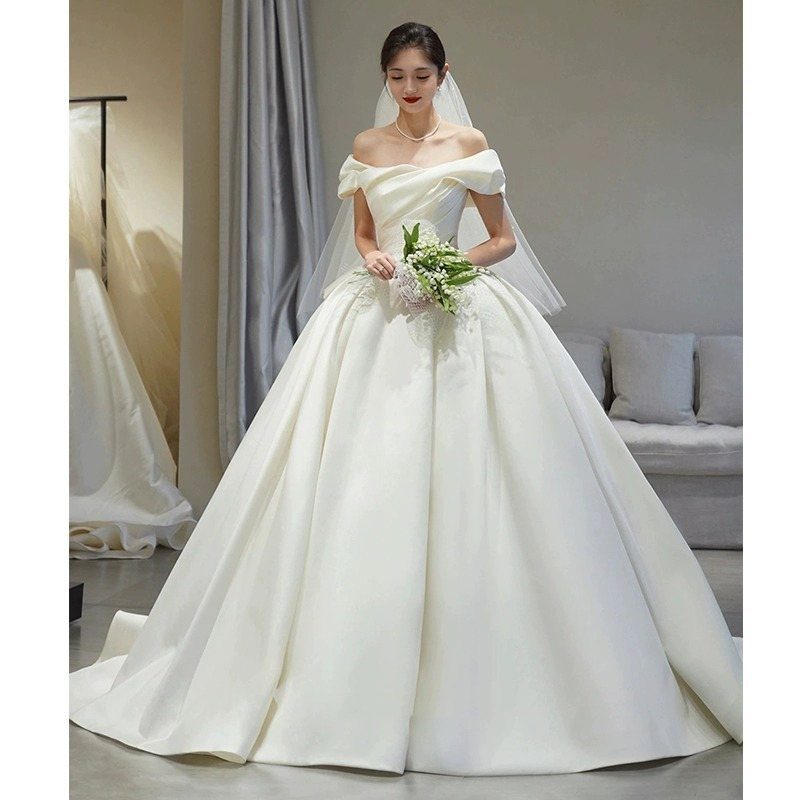
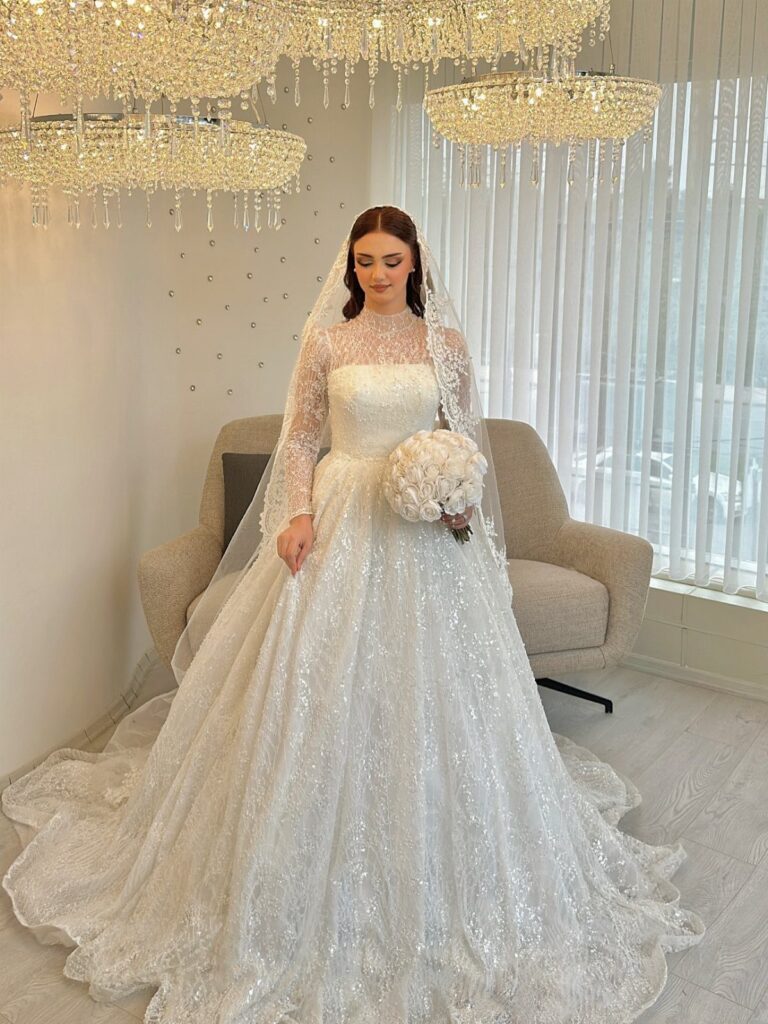
Off-the-shoulder necklines sit across the upper arms and frame the collarbone, and on a full ballgown that balance feels romantic rather than heavy.
Paired with a veil and a small bouquet of white flowers, as above, the look stays soft and traditional.
I like a small bouquet here. The skirt already takes up plenty of space, and a compact arrangement keeps the proportions in check.
Test arm movement in the fitting: off-shoulder styles can limit how high you can lift your arms, which matters for hugging guests.
7. Off-White Dress with Bishop Sleeves
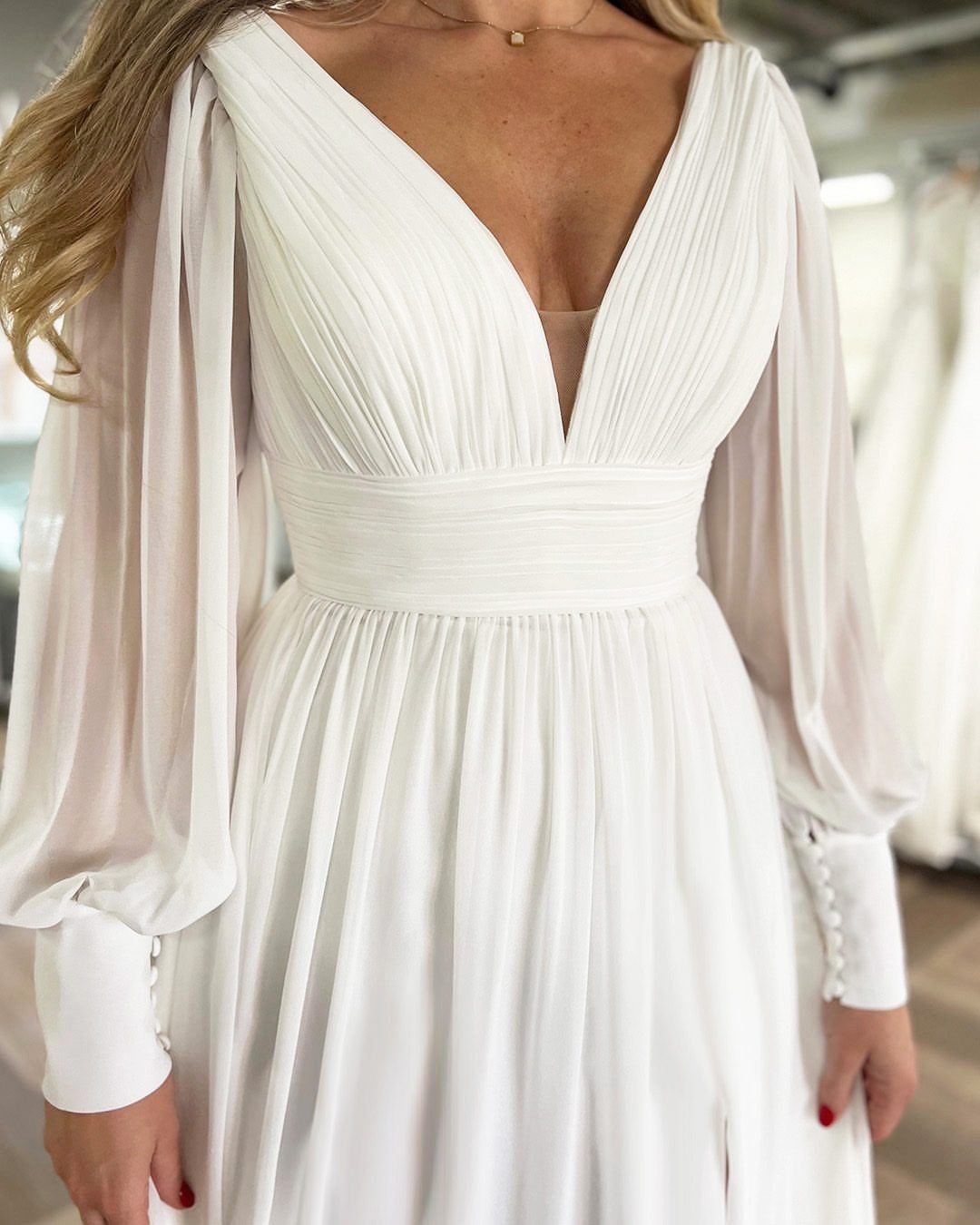
Sheer bishop sleeves gather at the wrist and billow through the arm, which gives a plunging V-neck some softness and a little modesty. With a pleated bodice underneath, the dress has shape and movement before you add a single accessory.
For a bride on a budget, a gown with this much going on in the sleeves needs nothing extra. I’d wear my hair up so the neckline and sleeves stay visible, and keep the jewelry to small earrings.
Sheer fabric can catch on bouquets and chair backs, so hold your flowers at your waist in the fitting and see how the sleeves behave.
8. Long-Sleeved Off-White Lace Gown
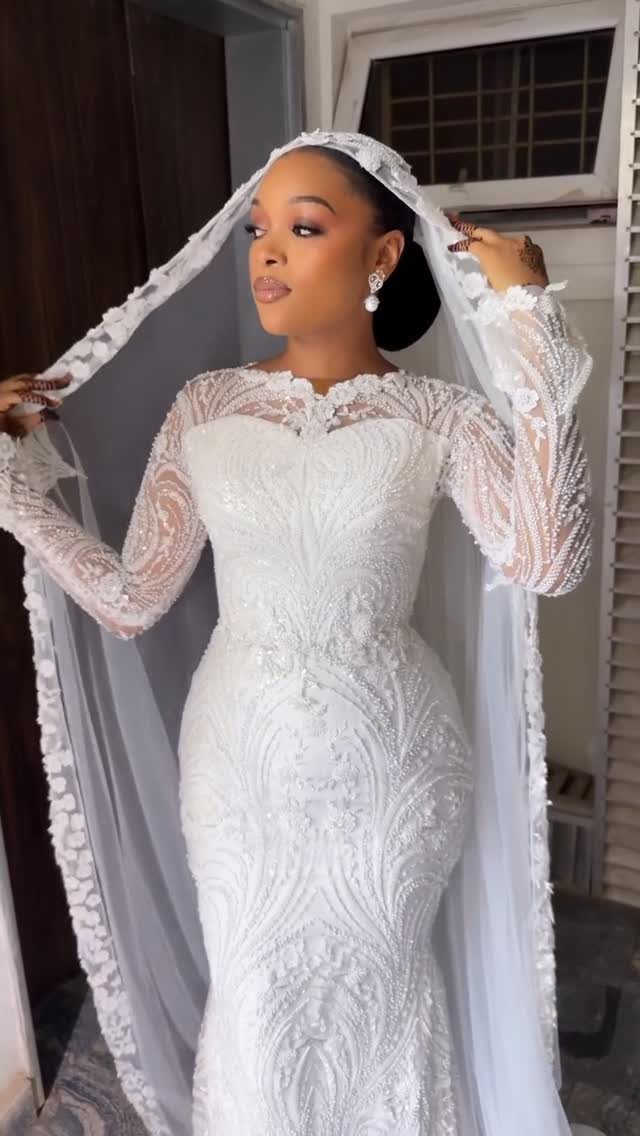
A fitted lace gown with full-length sleeves puts the pattern on your arms as well as your torso, so the lace reads as one continuous layer.
An embroidered lace veil in the same off-white is my pick here: it repeats the motif without competing with it.
Match the veil’s tone to the dress in natural light, since off-white varies from shop to shop and a mismatch shows against lace. Skip a necklace and keep earrings small.
Fitted sleeves should let you reach forward and bend your elbows, so test that before you buy.
9. Lace Bodice Full Satin Skirt
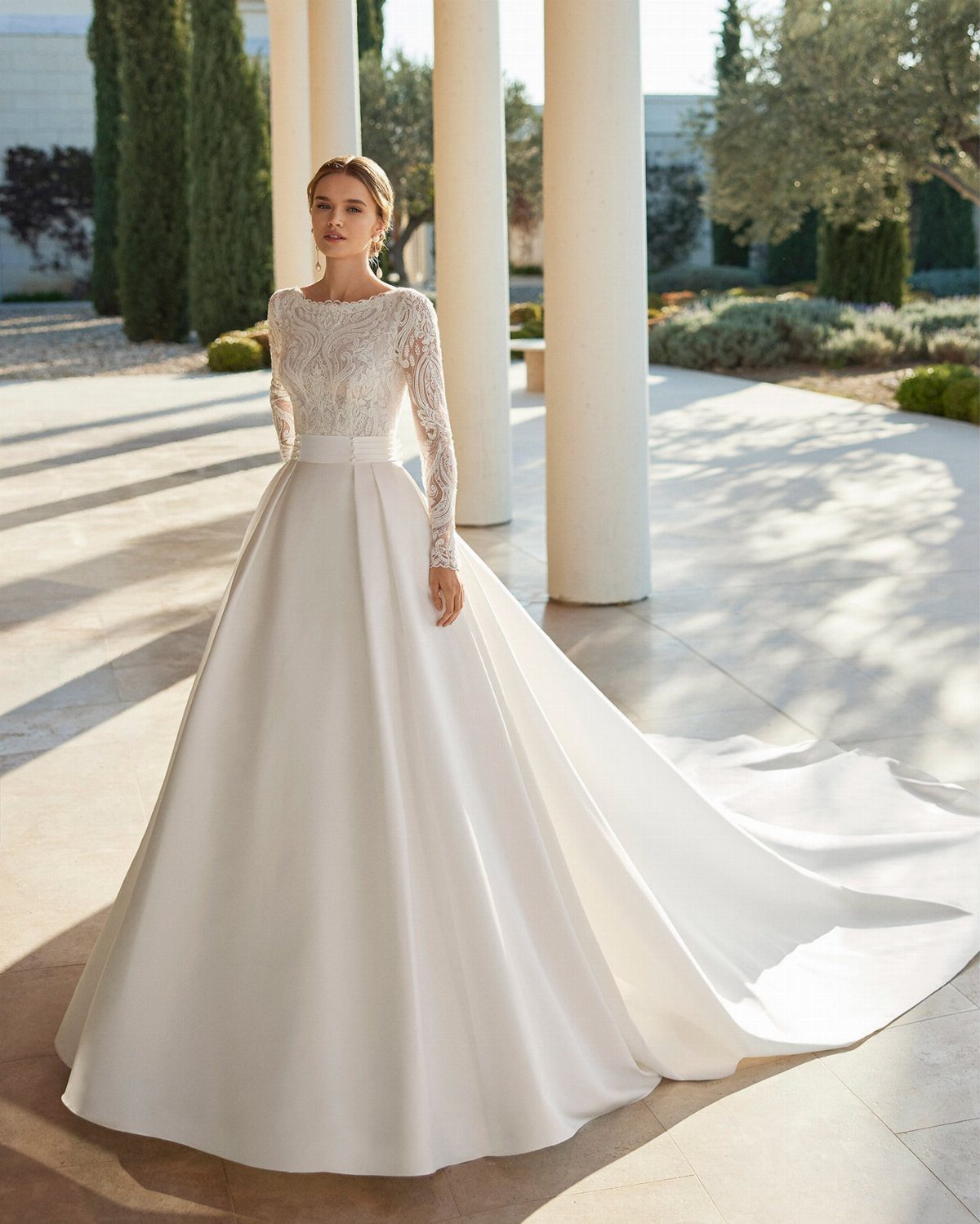
Lace on top and satin below makes two textures in one gown: an illusion lace bodice with long lace sleeves, then a full satin skirt that ends in a train.
The sheer lace gives the upper half a delicate look, while the smooth satin keeps the skirt clean and formal.
I like this mix for a bride who can’t choose between lace and satin. Off-white suits both fabrics, so the join between them looks intentional rather than mismatched.
Ask how the train bustles, since a full satin skirt adds real weight and length to handle during the reception.
Choosing the Right Color
Skin tone decides more about an off-white dress than the label on the tag. Pure white can wash out paler skin, while it looks excellent on deeper tones and on yellow (olive) undertones.
Ivory is the safer pick for most brides. Ivory leans warm, so against cool undertones it creates a soft contrast that brightens fair skin, and I find it works on nearly every skin tone.
Ivory isn’t the only option. Blush, champagne and mauve sit in the same family, and cream does too.
Finding your exact shade can be the hard part. Ivory, champagne and cream read differently once they’re on, and each shop’s off-white varies a little.
Test the dress against your bare skin, such as your forearm or collarbone, because a white fitting-room wall will tell you very little. If you can, check it near a window, where the undertone shows up most honestly.
Last, trust how you feel in it. A shade that makes you relaxed on the walk down the aisle beats one that only looks right on paper.
Choosing a wedding dress that complements your unique features is the secret to looking your best on your wedding day. So, when deciding on different color wedding dresses, keeping your skin color in mind is always something to consider.
Frequently Asked Questions
Is an off-white dress appropriate for a wedding?
Yes. A bride can wear off-white without a second thought; the shade looks gentler than stark white and still feels ceremonial.
Gold threadwork, lace appliqués and satin look richer on off-white, where brighter white can wash them out. These days, few guests notice the difference at all.
What is the current trend in wedding dresses?
Brides are moving away from strict white toward personal choices. Off-white sits in that shift, alongside colored gowns in black with lace overlay, red, emerald and Persian blue.
What is the difference between white and ivory wedding dresses?
White is a bright, stark color, while ivory leans warm.