Your body shape and how much you need to move on the day decide which of these gowns is yours: the ball gown silhouette for a full skirt, a corset bodice you can sit, breathe and eat in, or off-the-shoulder styles if you want your neckline and collarbones to do the work.
Pick the silhouette first, then add the tulle, lace or sparkle you love.
1. Off-the-shoulder Styles
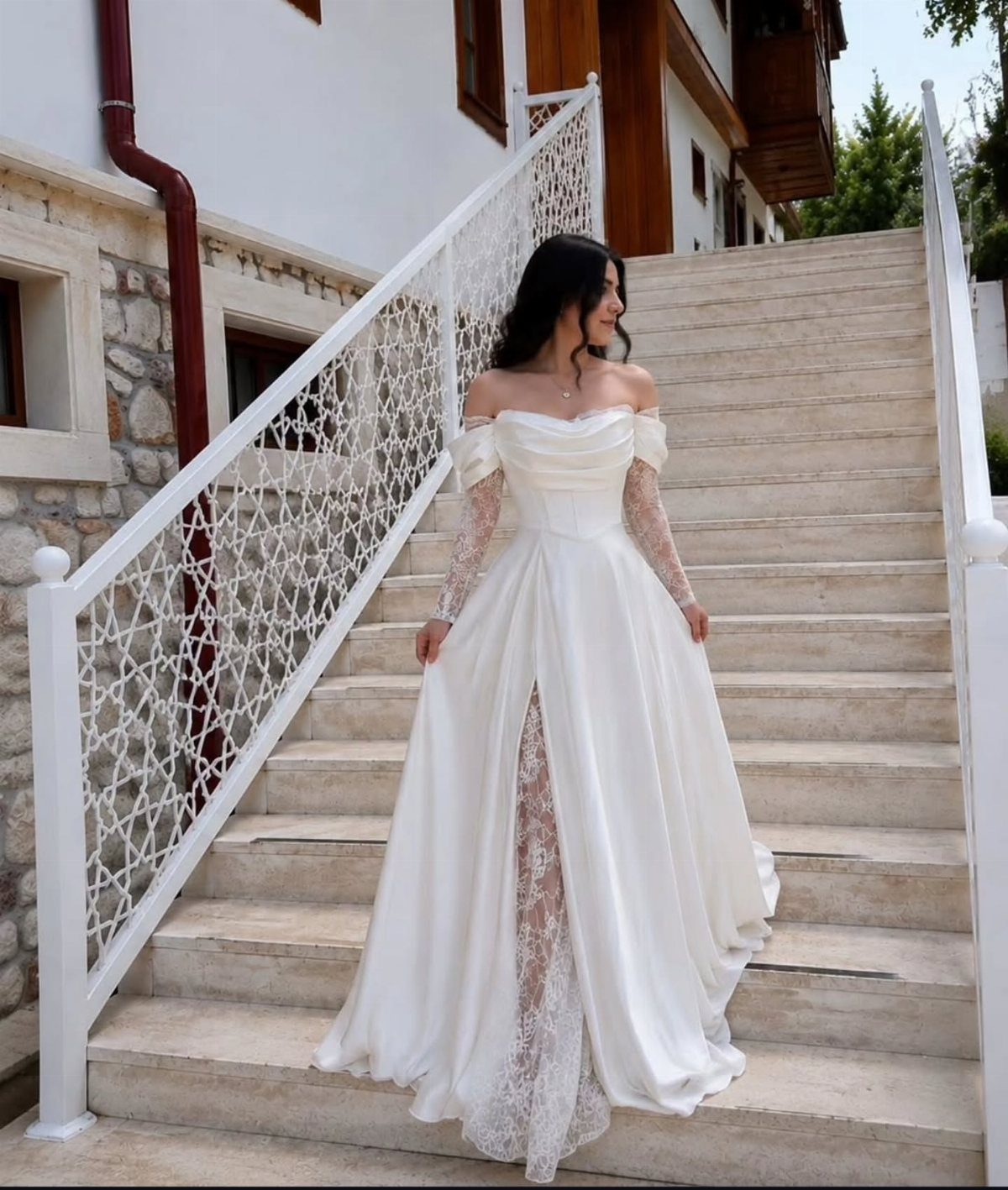
A neckline that sits below the shoulders frames the collarbones and does the romantic work without a single extra detail.
Lace sleeves, like the ones on this dress, keep the look from feeling bare and give the arms something to do in photos.
Try the dress with your arms raised and while hugging someone before you buy. If the neckline slips or you keep tugging it up, it is the wrong cut for a long day.
A lace underskirt adds the fairytale part, so I would let the top stay simple.
2. Ball Gown Silhouette
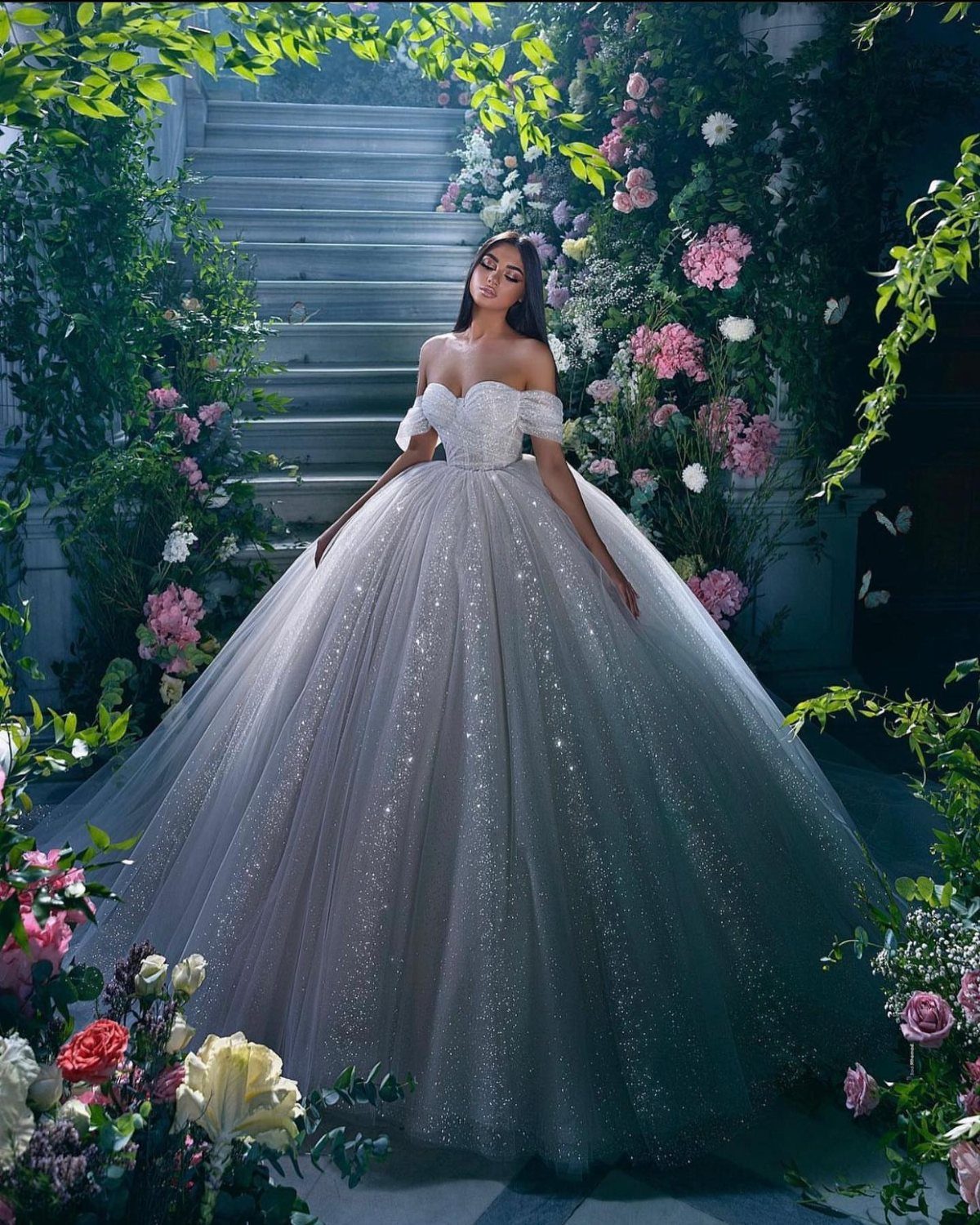
Fitted at the waist and wide through the skirt, the ball gown is the silhouette most people picture when they hear "fairytale." That full shape pulls the eye to the waist, which is why it flatters so many body types.
Pairing it with an off-the-shoulder neckline, as this sparkling silver gown does, balances the volume of the skirt with a clean line up top.
Plan for stairs and tight doorways. A skirt this size needs room, so practice walking in it at a fitting.
3. Vintage-inspired Wedding Dresses
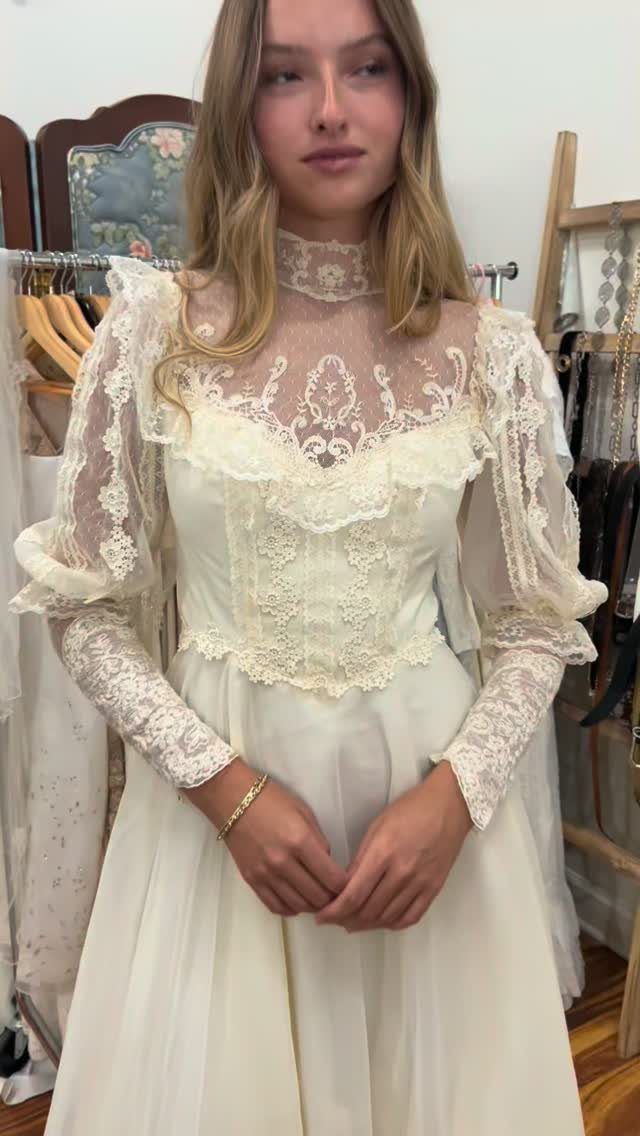
Cream reads softer than stark white, and on a vintage-style dress it makes lace look aged in the best way. Long sleeves and a corset bodice give the shape a storybook feel without a huge skirt.
I would pick this over a heavy ball gown if you want something romantic that still moves easily. Check the lacing and seams in person, because fine lace is only as good as the stitching under it.
4. Ethereal Tulle and Lace Wedding Dresses
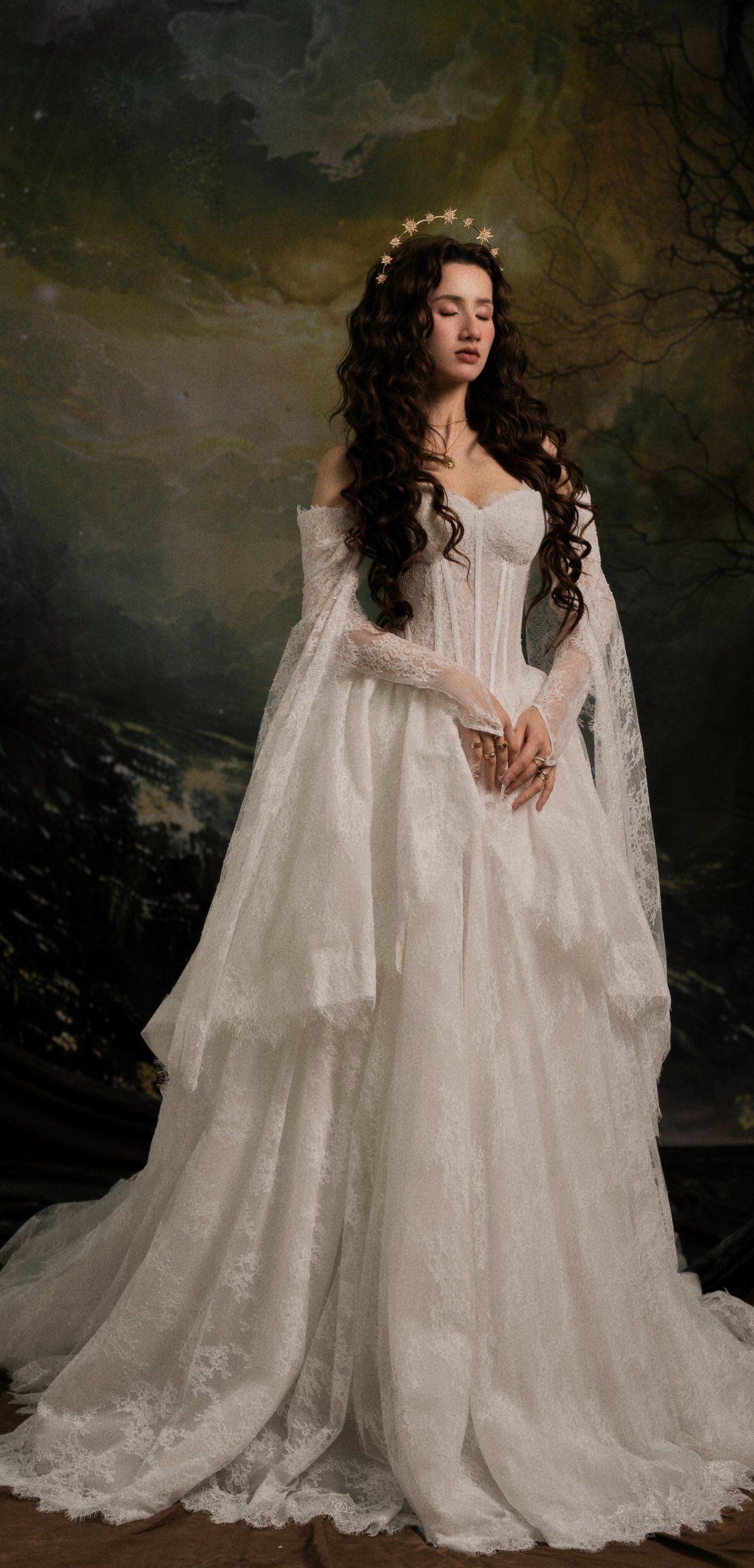
Tulle supplies the airy volume, and lace gives that volume a pattern to float behind. Together they make the lightest version of a fairytale dress.
A star crown is a simple add-on that finishes a tulle or lace gown without touching the dress itself, and a thin metal band with small stars sits better over a veil than a wide, heavy one.
I would keep jewelry minimal so the lace stays the focus.
Layered tulle can snag, so ask how the hem is finished before you commit.
5. Sparkly Wedding Dresses with Sequins and Glitter
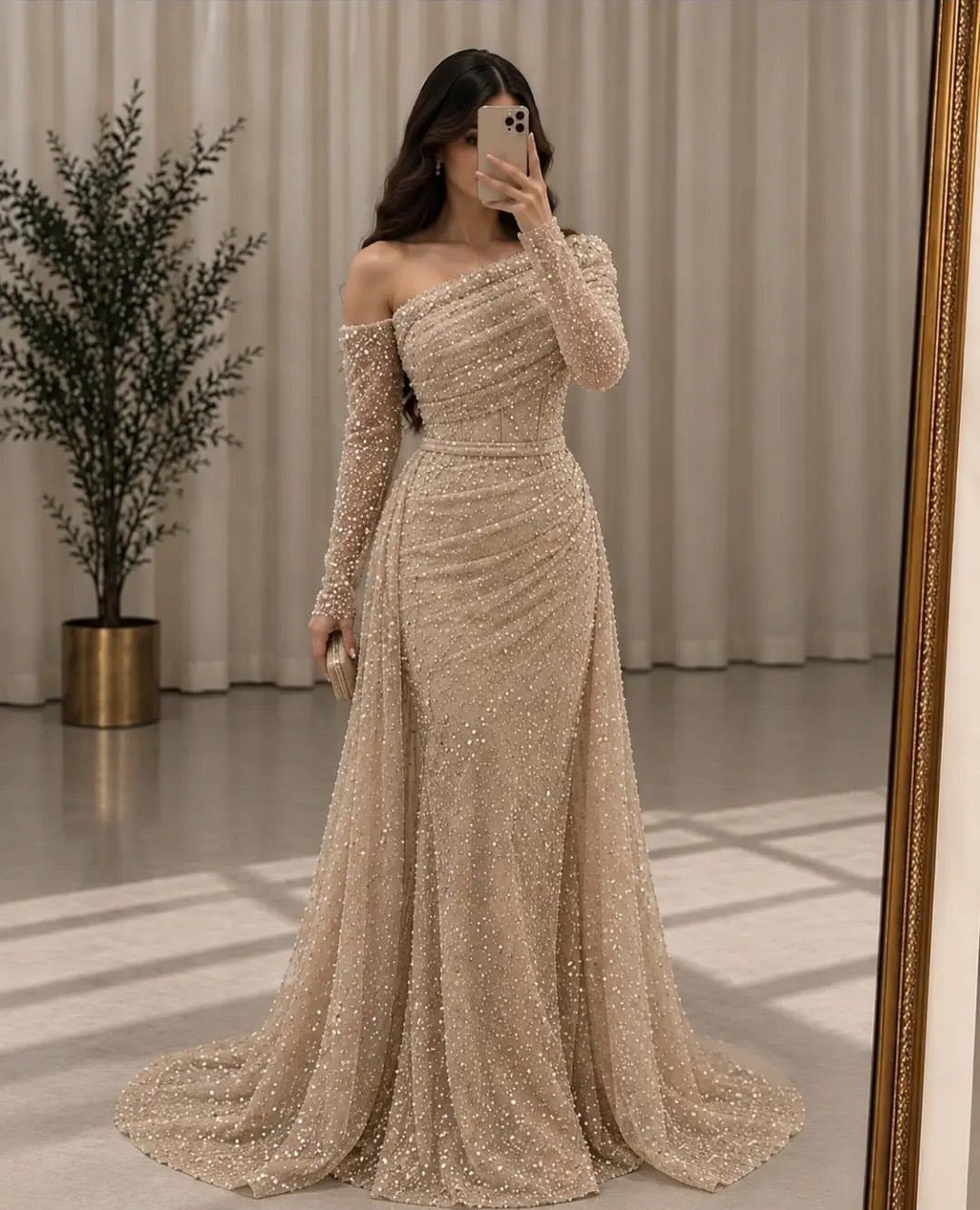
Sequins and glitter turn a gown into something that catches every light in the room. A champagne shade, like this one-shoulder gown, keeps the sparkle warm instead of icy.
Because the dress is already doing the talking, I would skip heavy necklaces and choose small earrings.
Try it under both indoor lighting and daylight. Sequins can read very differently in each, and you want to like both versions.
6. Celestial-themed Wedding Dresses
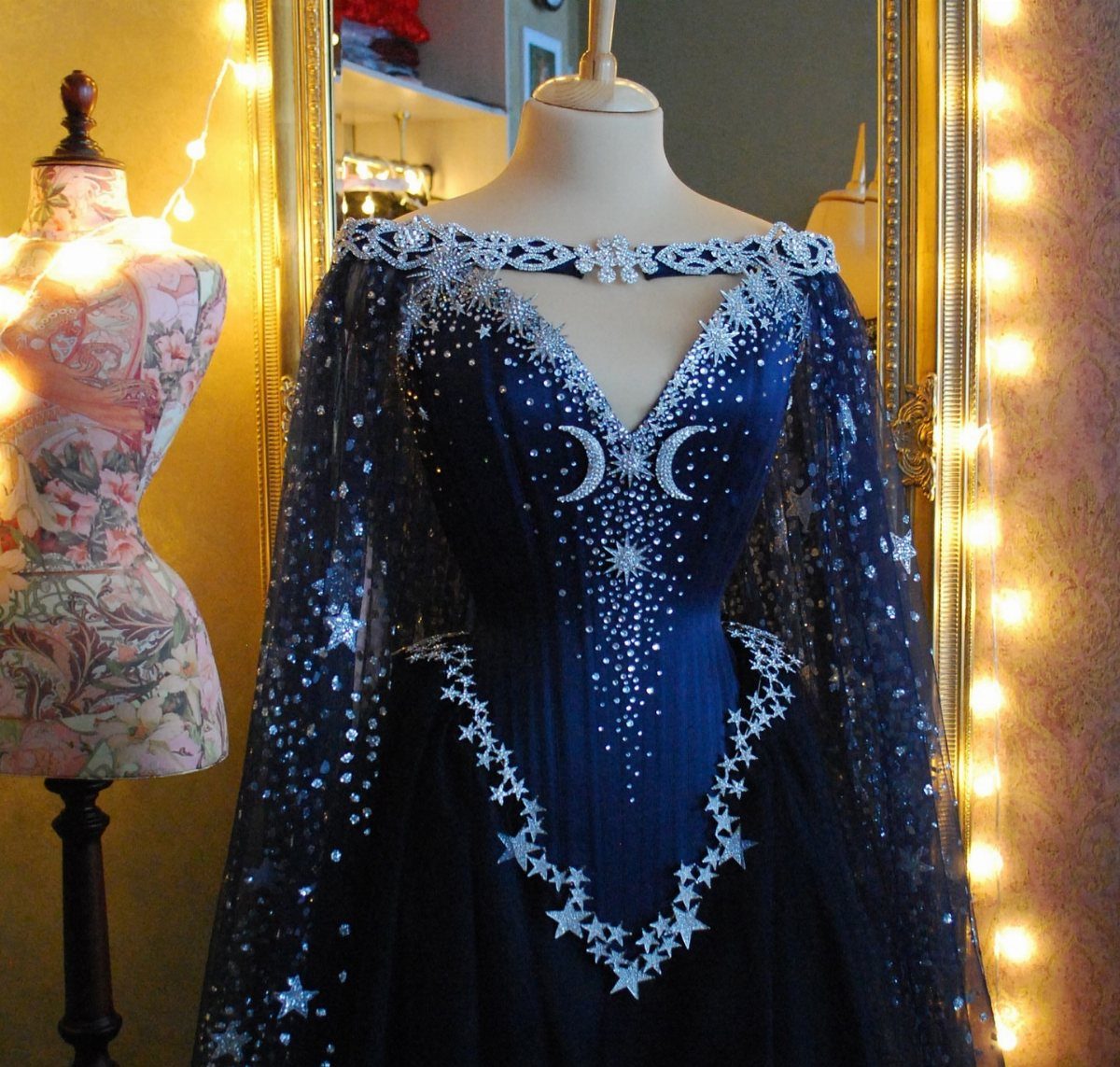
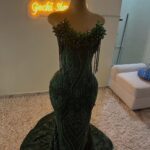
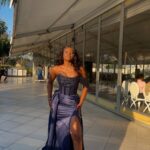
Navy is the right base for a celestial dress: silver stars and moons read like a night sky, and they stand out far more than they would on white.
A celestial gown suits brides who want the theme to carry the entire look, so the beading, the color and the details should all point to the night sky.
I would keep the rest of the look quiet, with silver jewelry and simple hair.
Dark fabric shows lint and dust, so brush it before photos. If navy feels too bold, a white dress with small star details is the gentler option.
7. Detachable Sleeves
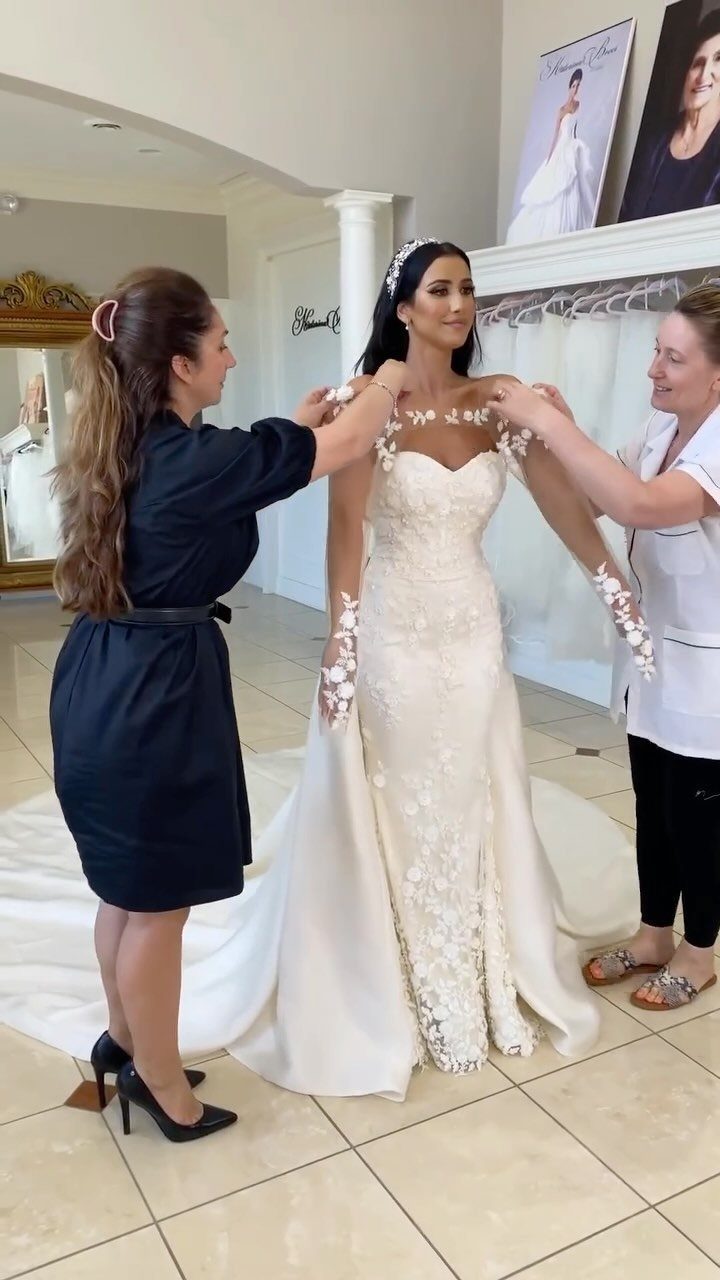
Sleeves that clip or button on let one dress do two jobs: bare for the reception, covered for the ceremony. Floral lace sleeves like these also add a layer of detail the bodice alone may not have.
Fit them during the same appointment as the gown, with the dress on, and lift your arms. The sleeves should sit smoothly at the shoulder without pulling the neckline.
I like this option when you can’t decide between sleeveless and sleeved. Ask whether the attachment point shows when the sleeves come off.
8. Floral Appliqués
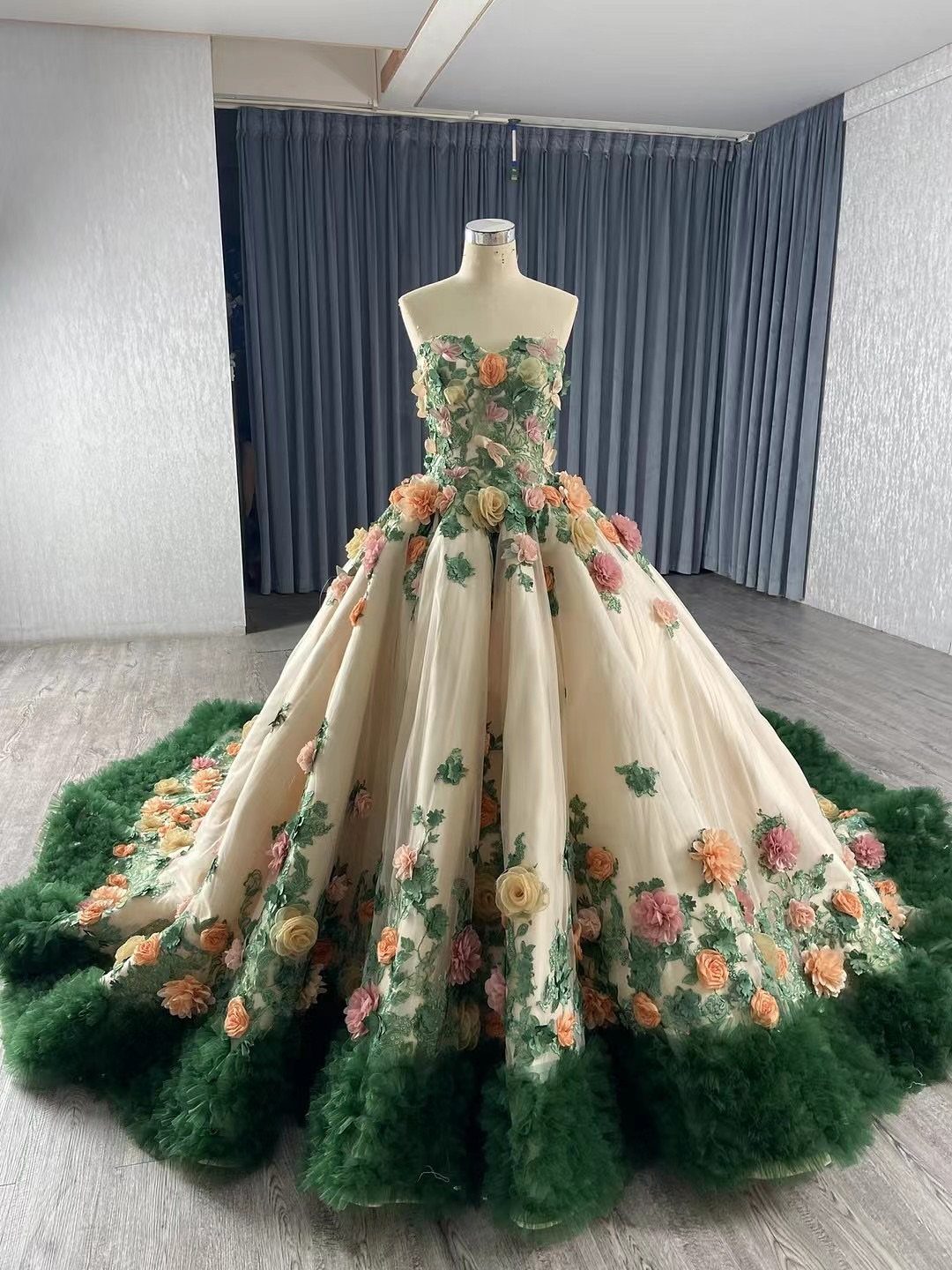
Flowers that stand off the fabric instead of lying flat give a gown real depth, and 3D appliqués are the quickest way to get a garden feel without a printed fabric.
Dimensional pieces catch on things, so ask which ones are stitched and which are glued before you buy. I would test the dress by sitting down and hugging someone.
Keep the bodice plain so the flowers have room to stand out.
9. Soft Color Wedding Dresses
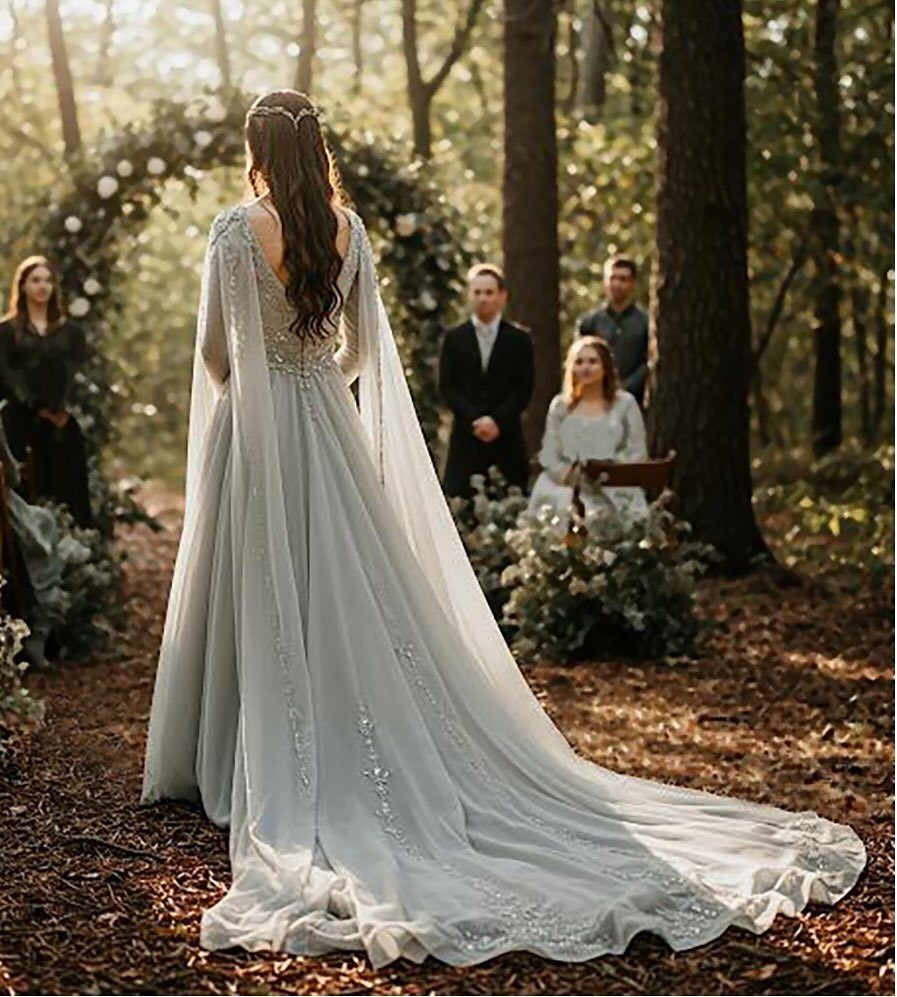
Pale blue-grey makes a fantasy dress look like mist, and it suits outdoor settings, especially forests and gardens, better than stark white does. A flowing skirt with a cape keeps the color soft rather than costume-like.
Check the shade in daylight, since pastels shift a lot under indoor bulbs. If the color feels like too big a step, I would start with a white dress and add a blue-grey cape.
Soft tones also pair well with natural greenery, so match your florals to the dress.
10. Corset Bodice
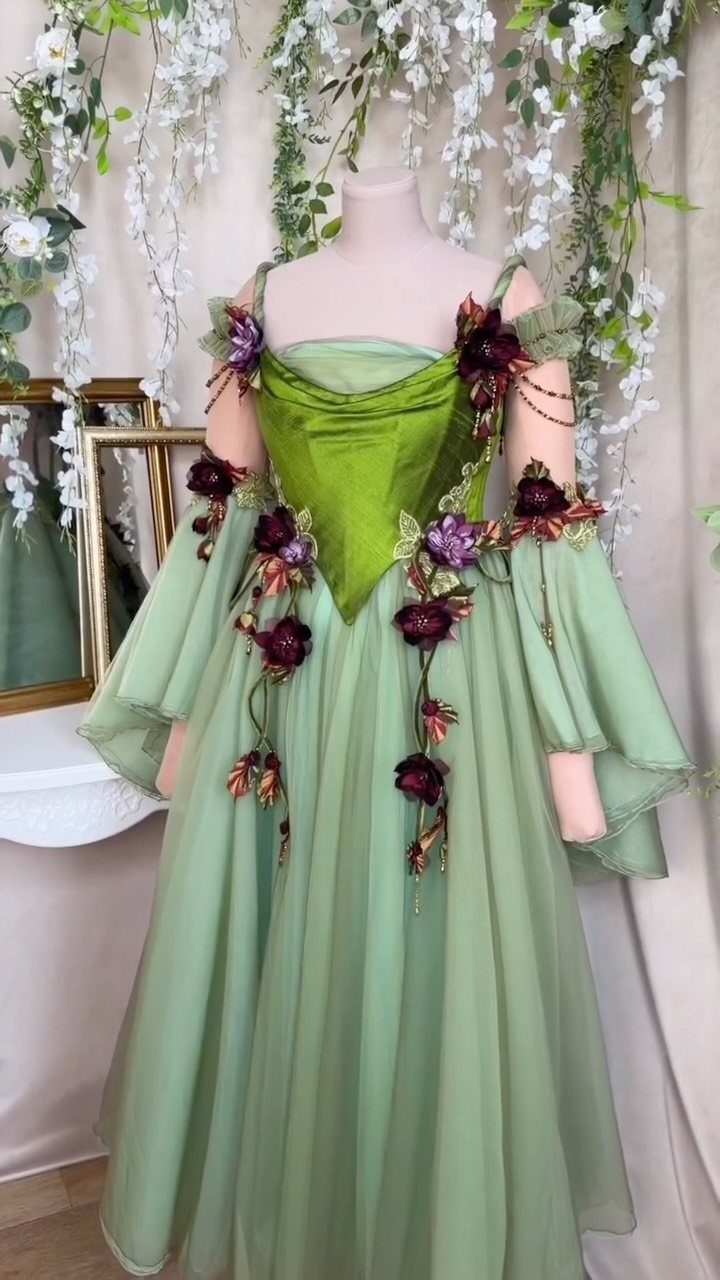
A structured bodice holds its own shape, so the gown looks sculpted instead of draped.
Boning gives support and shape, which many brides like in a long-wearing dress. A corset bodice fits closely, so sit, breathe and eat a snack during your fitting before you decide.
I would choose lacing at the back if your measurements might change before the day, since it adjusts more easily than a zipper.
Choosing the Right Silhouette
Ball gowns and A-line skirts are the two shapes that read as royal, and tulle and lace layers push either one further toward a fairytale.
Between them, the A-line is the easier pick for most body types, since it creates a balanced line from waist to hem.
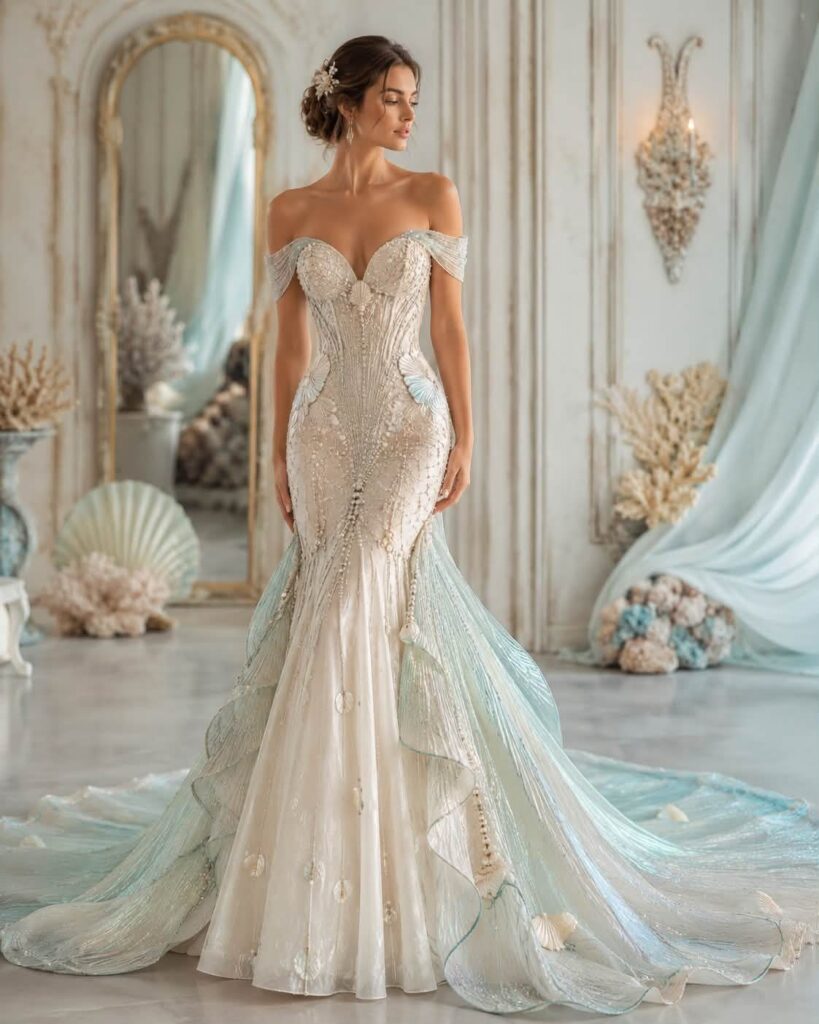
Mermaid cuts are the other option worth knowing. They follow the curves closely and suit an hourglass figure, but they give up some room to move.
Decide how much comfort and mobility you want before you fall for a shape. A dramatic skirt is only worth it if you can sit, walk and dance in it for the whole day.
Choose by body shape first, then add the tulle or lace layers you love.
Accessorizing Your Gown
Start with the dress and ask whether an accessory should add drama or balance something. A detailed gown usually wants one strong piece, not five.
A cape or shawl brings some drama and doubles as a layer when the venue turns cool. Gloves pull the look toward vintage, with a polished, formal edge.
Let the headpiece follow the mood of the gown: flowers fit a garden setting, while crystals suit a storybook one.
A long cathedral veil edged in lace or beading reads traditional; a shorter one trimmed with florals feels looser and more free-spirited.
Pick the headpiece and veil together so they don’t compete.
Finding Plus-size Options
Tulle, lace and dramatic silhouettes show up in plus-size lines too, so a fairytale gown is not reserved for a narrow size range. Don’t settle for a plain dress just because it’s what the sample rack holds.
Some shops sort their selection by style, price and size, which helps. Look for filters such as plus size, fairy tale or ball gown, then narrow by budget.
Custom-made gowns are another route if standard sizing never fits well. Ask about the timeline for making one, and book fittings early so any changes don’t crowd the wedding date.
Allure Bridals unveils an enchanting and magical collection of gowns inspired by the style and spirit of Disney princess and villain characters and their stories, turning fairy tale dreams into reality for today’s brides.
Frequently Asked Questions
What defines a princess wedding dress?
A fitted waist with a wide, full skirt is the shape most people picture, and the ball gown is the classic version.
An A-line skirt gets you to royal as well, just with a gentler shape that skims from the waist down to the hem. Add tulle or lace in layers and either skirt tips further into storybook territory.
How can I style a princess wedding dress?
Before choosing an accessory, decide if it should add drama or steady the gown; on a heavily detailed dress, one strong piece is plenty.
A cape or shawl brings drama and also covers your shoulders if the venue gets chilly, while long gloves lean the whole look vintage.
Pick a headpiece that fits the setting, like flowers outdoors or crystals for something more storybook, and choose it alongside the veil so the two don’t fight for attention.