Your waist and hips decide which 1950s day dress fits best: a nipped waist over a full skirt balances wider hips or builds shape when you’re straight through the middle, while a slim pencil cut is the better pick for something narrow and quiet at the office.
Fit and construction decide whether any of them looks like style or like dress-up.
1. Red Lipstick
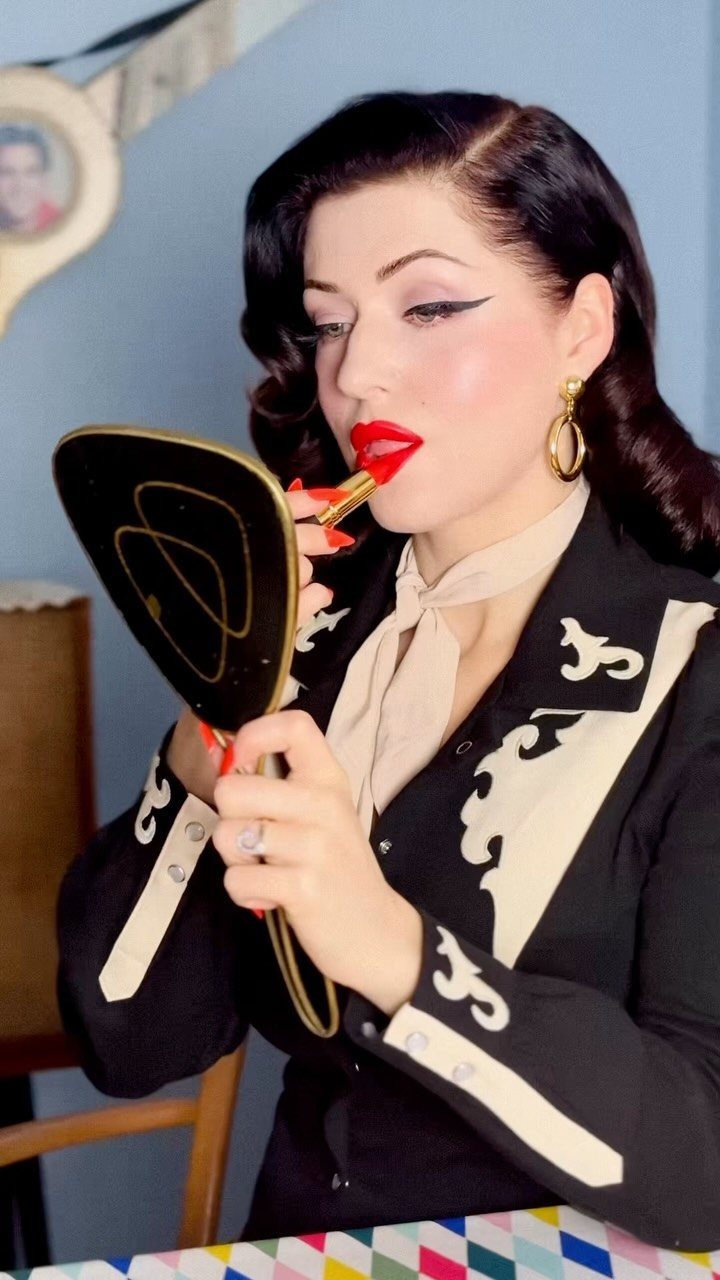
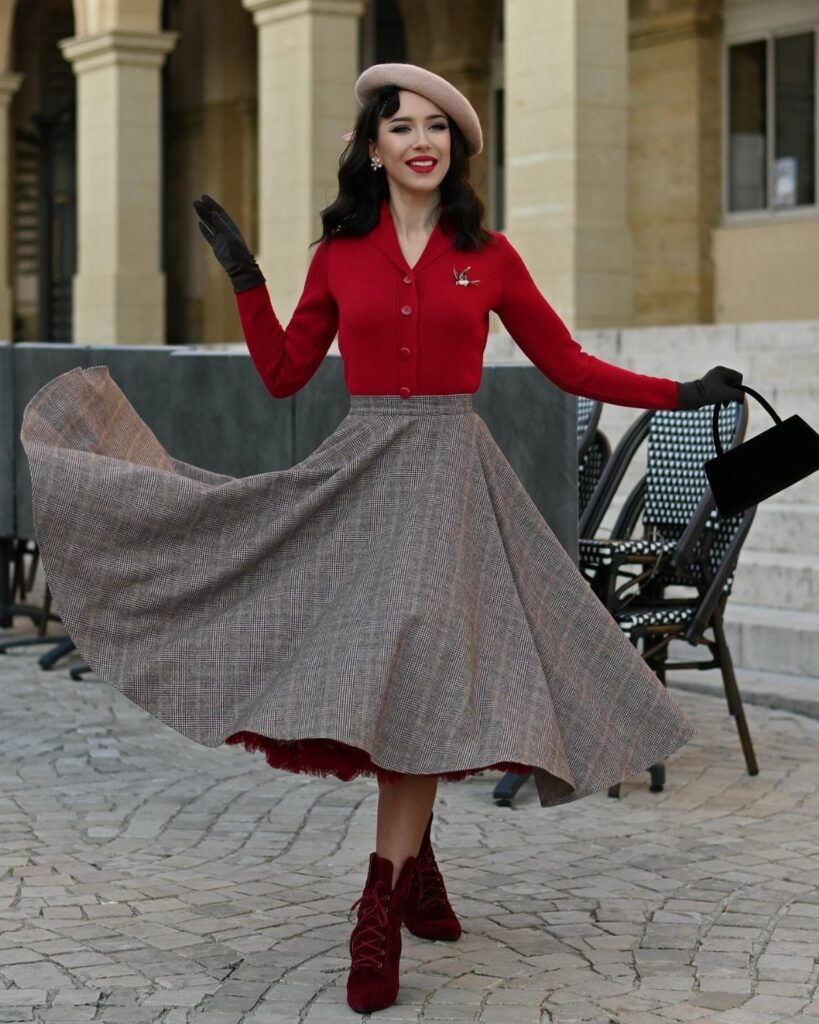
A red lipstick can carry a 1950s day dress on its own, so the shade deserves more thought than the dress. Pick by undertone: blue-based reds look cooler and brighten teeth, while orange-leaning reds look warmer and softer in daylight.
Test it on your lower lip in a mirror by a window, not under bathroom bulbs.
If the red turns harsh, sheer it out with a fingertip and blot once. A matte or satin finish suits a day look better than high gloss.
2. Wasp Waist with Full Skirt
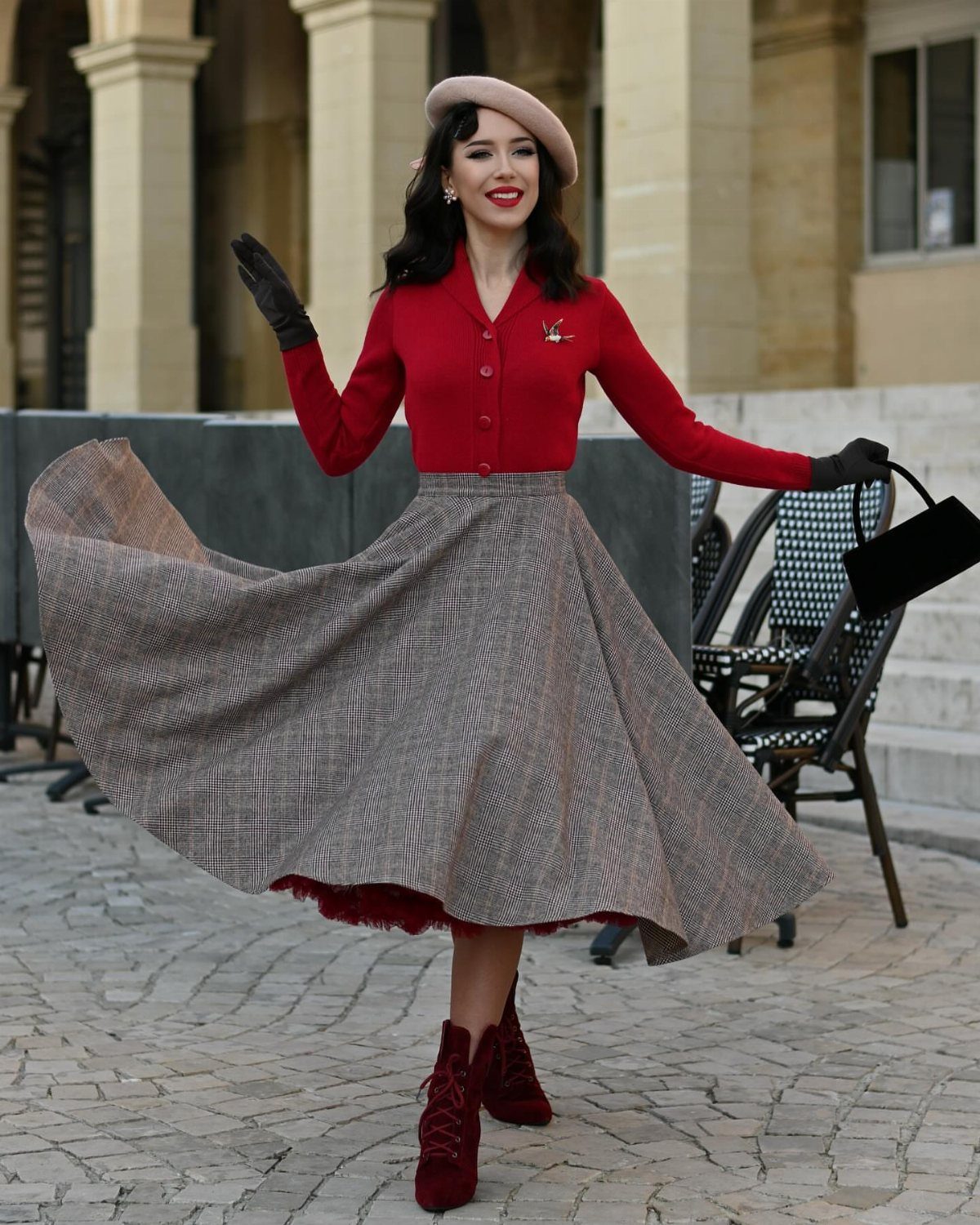
Cinching the waist and letting the skirt flare wide is the core 1950s silhouette, and it flatters more body shapes than people expect.
The narrow point sits at your natural waist, so the skirt’s volume balances wider hips, and a defined waist helps if you feel straight through the middle.
A full plaid skirt like this one gives plenty of swing. A cropped cardigan keeps the waist visible, which a long, loose top would bury.
If you’re petite, choose a hem that hits at or just below the knee so the fullness doesn’t swallow your legs.
3. Slim-Fitting Pencil Skirt
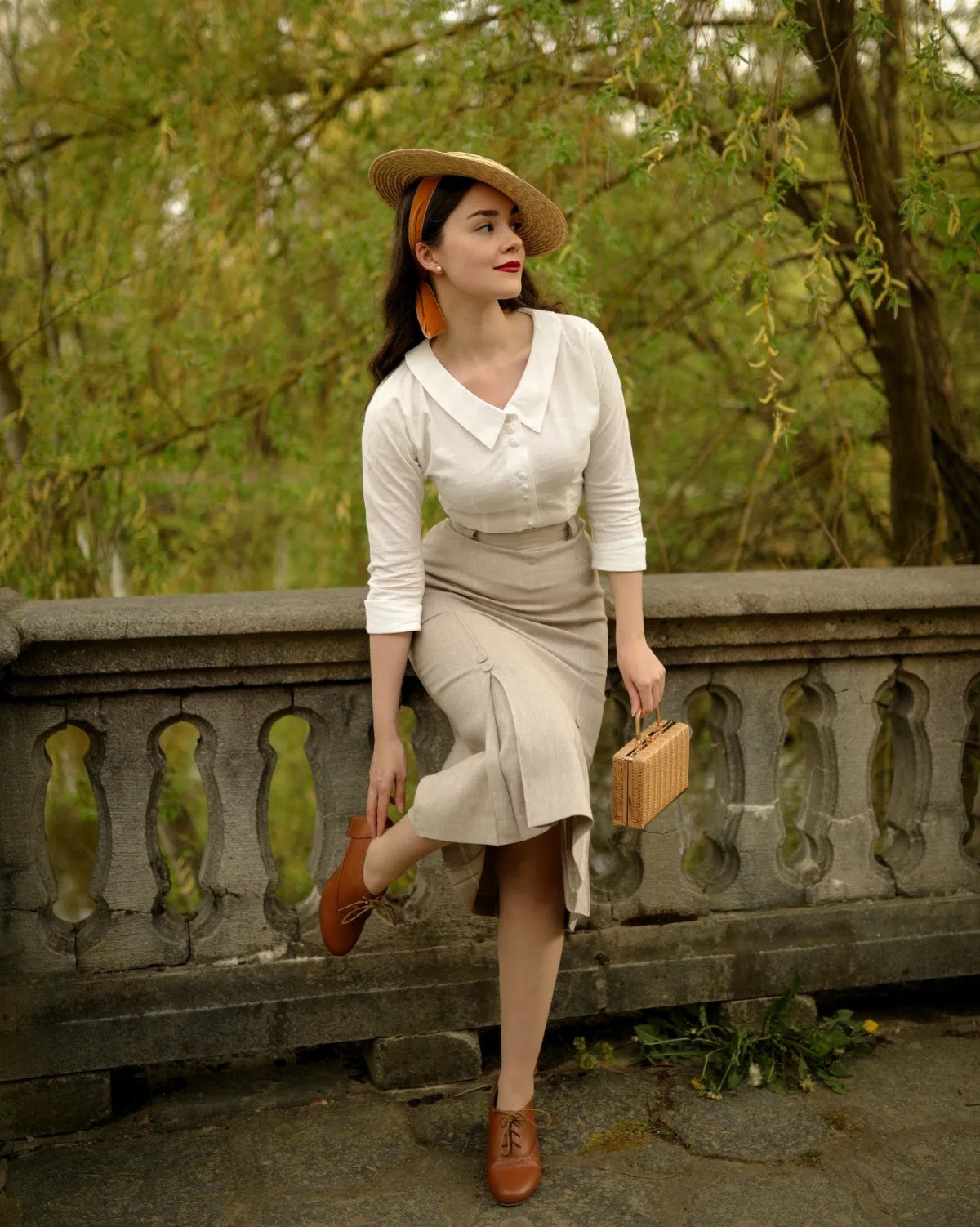
Narrow through the hips and fitted at the waist, a pencil skirt is the quietest way into 1950s style. It suits the office or a lunch date, and it pairs easily with a plain white blouse tucked in.
Fit decides everything here. You should be able to sit and take a full stride without the seam pulling, and a vent or slight give in the fabric helps.
Beige is easy to build on, though it can wash out pale skin tones. A belt or a brighter shoe adds contrast if so.
4. Vibrant Floral Prints Day Dress
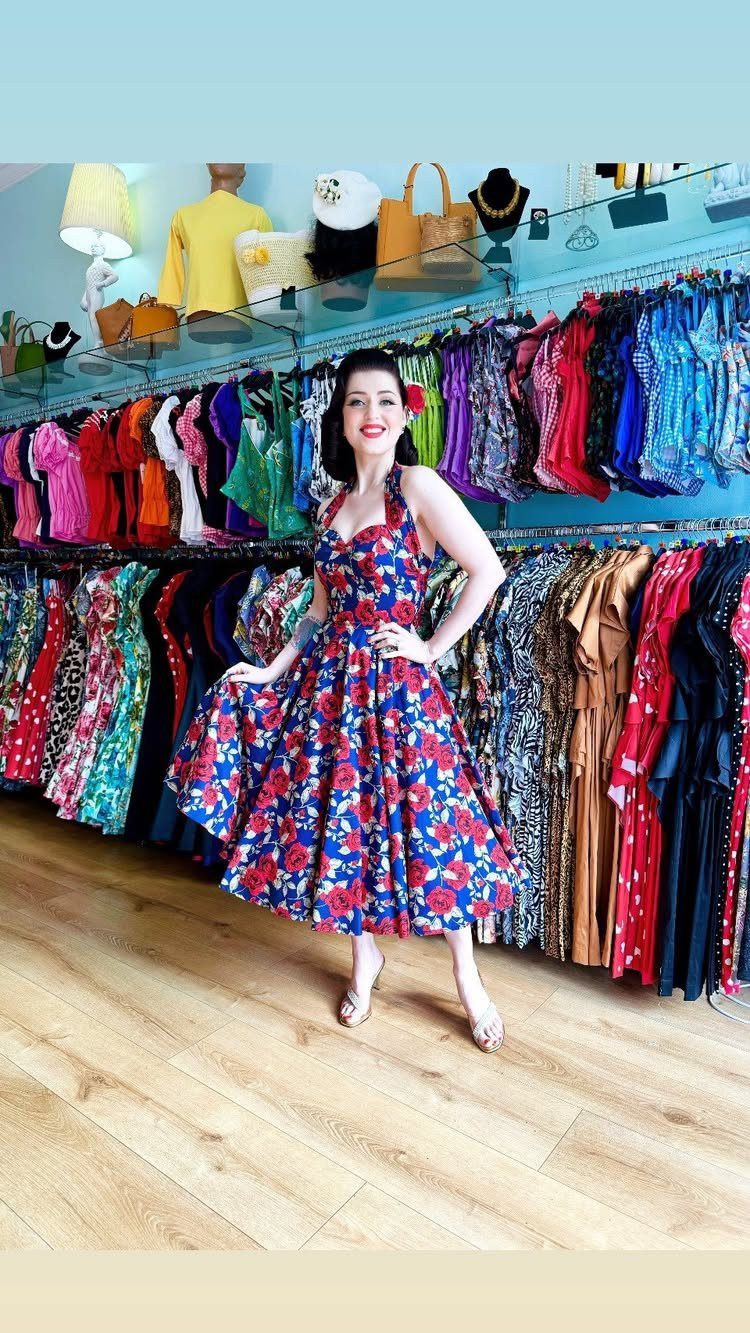
Large floral prints on a bold ground are what make a day dress feel like the decade. A blue base with red blooms, as here, works because the 2 colors are strong enough to hold their own without competing.
Scale matters. Big flowers read best on a full skirt, where the pattern has room to show, while a cinched bodice keeps the print from overwhelming you.
Keep everything else quiet: neutral shoes, one simple accessory. If you wear one loud dress, let it be the only loud thing.
5. Collared Day Dress
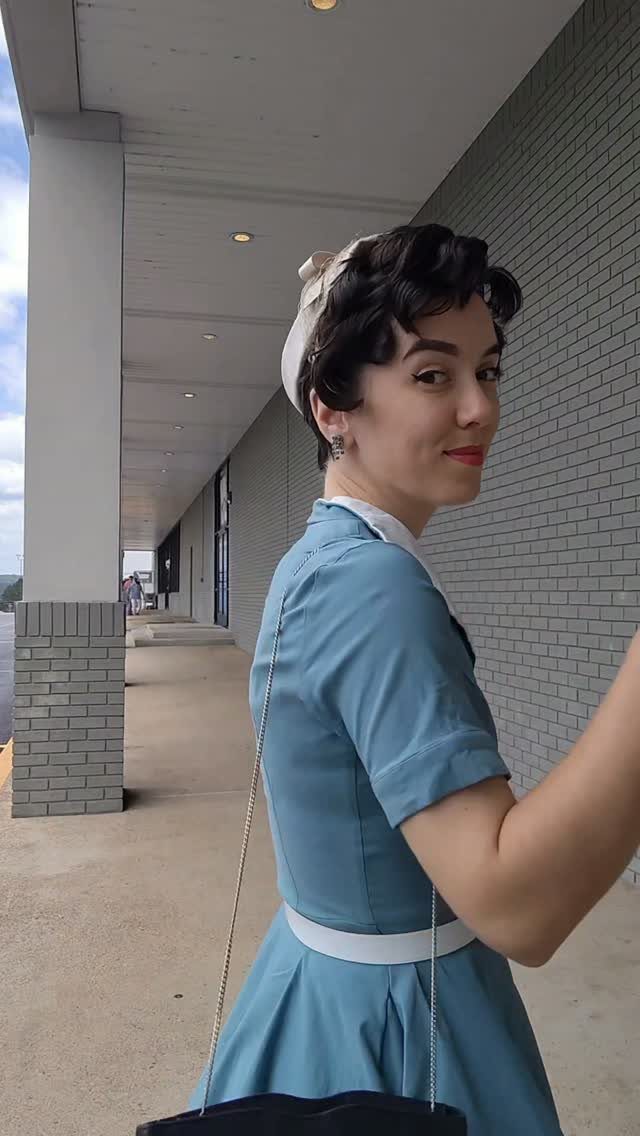
Contrast is what sets a collared day dress apart: a white collar and belt against light blue make the neckline and waist do the styling for you. It’s a tidy, polished choice for work, errands or a daytime event.
The collar frames your face, so a crisp one looks sharper than a floppy one. If the belt is removable, try it on and off to see which waist you prefer.
A white hat finishes it, though a simple pair of flats works just as well.
6. Gingham Swing Dress
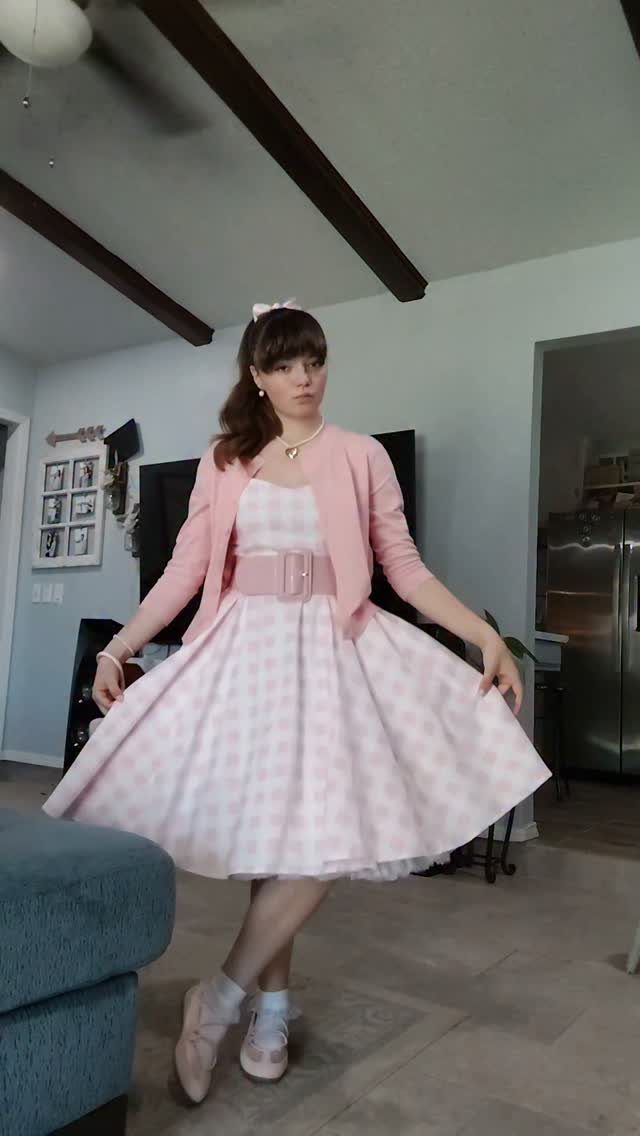
Gingham is the easiest 1950s print to wear, and a swing dress cut in pink and white keeps it playful without going costume. The skirt flares from a fitted bodice, so it moves well and skims over the hips.
A wide belt sharpens the waist, and a matching cardigan covers bare arms for cooler rooms or the office. Check that the checks line up at the seams; mismatched gingham is a sign of lower quality.
I’d choose a smaller check for a polished look.
Quality and Fit Focus
A 1950s day dress comes down to one of 2 shapes: a nipped waist over a full, swingy skirt, or a slim pencil cut that hugs from hip to knee.
Both grew out of Christian Dior’s "New Look" of 1947, which answered the austerity dressing of the 1940s, and both stayed dominant until around 1956.
Quality shows in the construction, so check the seams and hems before anything else.
Proper seams and hems are what make a dress hold its shape on a modern body, and a vintage-inspired brand that handles them well can cut for today’s figures while keeping the original lines.
Skirts of that era often fell to mid-calf, and the bust was shaped too, the so-called "sweater girl" line.
Buy the proportions, not a costume. One well-made dress with gloves, a hat or red lipstick reads as style; all three at once starts to read as dress-up.
Between a cheap replica and a carefully made piece, I’d buy the second and wear it often.
Frequently Asked Questions
What were some popular women’s outfits in the 1950s?
Day dresses of the decade came in 2 main cuts: a fitted bodice with a cinched waist and a wide, swishing skirt, or a narrow pencil skirt hugging the hips down to the knee.
Fitted sweaters with a shaped bust, the so-called "sweater girl" look, rounded out the outfits. Dior’s 1947 "New Look" set up both of those shapes, and they held the spotlight through roughly 1956.
Where can I find vintage style dresses?
Vintage-inspired brands are the best bet, since they copy the original lines but cut for today’s figures.
Before you look at price or print, turn the dress inside out and inspect the seam allowances and the hem; clean stitching is what keeps the shape on a modern frame.
I’d pick one carefully made dress over a cheap replica and wear it often.
What are some retro outfits for women?
A full circle or swing skirt with a cinched waist is the classic starting point, and a pencil skirt with a tucked-in white blouse is the quieter option.
A cropped cardigan over the top keeps the waistline in view. Finish with red lipstick, a chiffon scarf, gloves or a waist-cinching belt, but pick only one or two so the look reads as style and not dress-up.
What accessories were popular in the 1950s?
Gloves, hats, wide belts and red lipstick were the signature finishers, and a chiffon scarf fit in too.
Wide belts sharpen the waist, which was the focus of the whole decade. Wear one or two at a time, since all of them together starts to look like a costume.