Hair color blocking runs from subtle face-framing highlights and a few streaks to full panels of neon lime green, and how much of your hair is already dark decides where you land.
Black and other dark bases need lightening before orange, red or lime will show, so the real cost of the black and orange, neon lime and bold red looks is salon time, not the dye.
Natural color blocking asks the least of your hair, while the neon lime sections and the multi-colored bob need crisp, flat edges and regular touch-ups to keep reading as blocks.
1. Natural Color Blocking
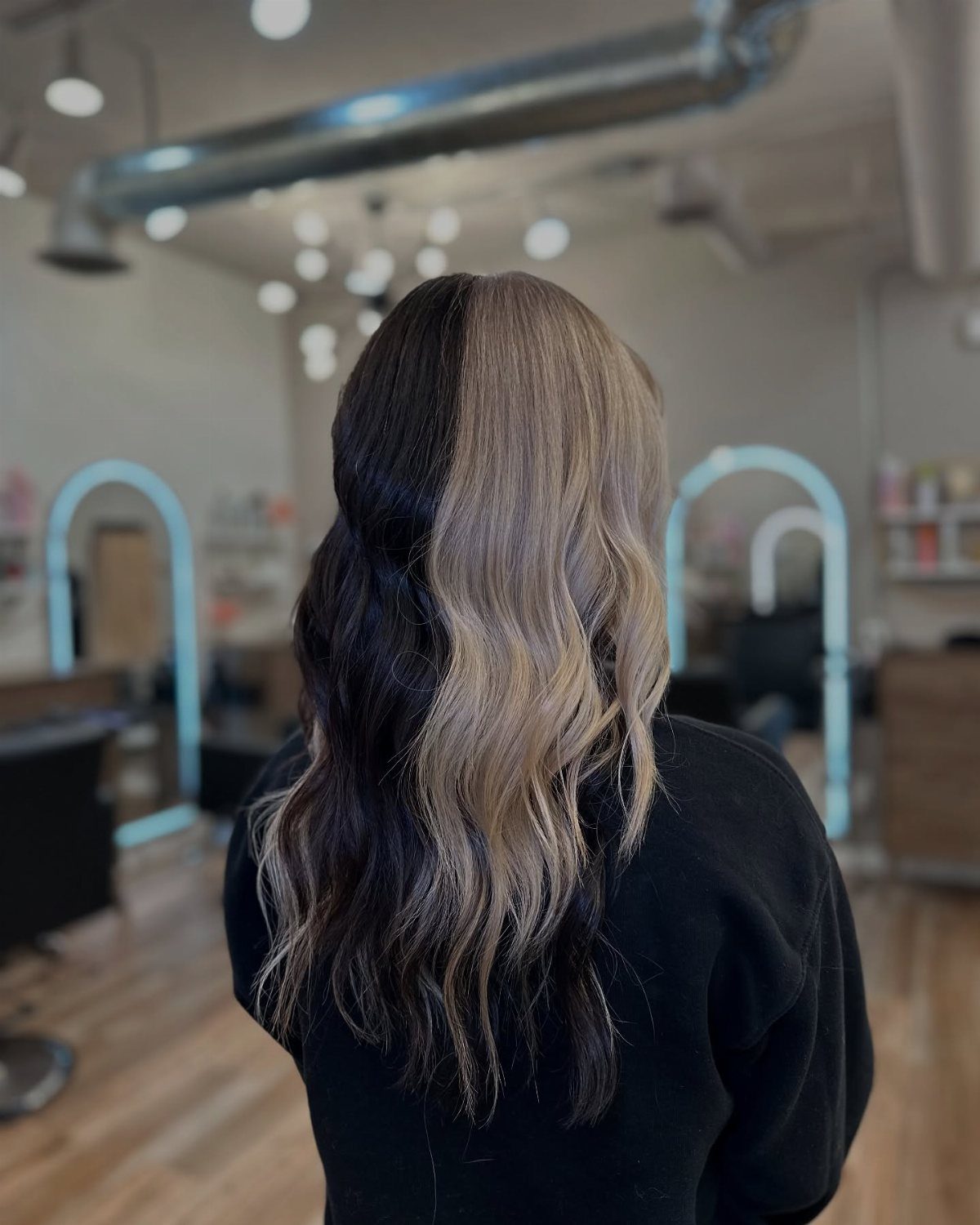
Dark brown against ash blonde works because both colors sit in the neutral family, so the split reads as deliberate without shouting. A clean vertical part down the back keeps the line sharp.
Wavy texture softens the border where the 2 shades meet, which I like for daily wear.
Bring a photo to your colorist and ask for the dividing line to be precise. Lifting brown to ash blonde is a bigger job than adding a tint, so expect to pay for it in salon time and upkeep.
2. Face-Framing Highlights
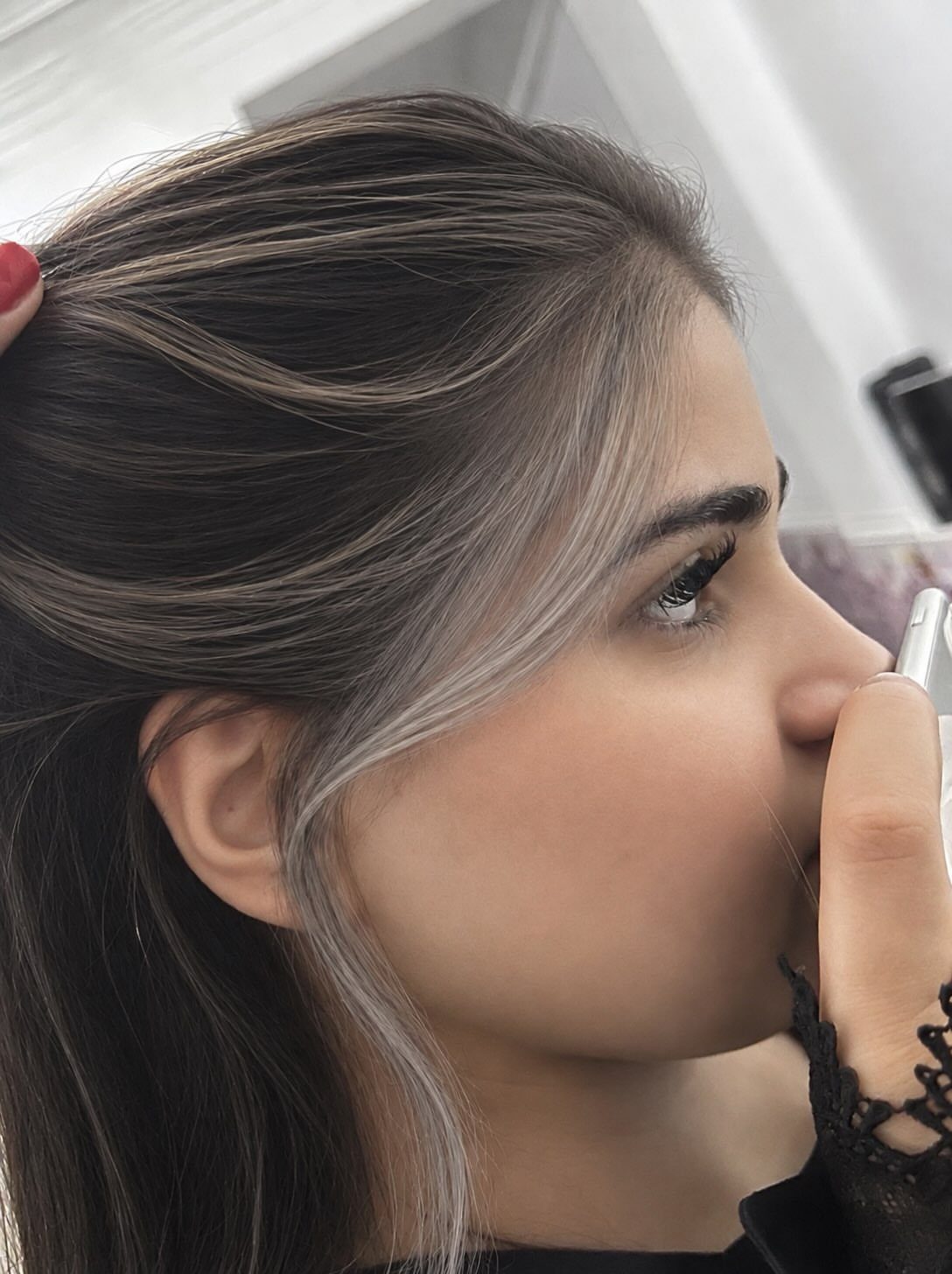
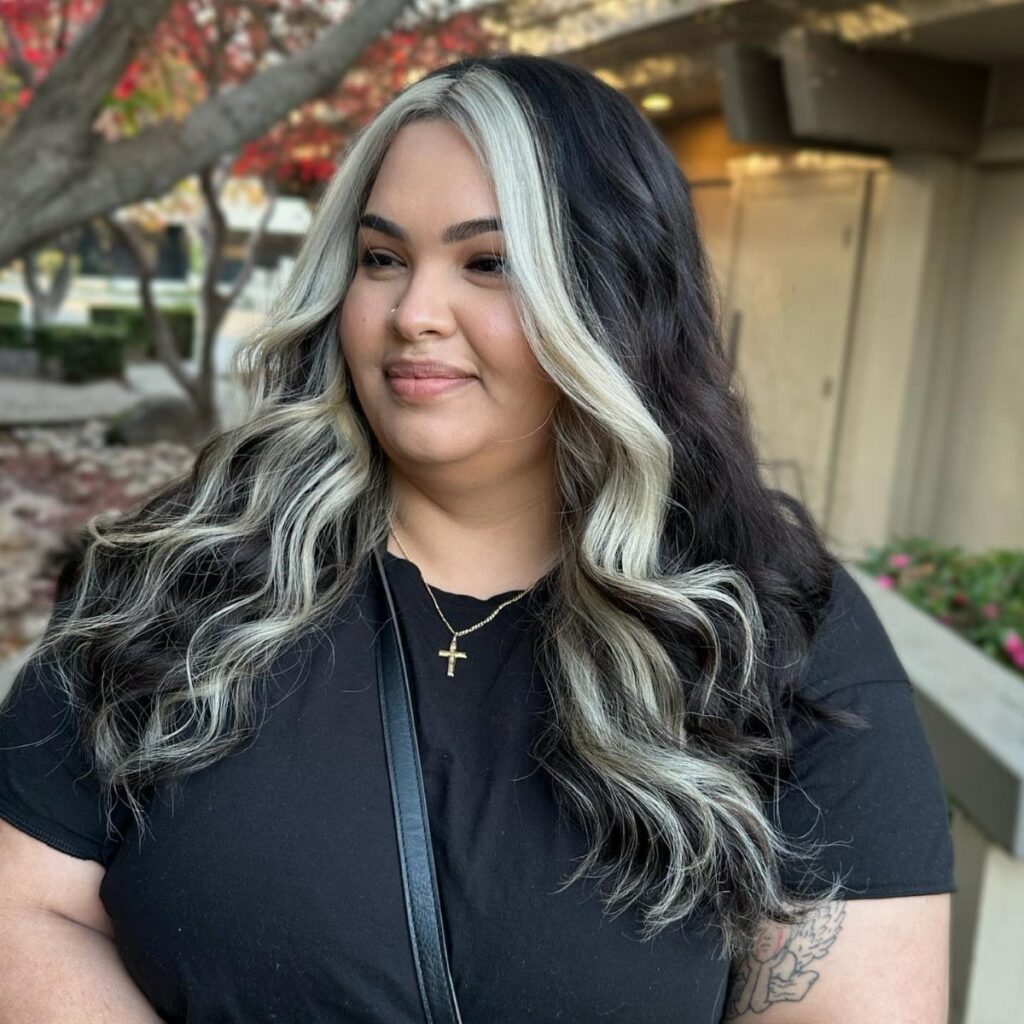
Lightening only the strands around the face puts the brightness where it catches the eye first. On dark hair, a silver-grey piece reads as an accent rather than a full color change.
This suits a reader who wants the look without recoloring everything. Because the rest of your hair stays dark, the effect is easy to wear with makeup, from bare lips to a bold one.
Ask your colorist where the pieces should start so they fall along your cheekbone, not behind your ear. Grey tones usually need a lightening step first, so plan for that.
3. Colored Bangs
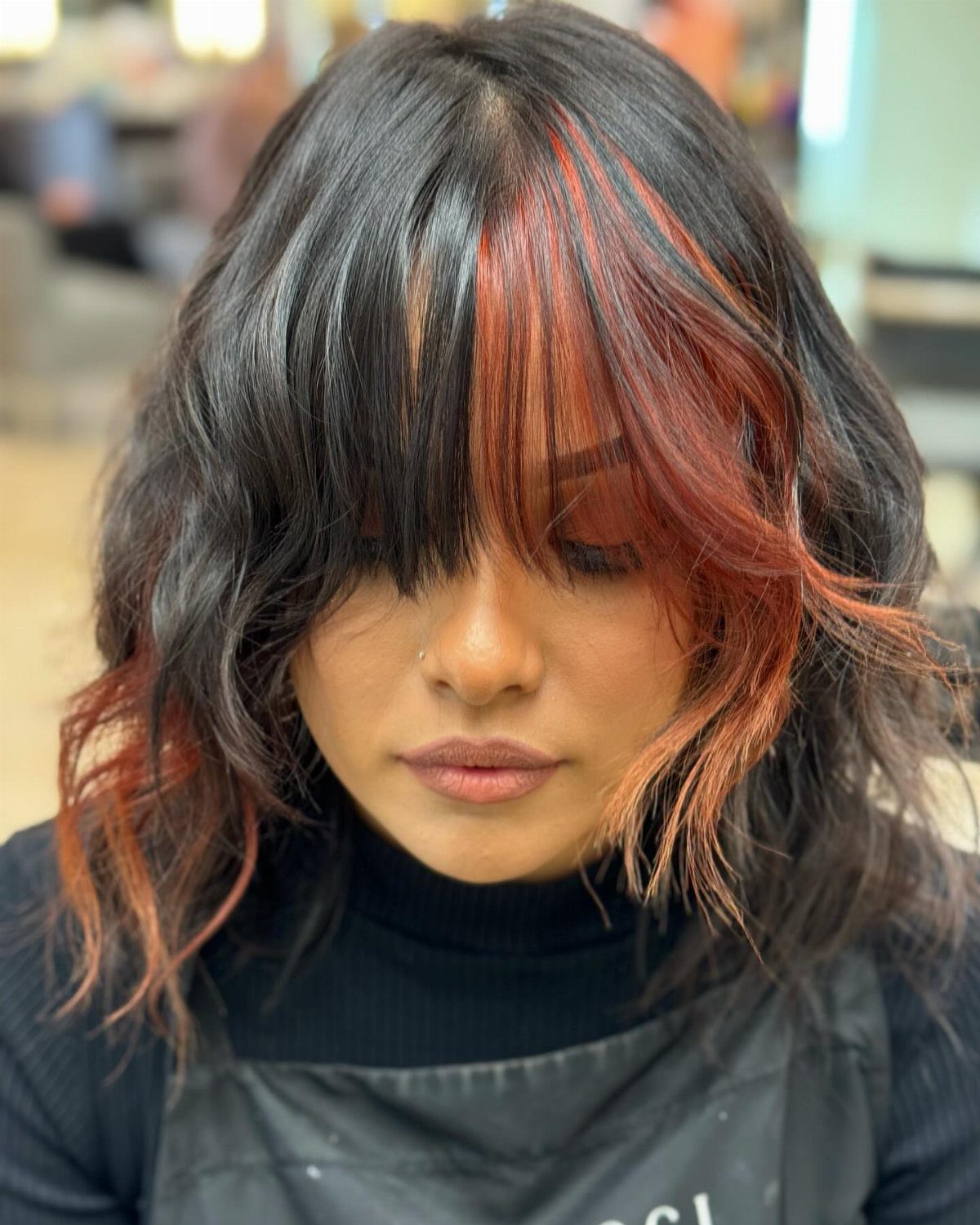
Coloring only the bangs gives you the most contrast for the least hair, and a bright shade like red-orange over a dark base shows the difference best.
The color sits right at the forehead, so it frames your eyes and brows more than any other section does.
Side sections can carry the same shade, as they do here, to make the bangs feel connected to the rest of the cut.
I would keep the remaining hair a solid dark shade so the color stays the focus. Bangs are short, which means a small dye job, but they need touch-ups as they grow.
4. Hair Streaks
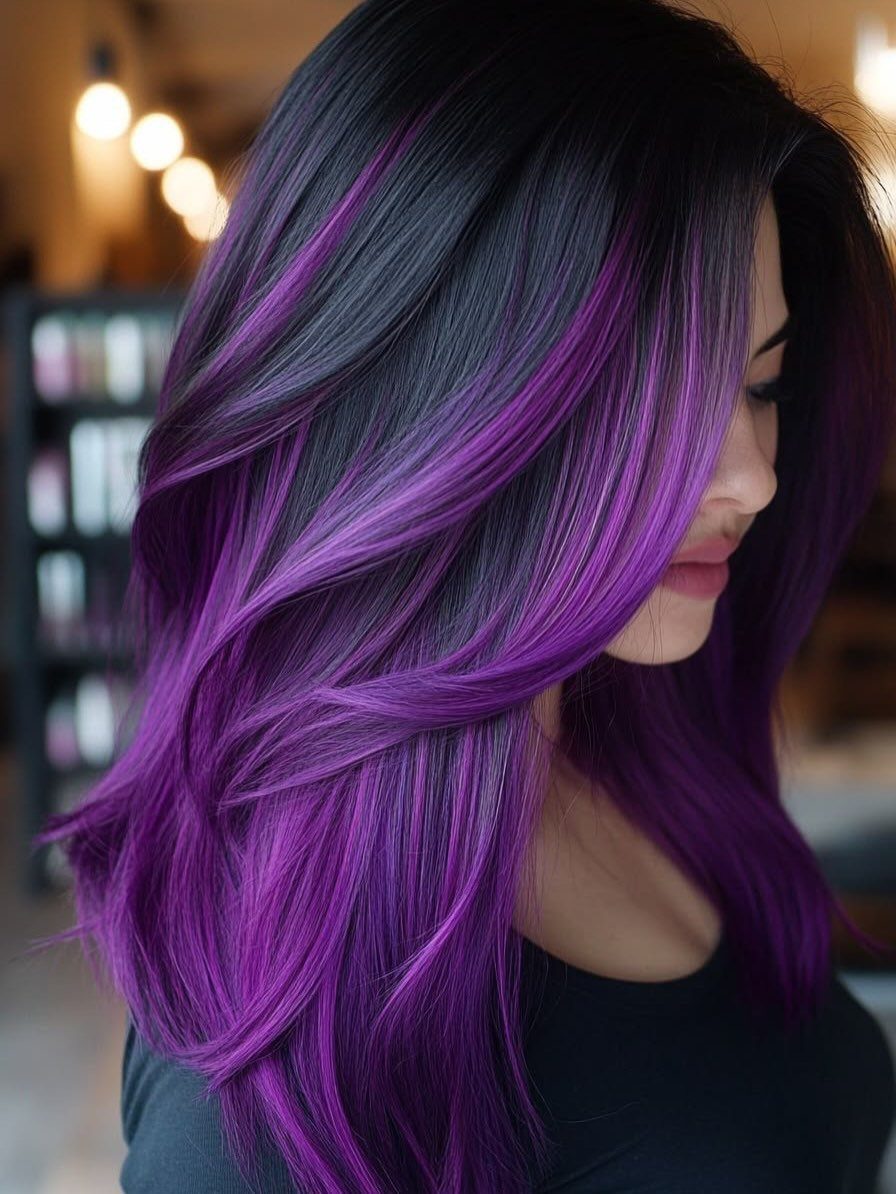
Purple streaks on long black hair are the gentlest way to try color blocking, since you choose how much to add. A few bold stripes read as an accent; more of them start to look like blocks.
Black hair needs lightening before purple will show, so ask your colorist about placement first.
I would keep the streaks to the front and mid-lengths, where they move when you do. Leaving the rest of your hair black keeps the purple vivid.
5. Black and Orange Color Blocking
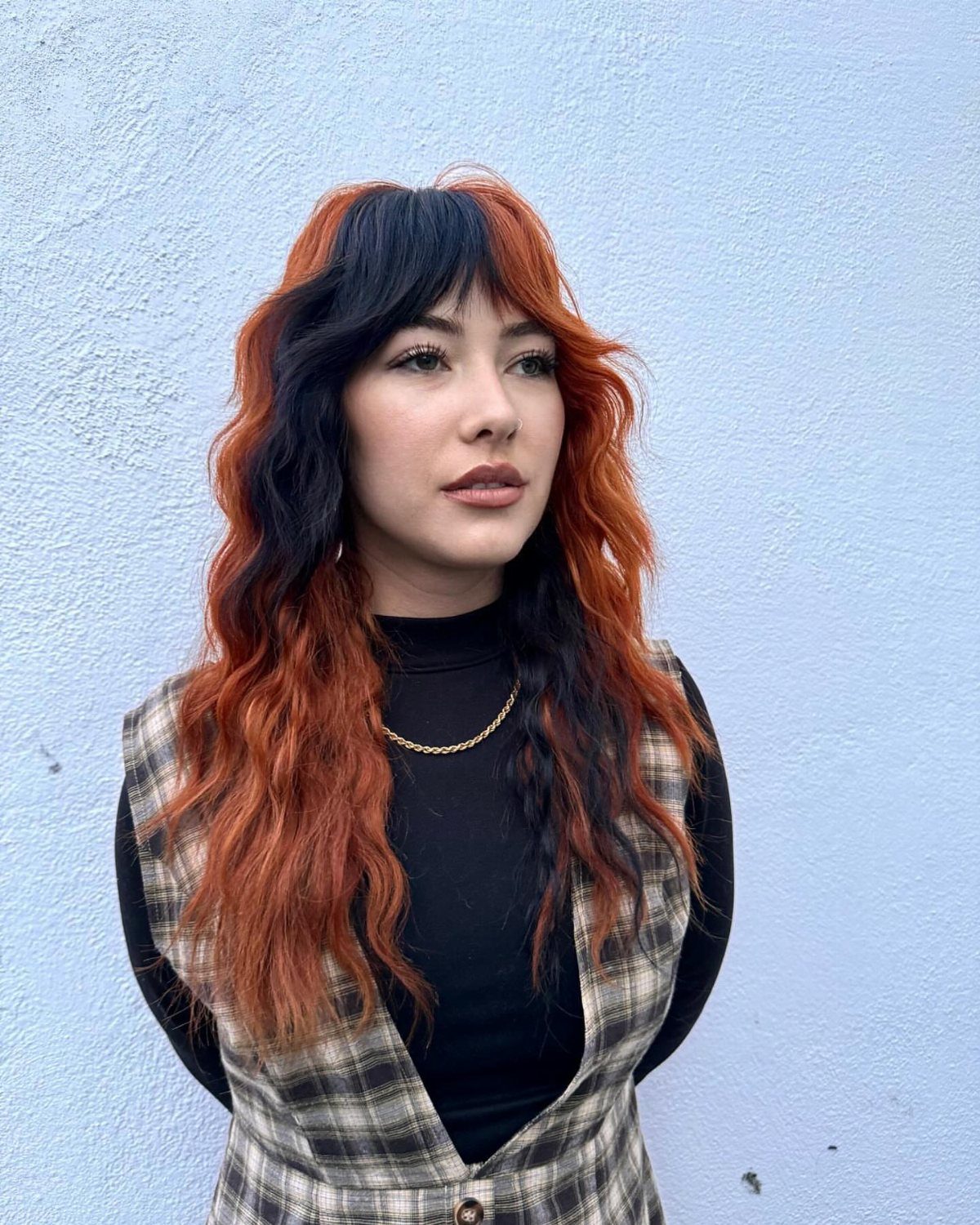
Black beside bright orange is high contrast, and on long wavy hair the geometric edges look graphic as the waves move. Solid, flat color in each block matters more than anything else here; blended edges would lose the effect.
Ask for crisp lines and decide the block shapes before you sit down.
Black is the easy half; orange takes lightening to look bright. A black turtleneck, as visible here, keeps the outfit from competing with the hair.
6. Neon Lime Green Block Sections
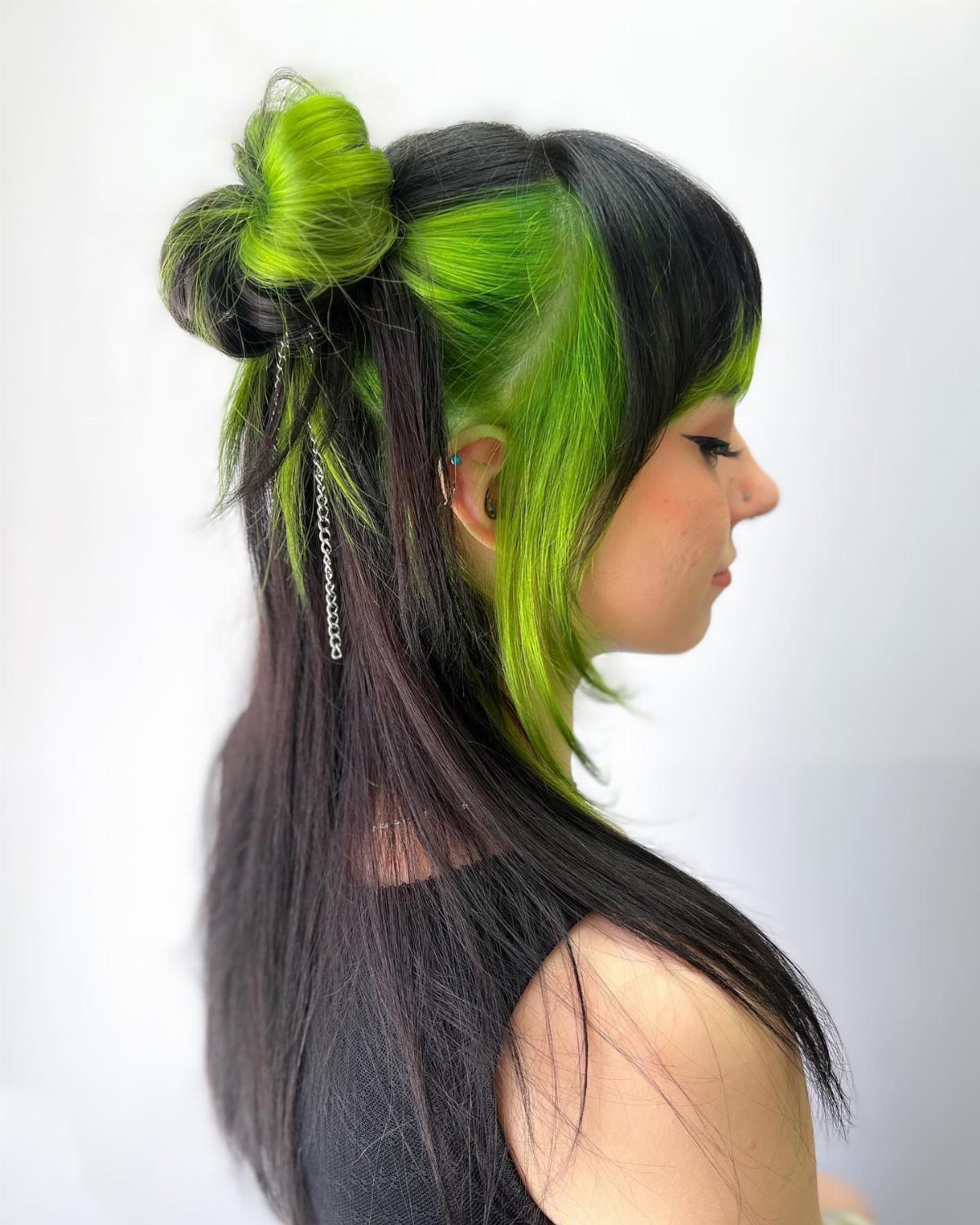
Neon lime green on dark hair is loud, and the loudest version is a panel at the side, as here, with the rest left black. Pulling hair into buns shows off the blocks, because each bun carries its own color.
I would pick this for a bold change you can reverse by cutting or covering the panel.
Dark hair must be lightened to get neon, so budget for salon time. Keep the part and panel edges clean, since sharp lines make the green look intentional.
7. Multi-Colored Bob Color Blocking

Purple beside orange is a bold pairing, and a bob keeps it manageable because the blocks stay compact and easy to see. Short hair also means less color to lift and maintain.
Decide where each shade sits before the appointment, and bring a photo so your colorist can match the block shapes. Both colors need lightening on dark hair, so plan for the salon time.
A patterned cardigan, as visible here, works when the hair is the loudest thing; I would keep the rest of the outfit quieter if you want the colors to read cleanly.
8. Black and Bold Red Blocks
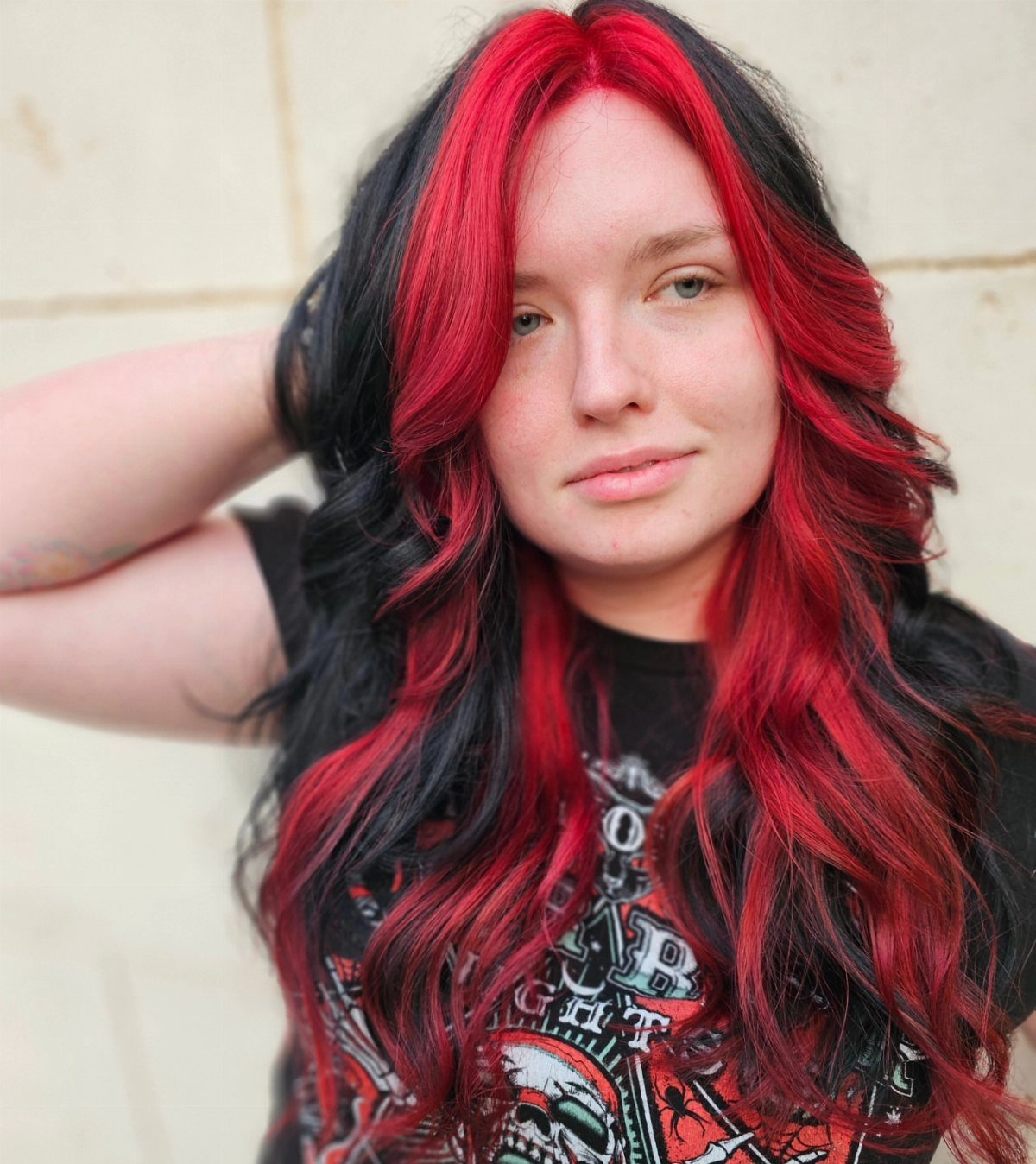
Deep red against black is the most wearable of the high-contrast pairings, since both shades sit in the same dark, warm range. Long waves let the red flash in and out as the hair moves.
Sharp edges are what make black and red read as blocks, so bring a sketch or a photo and agree on where each section starts and stops before the first clip goes in.
Black is easy; red over dark hair usually needs lightening first, so budget for that step. A plain black graphic tee keeps the focus on the hair, which is how I would dress it.
If you’re all about a statement hair color, you’ll be happy to hear that high-contrast looks are back in style—more specifically, block hair color.
9. Sunset Tone Color Blocks
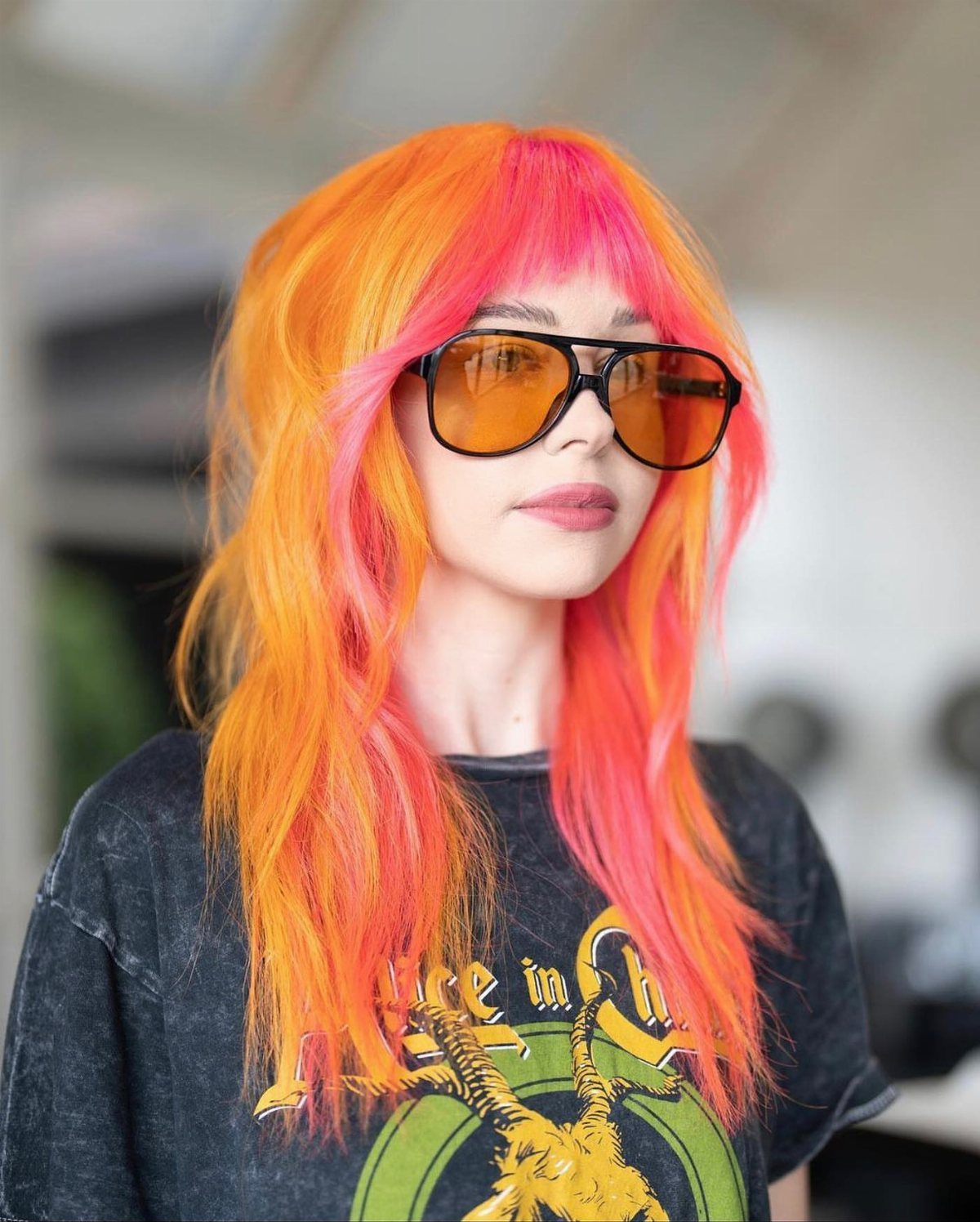
Red, pink, and orange sit side by side on the color wheel, so the blocks glow into each other like a sunset instead of clashing. On long waves, that warm run of shades looks richest.
I would choose this over a two-color split if you like variety but want it to feel cohesive.
Bright shades like these need lightened hair, and warm tones fade, so expect touch-ups. Ask your colorist to keep the edges crisp, or the three colors will muddy into one.
Frequently Asked Questions
What is block hair color?
Block hair color means dyeing distinct sections of hair in contrasting shades, so each section reads as a solid shape against the rest.
You can do one panel, like a single side section, or several shades in a row. Crisp edges and flat color in each block are what separate it from blended color.
What is box coloring for hair?
Most people typing that are after color blocking: one clearly defined panel of hair dyed a shade that contrasts with the rest.
It can be a split down the part, a panel at the side, colored bangs, or a hidden layer that shows when the hair moves.
How many panels you get, one or several, is a conversation to have with your colorist, and it depends on how loud you want the look.
What are the downsides of dyeing your hair black?
Black is the easy shade to apply, but it makes later changes harder. Anything brighter than black, like orange, red, purple or neon green, has to be lifted out first, which costs salon time and upkeep.
If you plan to color block with black as the base, that is a fair trade, since the dark hair makes the bright blocks stand out.
Why do hairdressers use foil when coloring hair?
Foil isolates a section so lightener or color stays only where it is meant to go. That matters for color blocking, where the edges need to stay sharp.
A heavier foil holds up better, so the colorist can open it to check the lift without tearing it. The hair also needs to be fully saturated, or only the top layer will lighten.
What are the different types of hair coloring techniques?
For color blocking, the main approaches are a split color down the part, face-framing pieces, colored bangs, thin streaks, and a side panel.
You can also do a short bob with 2 shades, or a run of neighboring shades like red, pink and orange.