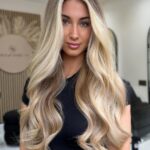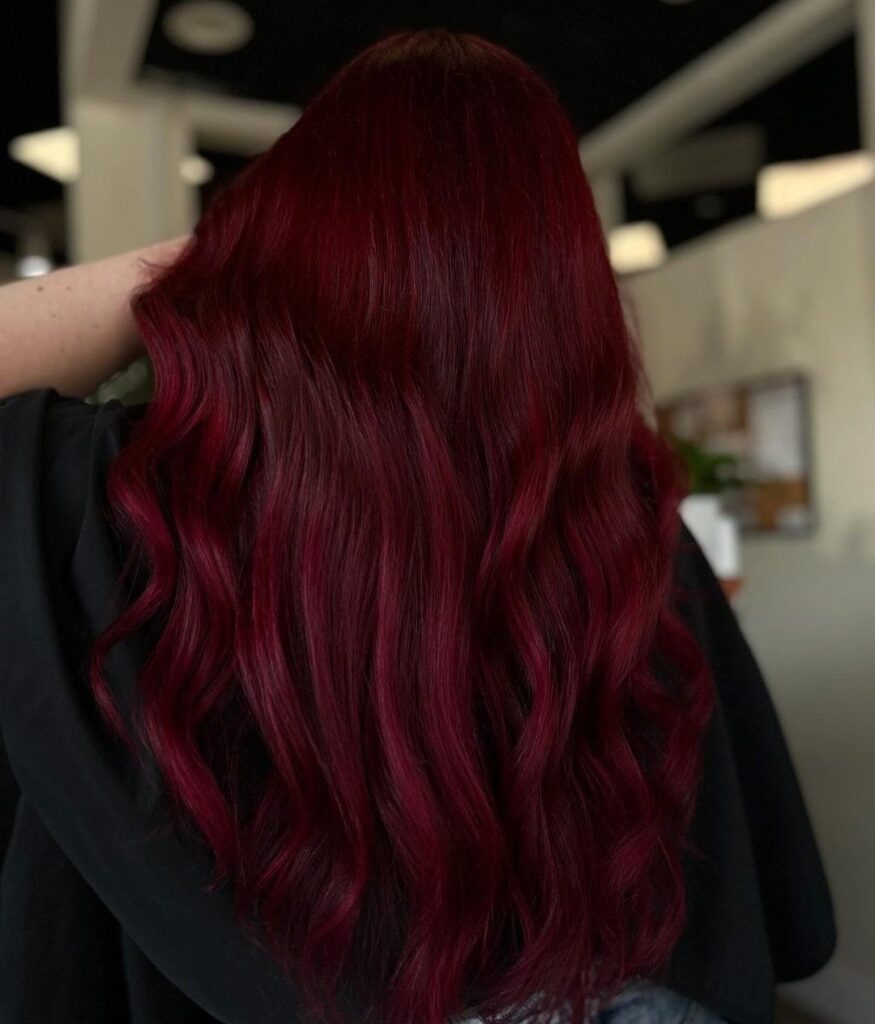
Shade matters less than the state of your hair when the color goes on, since regrowth, a previous dye job, curls or a blunt cut all change how deep red takes, as the looks below show.
The list runs from wine-leaning burgundy to deep red layered with black, and the effort climbs along the way: red with black usually needs lightening first, while a layered or bob cut can be refreshed more simply.
Your undertone picks the shade, cool for wine-leaning reds and warm for copper or auburn, and your hair length and texture pick the look.
1. Burgundy Deep Red Hair Dye
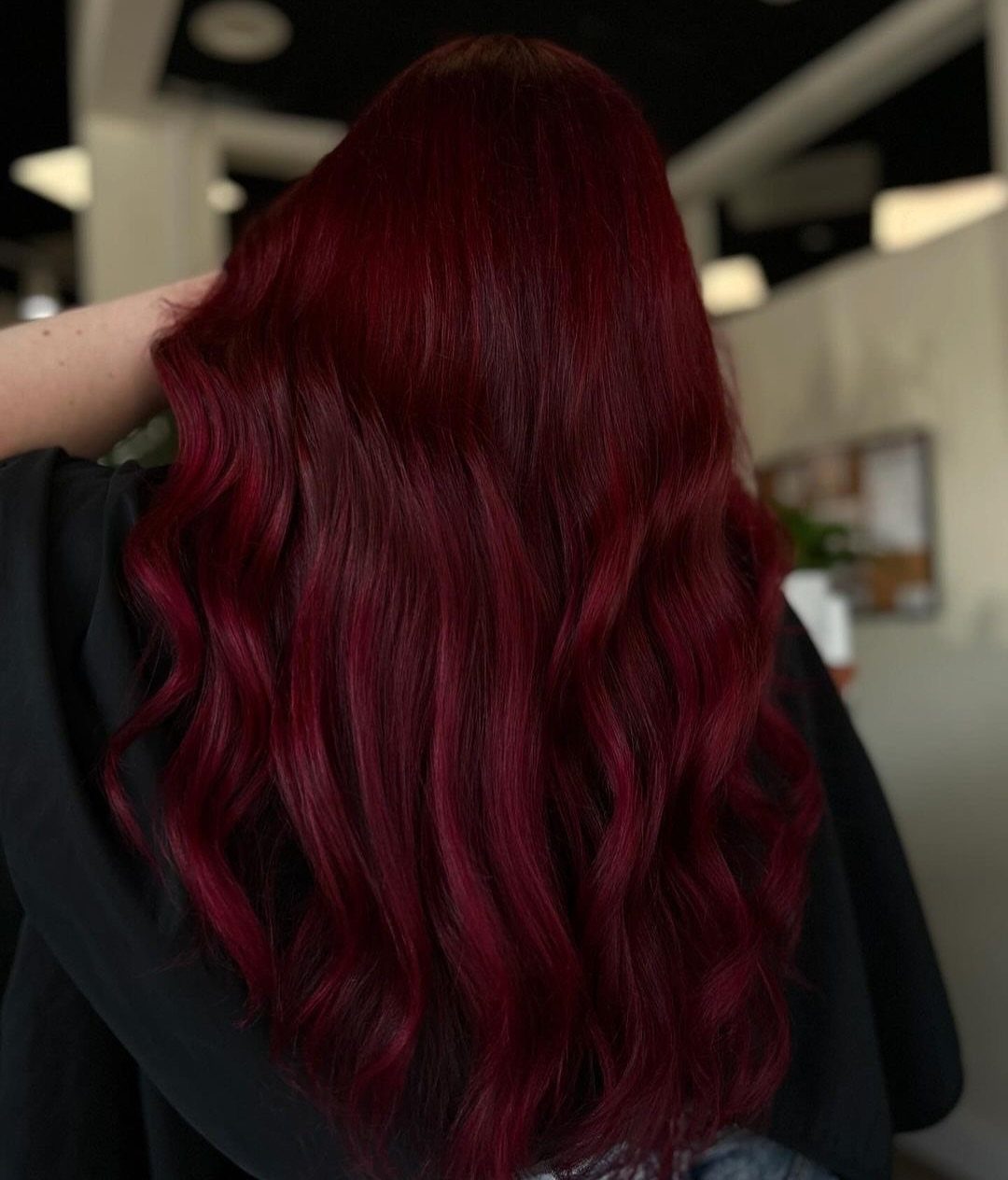
Burgundy sits on the cooler, wine-leaning side of deep red, which is why it reads as polished rather than loud. On long hair with soft waves, the color shows its depth in the shadows between the bends.
For at-home dyeing, a burgundy is the better pick over a true bright red when the color has to work at the office and at dinner afterward.
It also pairs easily with black, which is the wardrobe shade many of us reach for most.
2. Long Wavy Deep Red Hair
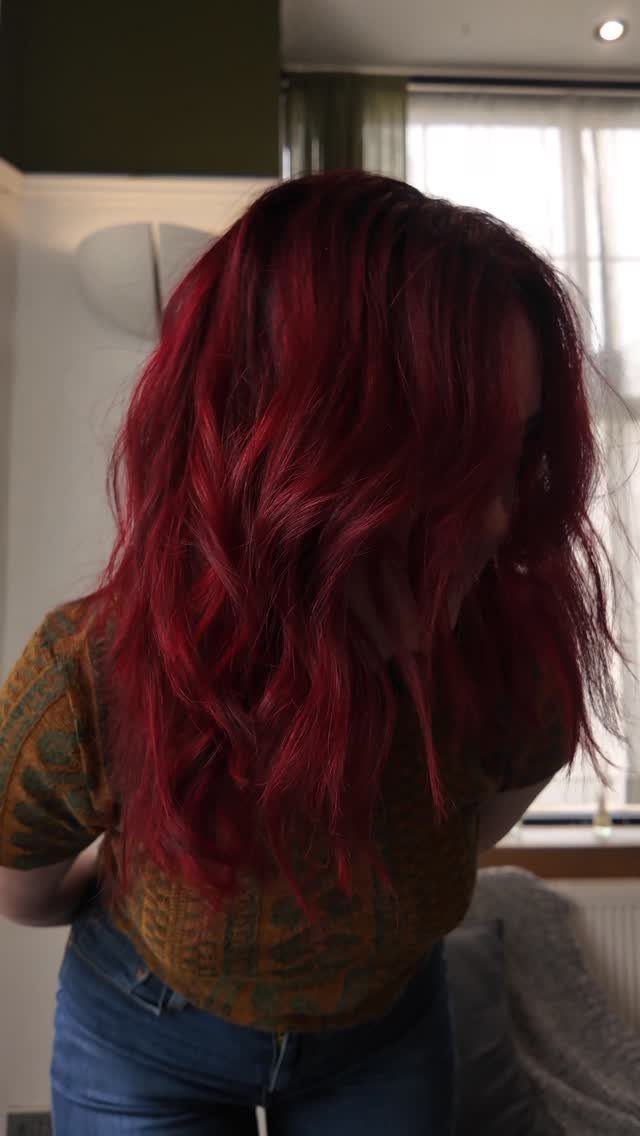
Long waves do a lot of the work for deep red. Every bend catches light differently, so the color looks richer than it would on flat, blunt hair.
If you’re dyeing at home, I’d go with a shade that sits close to your natural base so regrowth stays soft.
Warm patterned tops in rust, olive, or camel suit long wavy red hair well, since they pick up its warmth without competing with it. Upkeep costs more here: long hair takes more product and more time at the sink.
3. Vibrant Deep Red Layered Hair
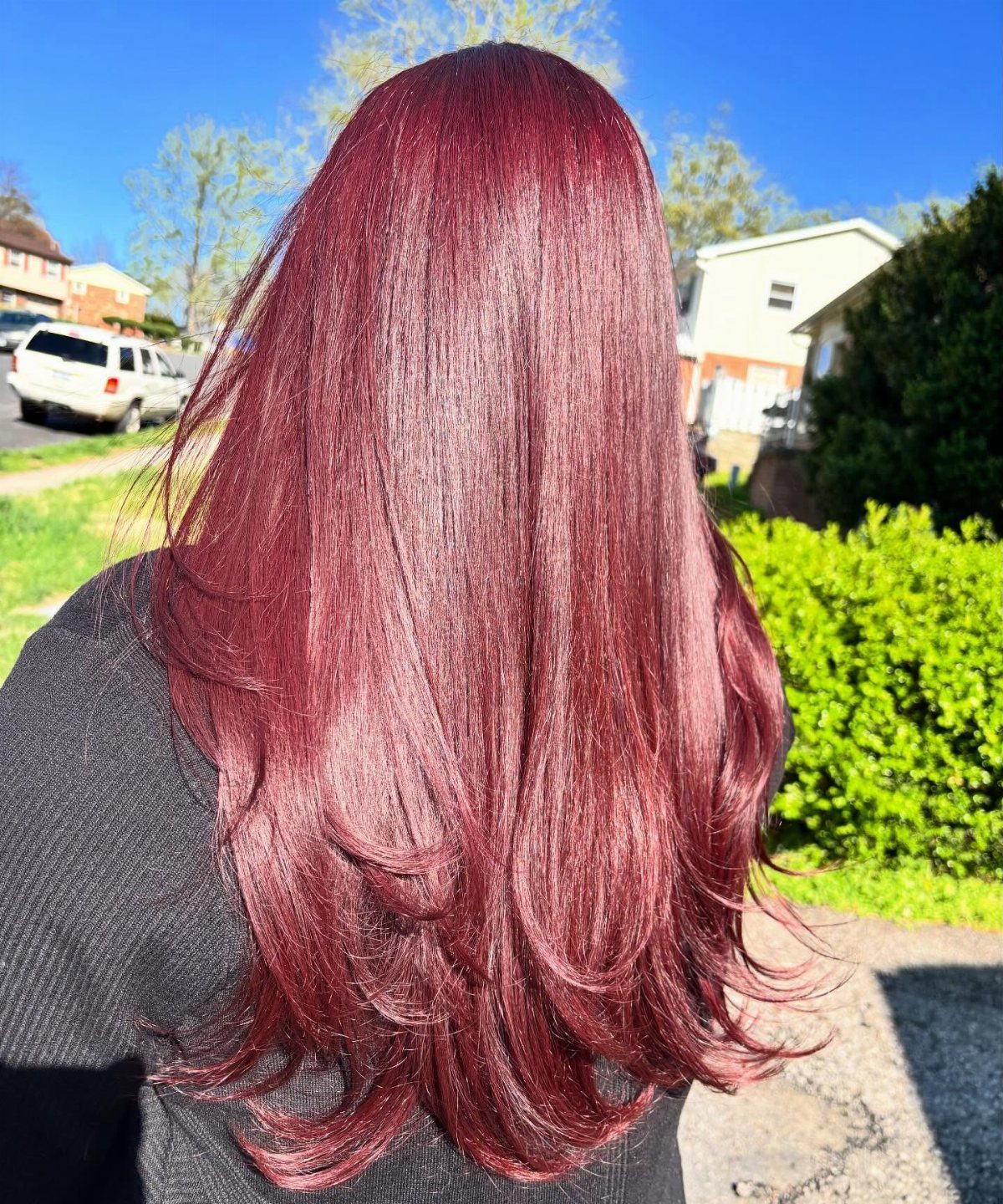
Layers give deep red a second dimension. Where the cut steps up and down, the color shifts from darker to lighter, so a single box shade can look dimensional without any highlighting.
I’d have the layers cut first, then dye, so the ends take color evenly. Longer layers also grow out gracefully, which suits anyone shifting toward fewer salon trips and more at-home care.
4. Vibrant Deep Red Bob
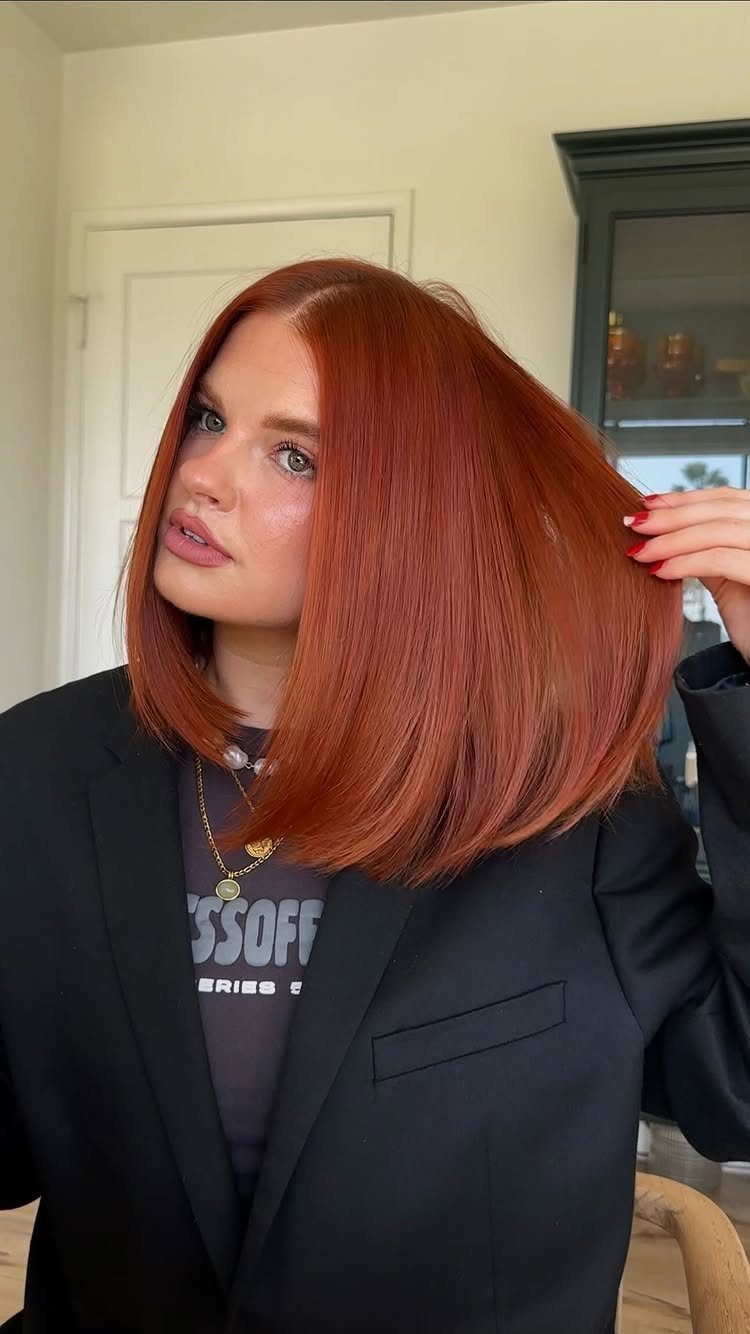
A bob shows off deep red better than almost any other length, because the color is the whole story. Nothing hides it, and a blunt edge makes the shade look saturated.
Short hair is also the easiest to dye at home: one box usually goes further, and application takes less time.
The cost is that the line of regrowth shows sooner, so plan on touch-ups. A black blazer, as here, keeps the red the focus.
5. Long Straight Deep Red Hair
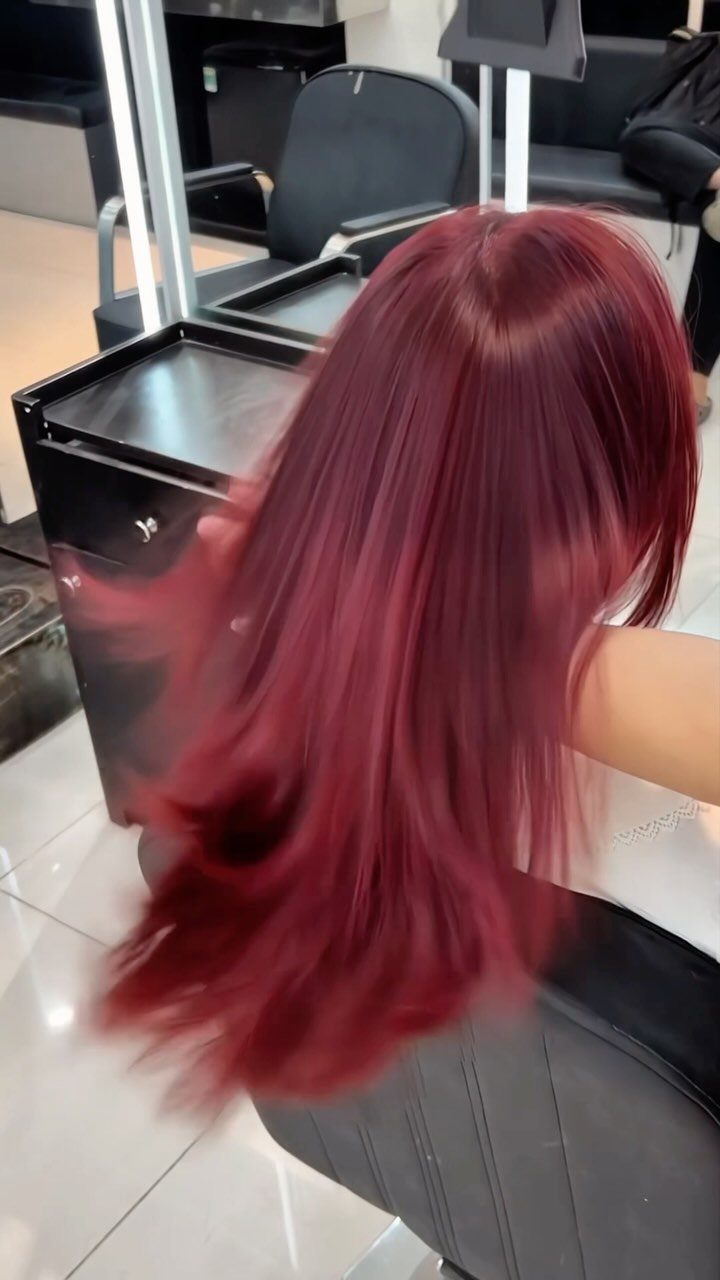
Pin-straight hair turns deep red into a mirror. With no curl to break up the surface, the shade reads as one smooth, glossy sheet, and any patchy spots show.
For that reason I’d section carefully and work in thin slices when applying at home, so every strand gets saturated. Straight hair also makes the color look darker, so choose a shade one step brighter than you think you want.
6. Curly Deep Red Hair
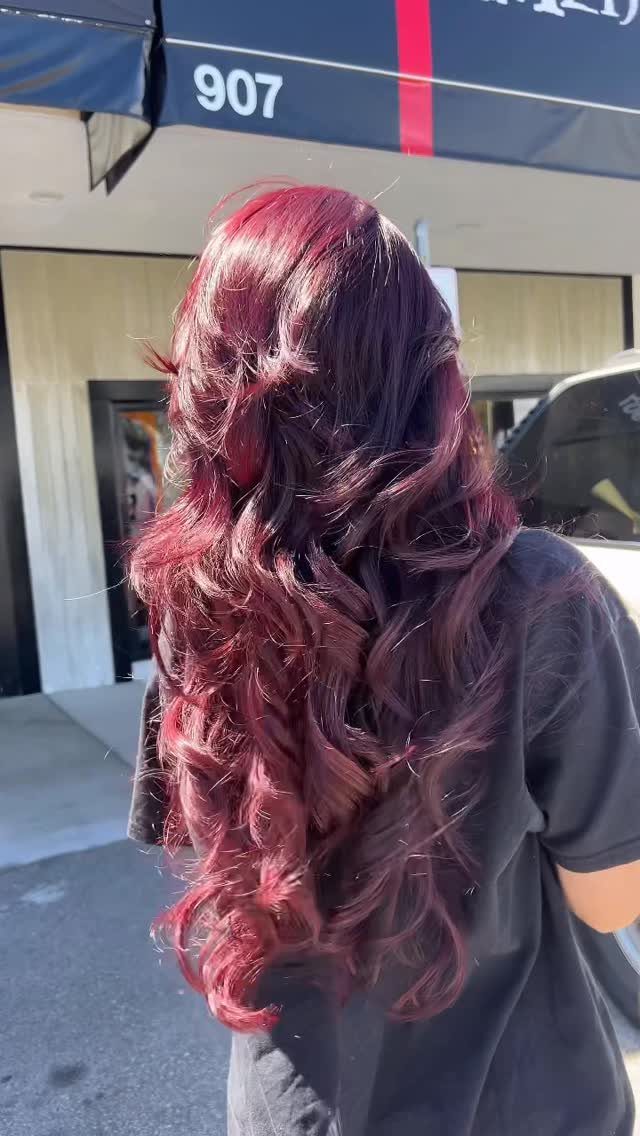
Curls give deep red volume and movement, and the color pools in the spirals so it looks richer in some spots than others. That variation is the appeal.
Curly hair tends to run drier, so I’d put moisture ahead of everything else in the routine.
Apply dye gently, without rough combing, to keep curl pattern intact. Dryness dulls red faster on curls, so a hydrating mask once a week helps keep the shade deep.
7. Deep Red Hair with Bangs

Bangs put the color right at eye level. On long deep red hair, a fringe that falls across the forehead frames the face and keeps the shade from getting lost in all that length.
If you’re dyeing at home, color the bangs last and keep the brush light.
Short pieces soak up dye fast and can come out a shade darker than the rest. A fringe also needs a trim every few weeks, so factor that into upkeep before you commit.
8. Deep Red and Black Hair
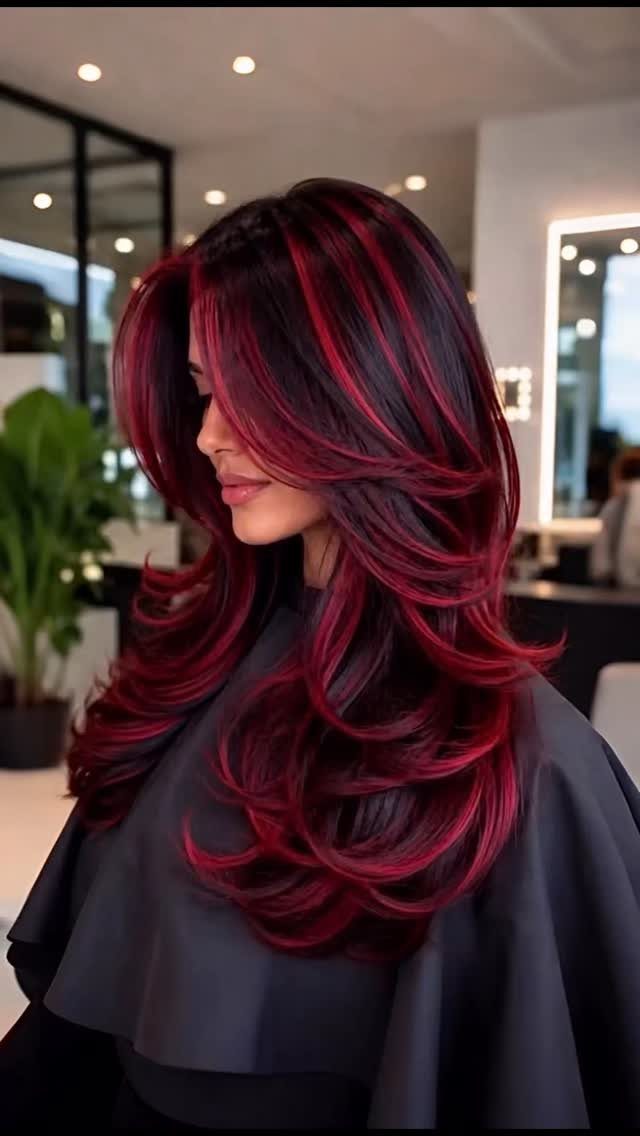
Deep red against black works best when the red stays in the layers and the black sits underneath. Dark roots and inner sections make the red look richer, and the cut gives the 2 tones room to show.
For home color, I’d keep the black as the base and add red only to the top sections you want to catch light.
Foil keeps the 2 shades from bleeding together. Fair warning: red over black usually needs lightening first, so a box alone may read as a subtle tint rather than a bold streak.
Choosing the Right Shade
Skin tone and undertone decide whether a red looks rich or harsh. No hard rules apply here, but some deep reds flatter fair, medium, or deep skin more easily than others.
To find your undertone, check the veins on your inner wrist in daylight.
Blue or purple veins usually mean a cool undertone, and green veins a warm one. If you can’t tell, you’re likely neutral and have the widest range to play with.
Cool undertones tend to look best in wine-leaning reds.
Warm undertones usually do better with copper-leaning or auburn tones. Hold a few swatches or the box photos up to your face near a window before you buy.
Dyeing Techniques
Roots and lengths take dye differently, so treat them as 2 jobs. Roots process faster from scalp heat, and previously colored ends can grab pigment unevenly or turn darker.
If regrowth shows, I put roughly two-thirds of the mixture on the roots first. Part thin sections with the tip of the applicator bottle, work the color in with your fingertips, and leave your gloves on.
Let that sit for 20 minutes, then work the remaining mixture through the ends and leave it for 10 more minutes. Plan on 30–45 minutes of total processing; the longer end gives you a deeper, more saturated red.
For a first-time permanent color with no regrowth, I start on the mid-lengths and ends, then add the roots last, since scalp heat makes roots process faster and can leave them brighter than the rest.
Always check your box for any shade-specific timing.
Color Fading
Red fades faster than most colors, and every wash takes a little with it.
Switch to sulfate-free, color-safe shampoo and conditioner. Everyday formulas aren’t built for color-treated hair, and the swap helps keep the shade looking fresh for longer.
On off days, a dry shampoo can stretch the time between washes. If you’re in the shower anyway, rinse with cooler water and keep the hot stream off your lengths.
If you’re ready to fully commit to your redhead era, opt for this permanent hair dye. While fading is natural, especially with red hues, Clairol’s Liquicolor Soy 4 Plex is designed to stay in your hair for good.
— Glamour