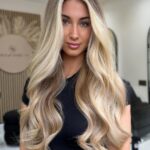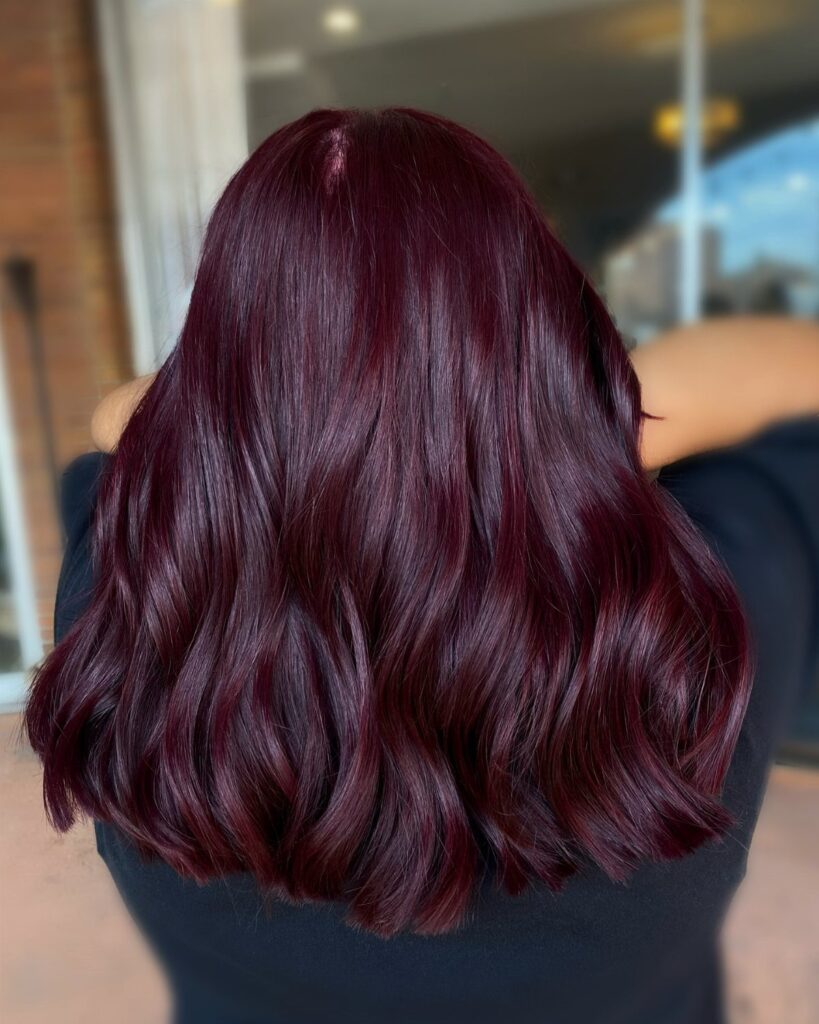
Your starting color sets how much work a maroon takes, and the list covers both ends: an all-over tint on dark curls, and blonde streaks on a maroon base that need lightening first.
Every version fades fast, since red goes quicker than almost any other color, so a gloss and a touch-up visit belong on the calendar before you book.
1. Burgundy Hair Color
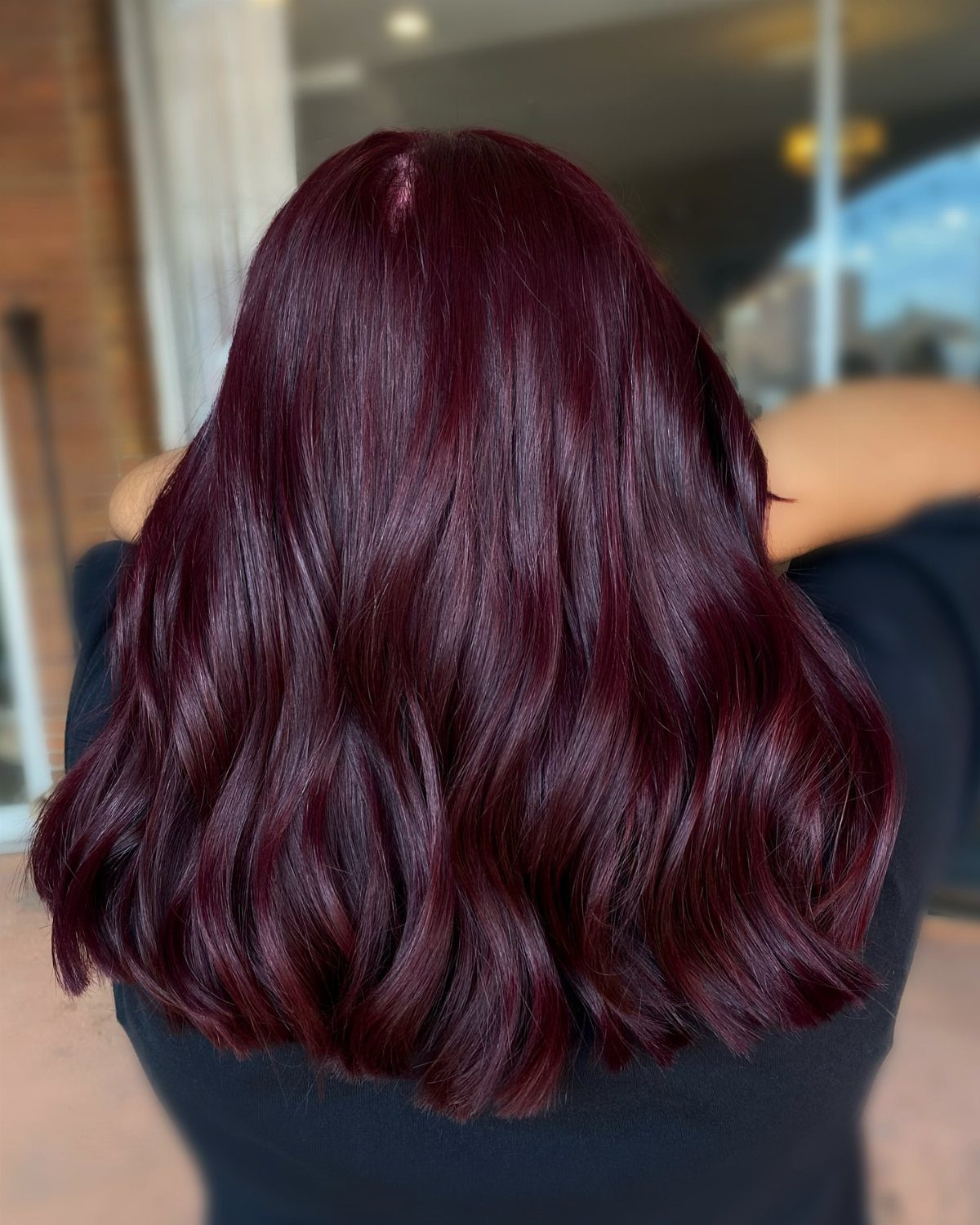
Cool red with a violet cast is what separates true burgundy from the warmer reds, and it shows best on long hair with some movement, where the color deepens in the shadows of each wave.
Ask your colorist for a violet-leaning base rather than a brick or copper red. Burgundy sits comfortably beside black, so if most of your closet is black, this shade is an easy one to wear.
2. Bright Burgundy Highlights on Dark Hair
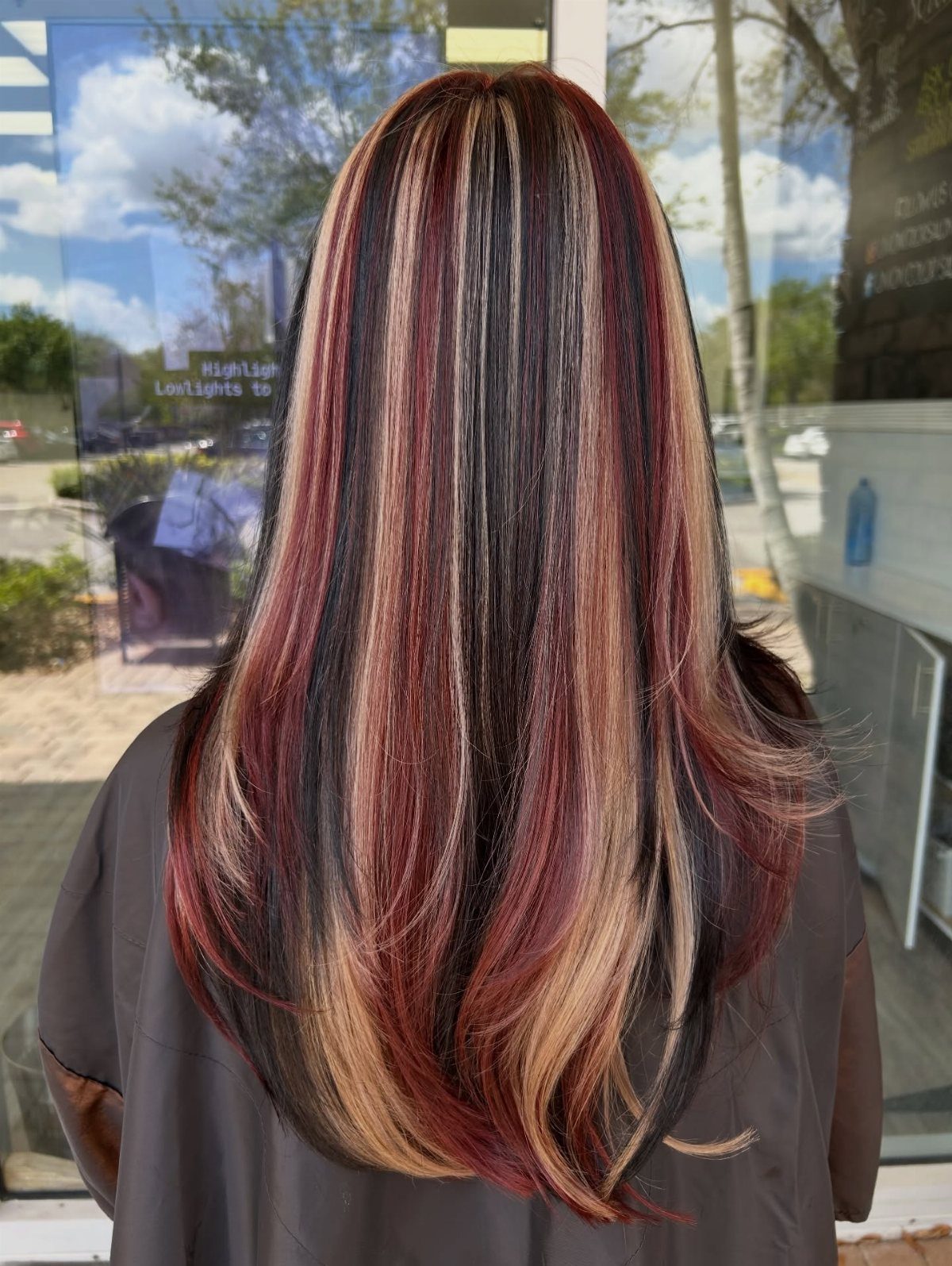
Dark hair with bright burgundy ribbons through it keeps your natural base doing the grounding while the color does the talking.
Burgundy mixed with a few blonde pieces is the version I like best, because the contrast reads as dimension rather than a single stripe.
Ask for the highlights to be spread unevenly. Evenly spaced stripes tend to look striped, and uneven ones look grown into the hair.
3. Tinted Curls
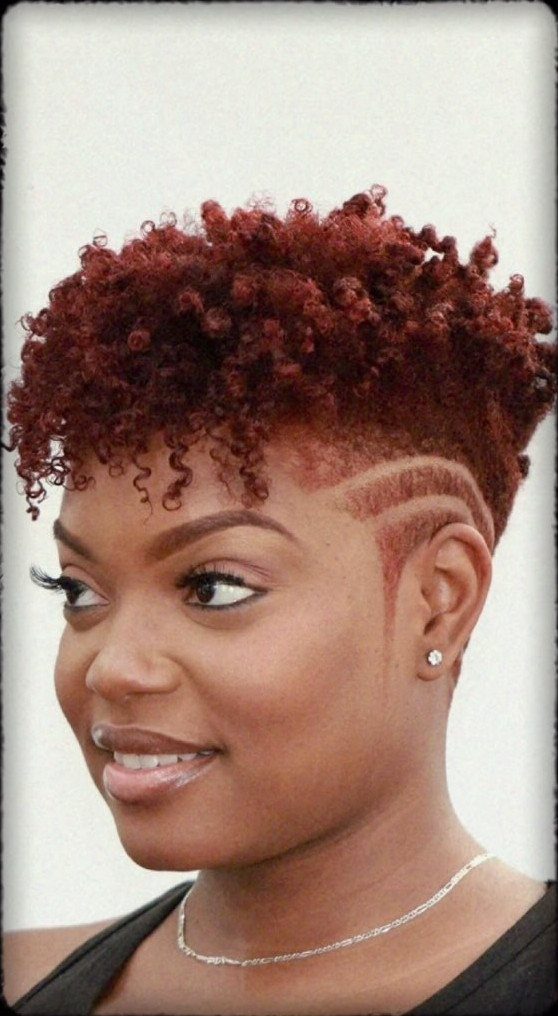
Short curls take wine color differently from long hair: every coil catches light at a different angle, so a wash of maroon over a dark base looks layered without any extra tones.
A tint over dark hair is a softer commitment than a full lift. On a cropped cut with a shaved design, the lines stay crisp, so the color itself can stay soft.
4. Mulled Wine
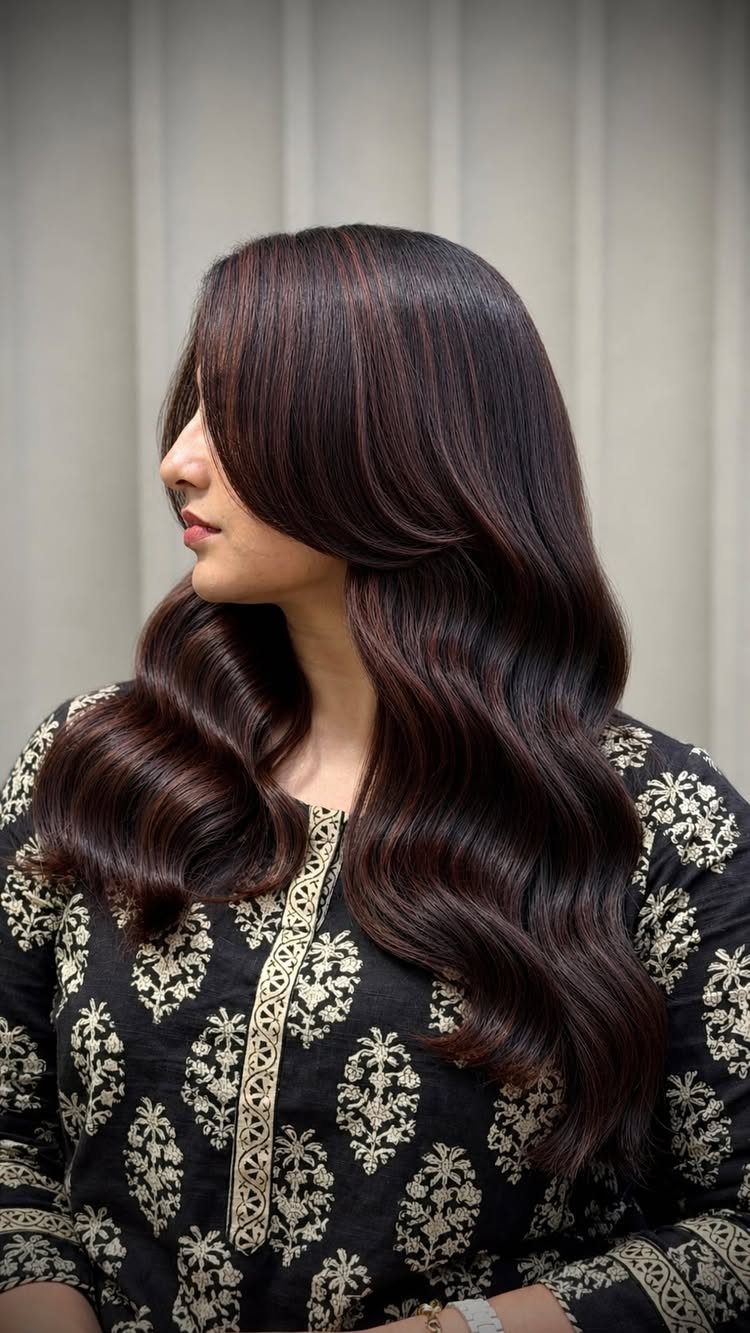
Mulled wine is the deepest, most modern red of the group, closer to a glass of wine held up to a lamp than to anything bright.
Because it runs so dark, it suits long, wavy hair that moves, and it pairs well with rich patterns in black and gold. Mulled wine is the pick for a red that reads as quiet rather than loud.
The color once closely associated with the 1990s is getting a major update. Professional stylists and at-home DIY-ers have found new, creative, and flattering ways to interpret this rich, cool shade of red, whether it’s mulled wine, red velvet, or cranberry.
— Allure
5. Burgundy Brunette
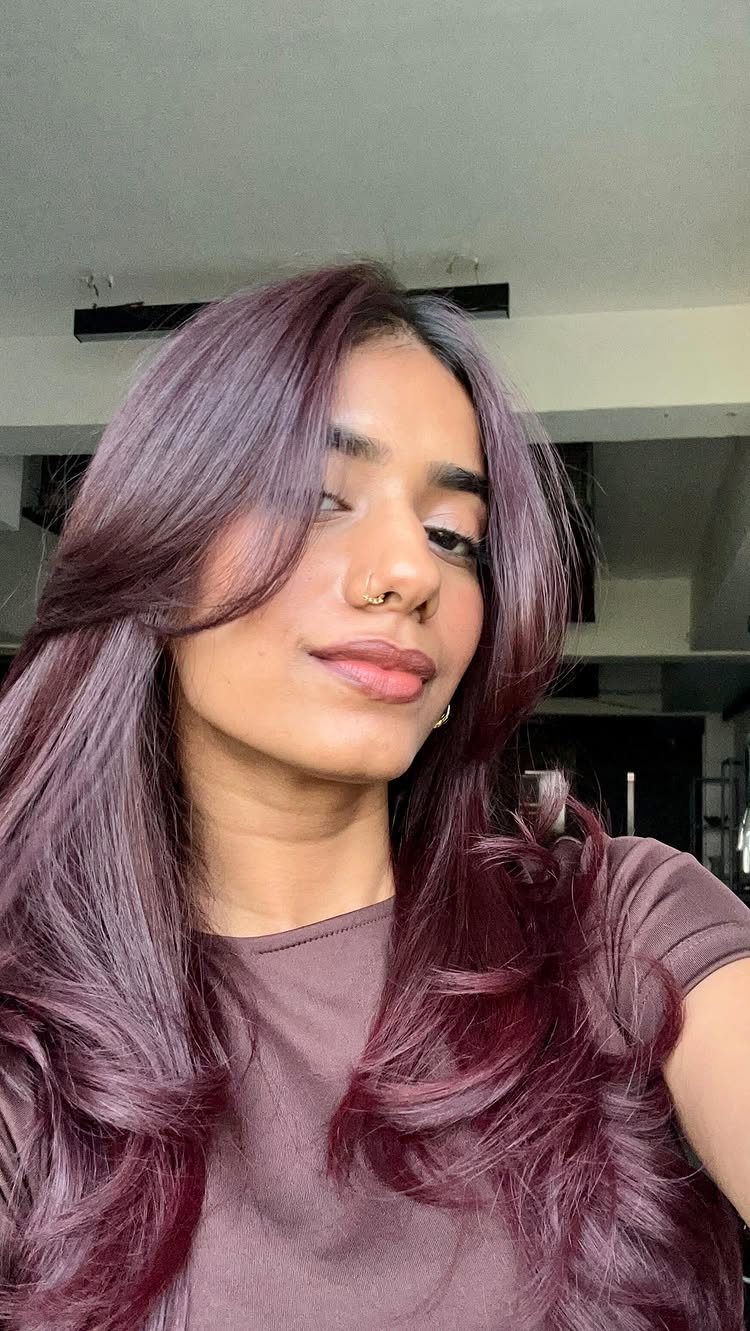
Burgundy on a brunette base leans warm and coppery in sunlight, then turns cooler indoors, so the same head of hair can look two ways in one day.
That shift is the appeal.
Mauve and brown clothing, as worn here, echo the color without matching it too closely. Tell your colorist whether you want the copper or the cool side to win, since the shade can tip either direction.
6. All-Over Maroon Waves
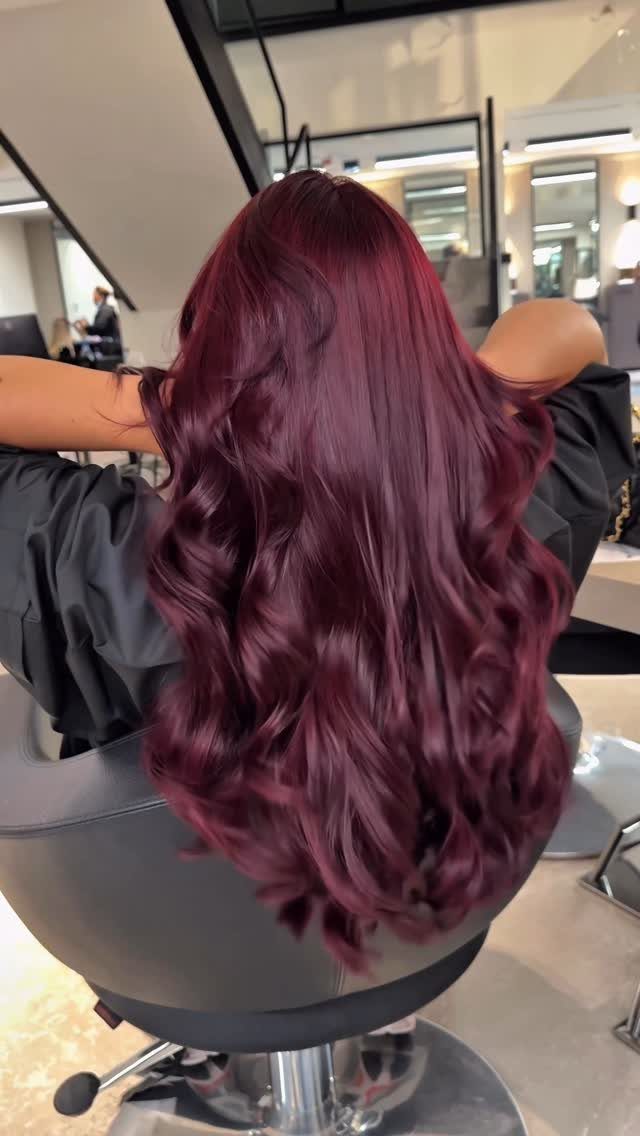
One uniform maroon from root to ends, worn in long, soft waves, is the lowest-fuss way to show off the color, because there are no highlights to place or blend.
Waves add volume, and volume gives a solid shade depth it would not have on straight hair. A rich all-over tone does look best when the hair is shiny, so ask for a gloss finish at the salon.
7. Maroon Hair with Blonde Streaks
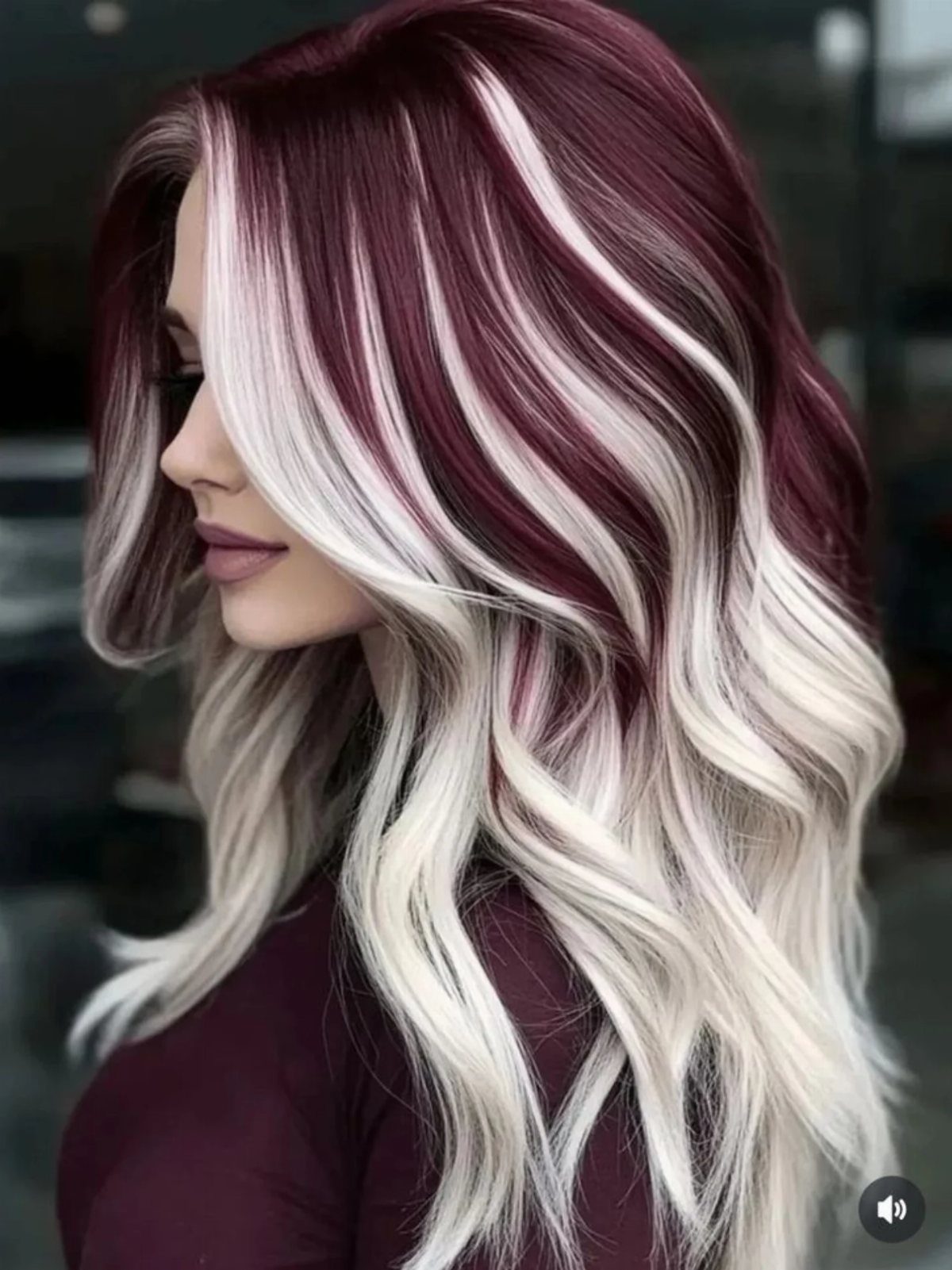
Bright platinum streaks against a deep maroon base make the sharpest contrast you can get with this color, and long waves give the blonde room to catch light in thin, separate pieces.
Blonde on dark red means lifting those sections first, so expect a longer salon visit and extra care afterward.
Ask for the streaks to be thin and placed near the front hairline and through the mid-lengths, not stacked at the crown.
I prefer this over a single flat shade if you like a little drama, and a maroon top like this one lets the base color lead while the blonde stays the accent.
Choosing the Right Shade
Start with your current hair color, because it decides how much work the shade will take.
Blonde, brunette, black and red bases each pull burgundy in a different direction, and a shade selector (the kind drugstore brands put on their sites) will match a burgundy to your starting point and complexion.
If you color at home, follow the directions on the box exactly.
On blonde hair, burgundy is a simple process because the hair does not need lightening first.
Still, treat it as a decision you’ve thought through. Red fades faster than any other shade, so I treat a maroon dye job as a routine of regular touch-ups.
Maintenance Tips
Red fades faster than almost any other color, so plan for upkeep before you book the appointment. Regular glossing keeps the shade rich, and touch-ups close the gap as it softens.
Think of maintenance as part of the price of the shade.
Deep, decadent burgundy lasts longer with a gloss and a touch-up visit on the calendar, rather than a rescue appointment once the color looks tired.
Skin Tone Compatibility
Burgundy flatters fair to medium complexions, and fair, cool skin is where it looks most natural.
It is not limited to those tones, though. A cranberry-leaning burgundy looks good on every skin tone, and it works in any season even if it skews a little autumnal.
Check your undertone before choosing: cool skin pairs easily with the violet-leaning shades, while warmer skin can carry the cranberry side.
To let the hair lead, wear nude makeup and neutral clothing. For more punch, add a bold berry lip.
Frequently Asked Questions
Which burgundy color is best?
The best one depends on your skin undertone and your starting hair color. Violet-leaning burgundy is the truest version and suits cool skin, while a cranberry-leaning shade flatters every skin tone and carries warmer skin well.
On a brunette base, burgundy can read coppery in sunlight and cooler indoors, so tell your colorist which side you want to win.
What colors should I mix to get burgundy?
I can’t give you a mixing formula, because nothing I have covers one. Burgundy only reads as burgundy when the red leans cool and a little violet; a brick or copper undertone pulls it toward auburn.
Box dye works if you pick the shade by your starting level and skin tone, and follow the timing on the directions to the minute.
Can maroon be a natural hair color?
Not really. Maroon is a dyed shade, and a deep red-wine tone like this usually comes from a tint over dark hair or a full color service.
Of all the shades, red washes out the quickest, so plan on a gloss every few weeks and a root touch-up to keep the depth.