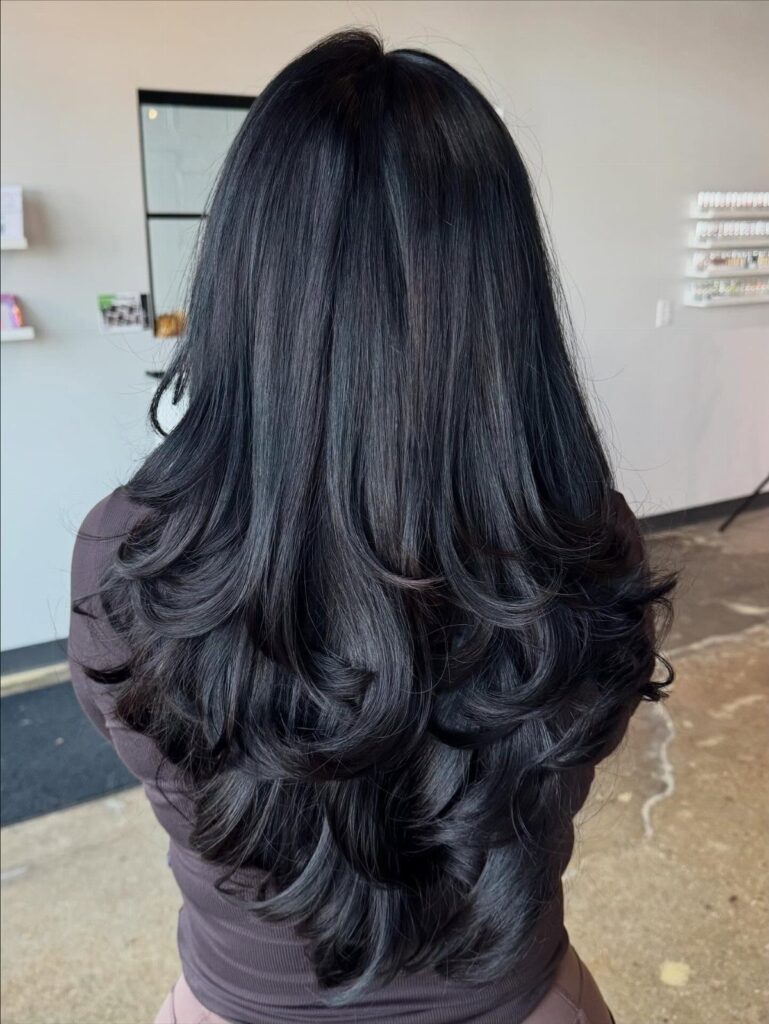
How much thick hair you want to style each morning decides which of these cuts is yours.
The cuts range from face-framing layers, where only the shortest pieces near your cheeks and jaw are cut, to heavy layers with bangs, which need a round brush or curling iron and real styling time.
For anyone who wants to keep length and do very little each morning, the lighter cuts are the better pick.
1. Face-Framing Layers
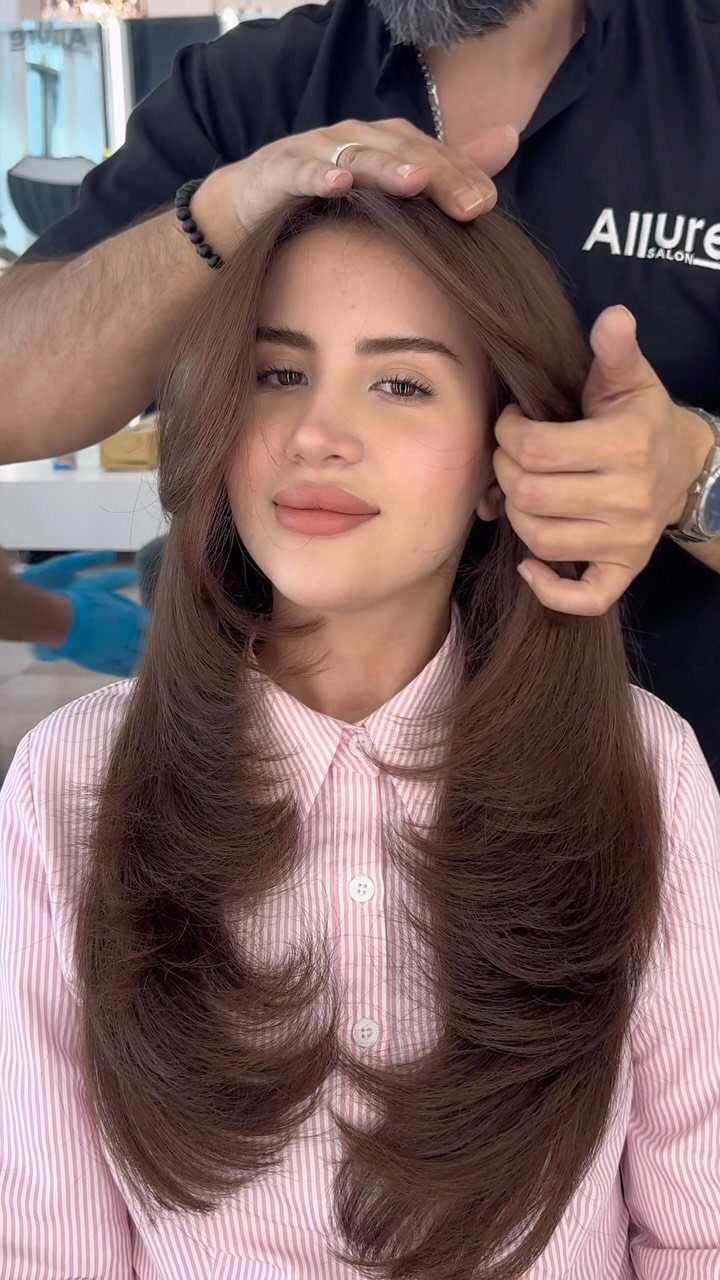
Face-framing layers are the lightest intervention you can make on thick hair. Only the shortest pieces, the ones that sit beside your cheeks and jaw, get cut shorter, so the back keeps its length and weight.
Ask for the shortest piece to start near the cheekbone or chin, so it falls forward instead of poking out.
On thick hair I prefer a blended, soft slope over a sharp step, since choppy front pieces tend to puff. Roll them away from your cheeks over a round brush with a few seconds of heat, and they curve outward.
2. Long Layers
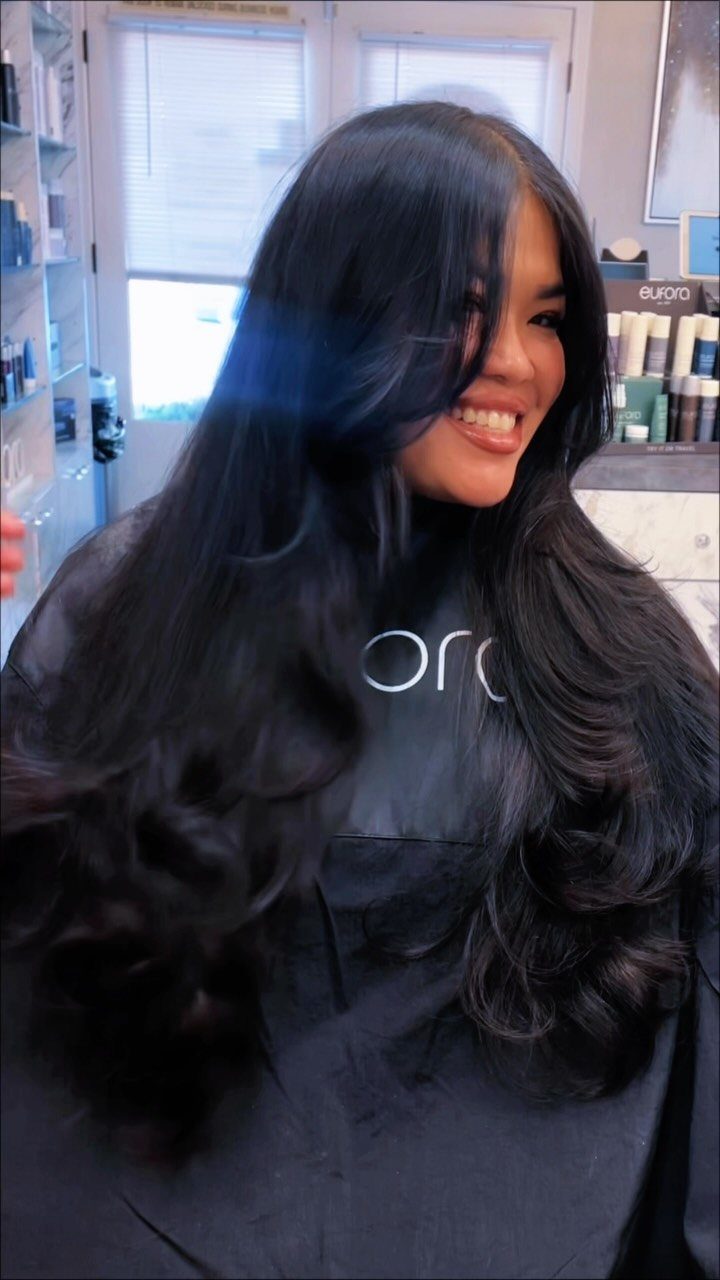
Length stays; the bulk goes. That is the appeal of long layers on thick, dark hair, where one blunt length can sit like a curtain and refuse to move.
Layers cut through the lengths let curls or waves separate instead of stacking into a triangle.
For the most movement, ask your stylist to start them below the chin. Keep the ends from looking thin by asking your stylist to remove weight inside the hair rather than trimming off inches.
Long layers are a great option if you want to keep your length. With this type of haircut, long layers are blended with your haircut’s length to create movement and add volume.
3. Butterfly Haircut
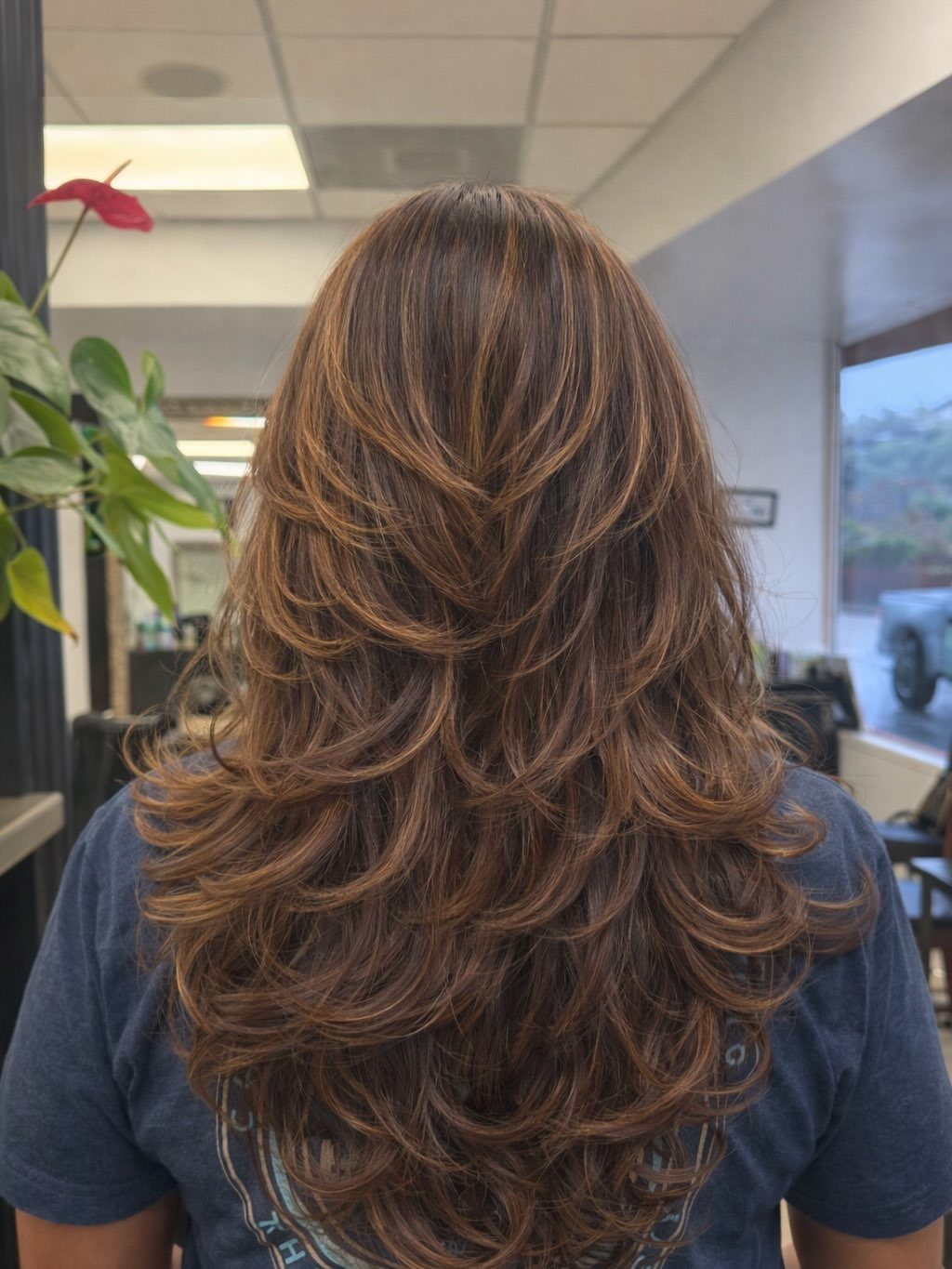
Short front layers over a longer back make the butterfly cut a two-level shape, and from behind it reads as soft, stacked tiers ending in curled tips.
Thick hair suits it because the shorter top tier gives lift at the crown while the longer layers underneath keep fullness.
A curling iron or large rollers at the ends hold the shape best. Expect more daily styling than with a single-length cut; air-dried, the tiers can look uneven.
4. Curtain Bangs with Long Layered Cut
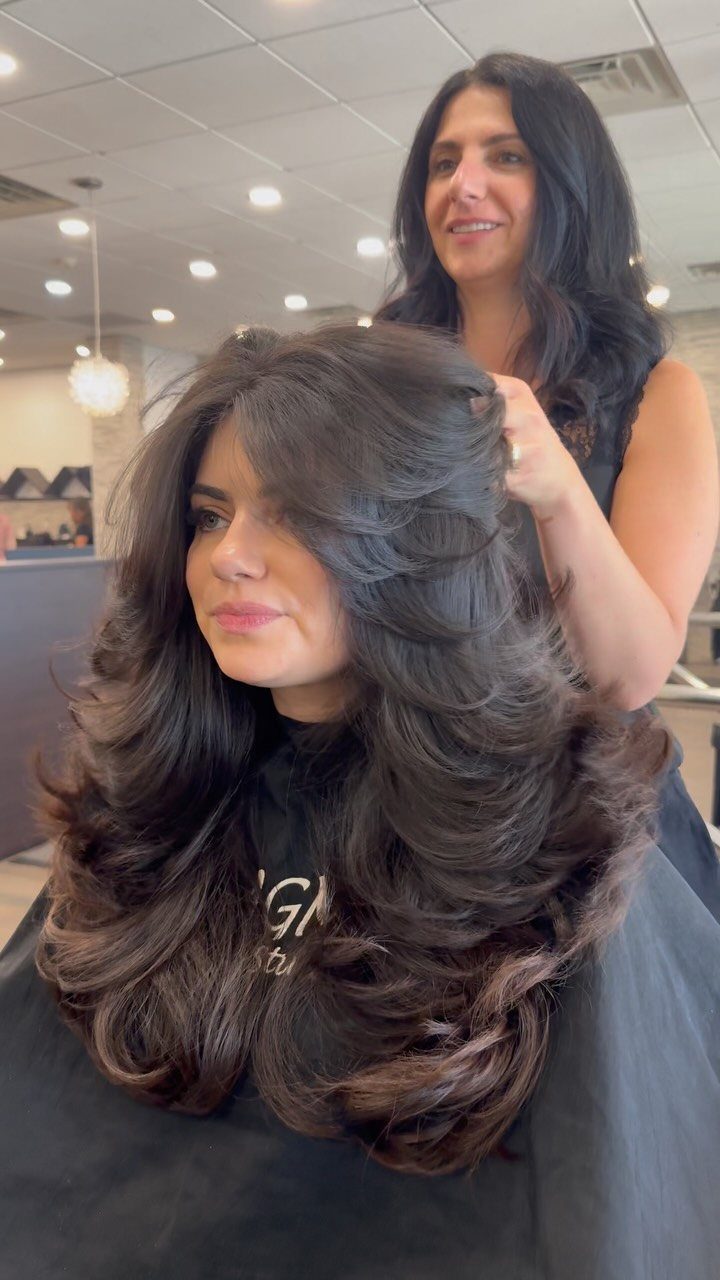
Curtain bangs parted down the middle sweep to each side and blend into the long layers, so there is no hard line across the forehead.
On thick hair, I would ask the stylist to cut curtain bangs a little longer than you think you need, since they tend to shorten once they dry and settle.
Dry each side over a round brush and sweep it outward, away from the part. Growing them out is easy, since they fold into the face-framing layers.
5. U-cut with Weight Removed at the Ends
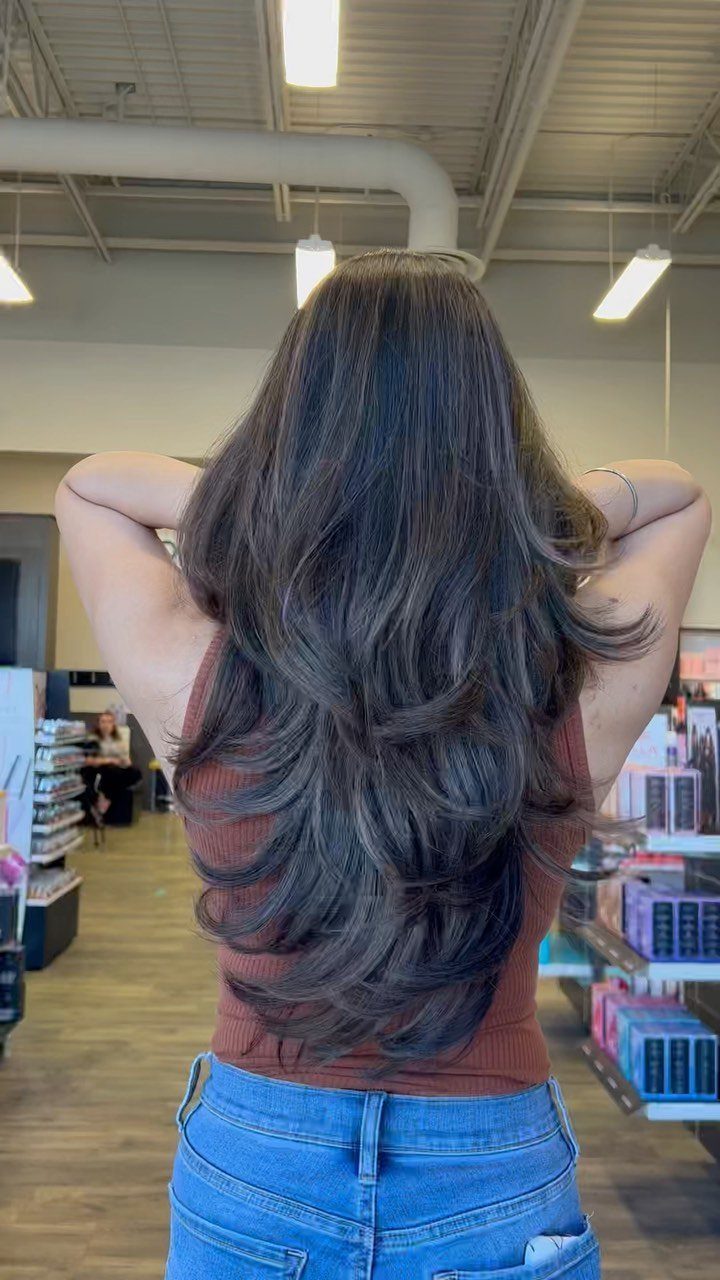
A U-cut curves the hemline into a rounded shape, with the longest hair at the center back and shorter pieces falling toward the sides.
Tapering the ends is what makes this work for thick hair: the bottom stops looking like a heavy block.
The stylist behind this example finished it with a smoothing cream and a nourishing oil, a sensible pair for hair that gets dry at the ends. Use a small amount, mostly on the lower half.
6. Long Butterfly Cut
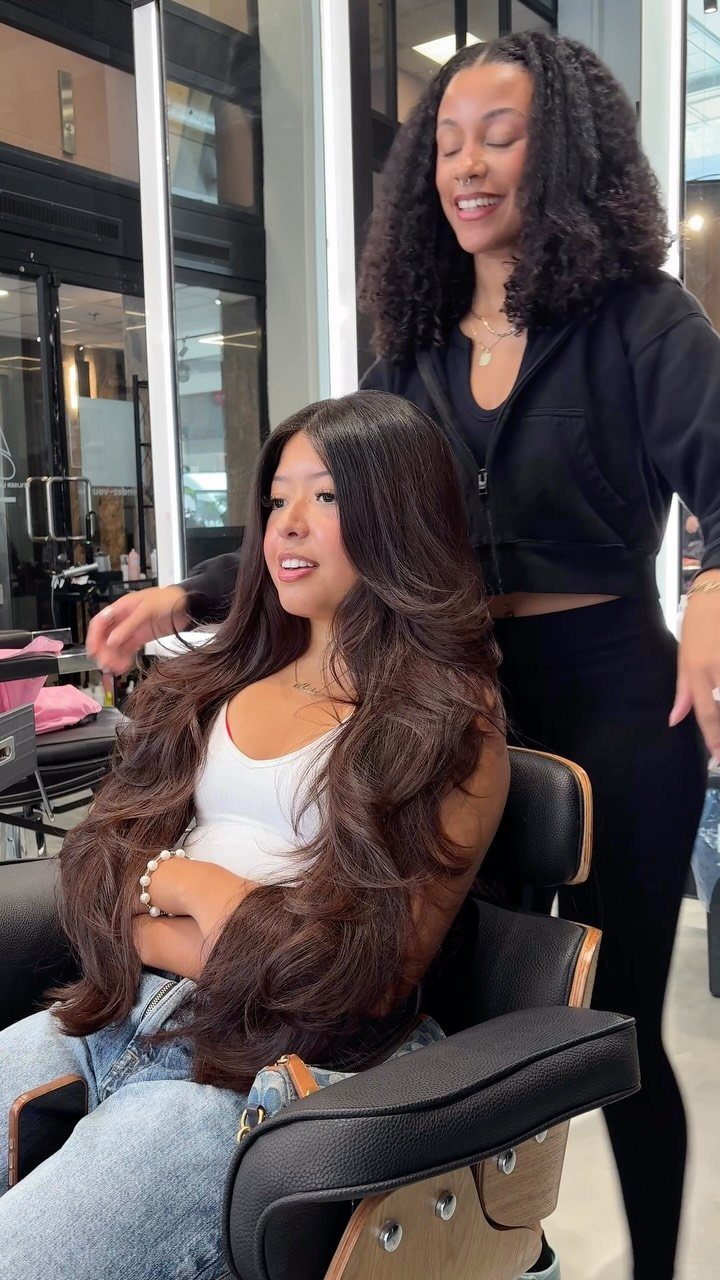
Volume without the short front pieces is what separates this version from the standard butterfly cut. Layers are cut around the crown and through the lengths, while the front stays long enough to tuck behind your ear.
On thick hair this cut works well when shorter pieces by your cheeks feel like too big a commitment.
Blow-dry with a round brush, and finish the ends with a loose curl for movement. It grows out more gracefully than a cut with a short front tier.
7. Layered Lob
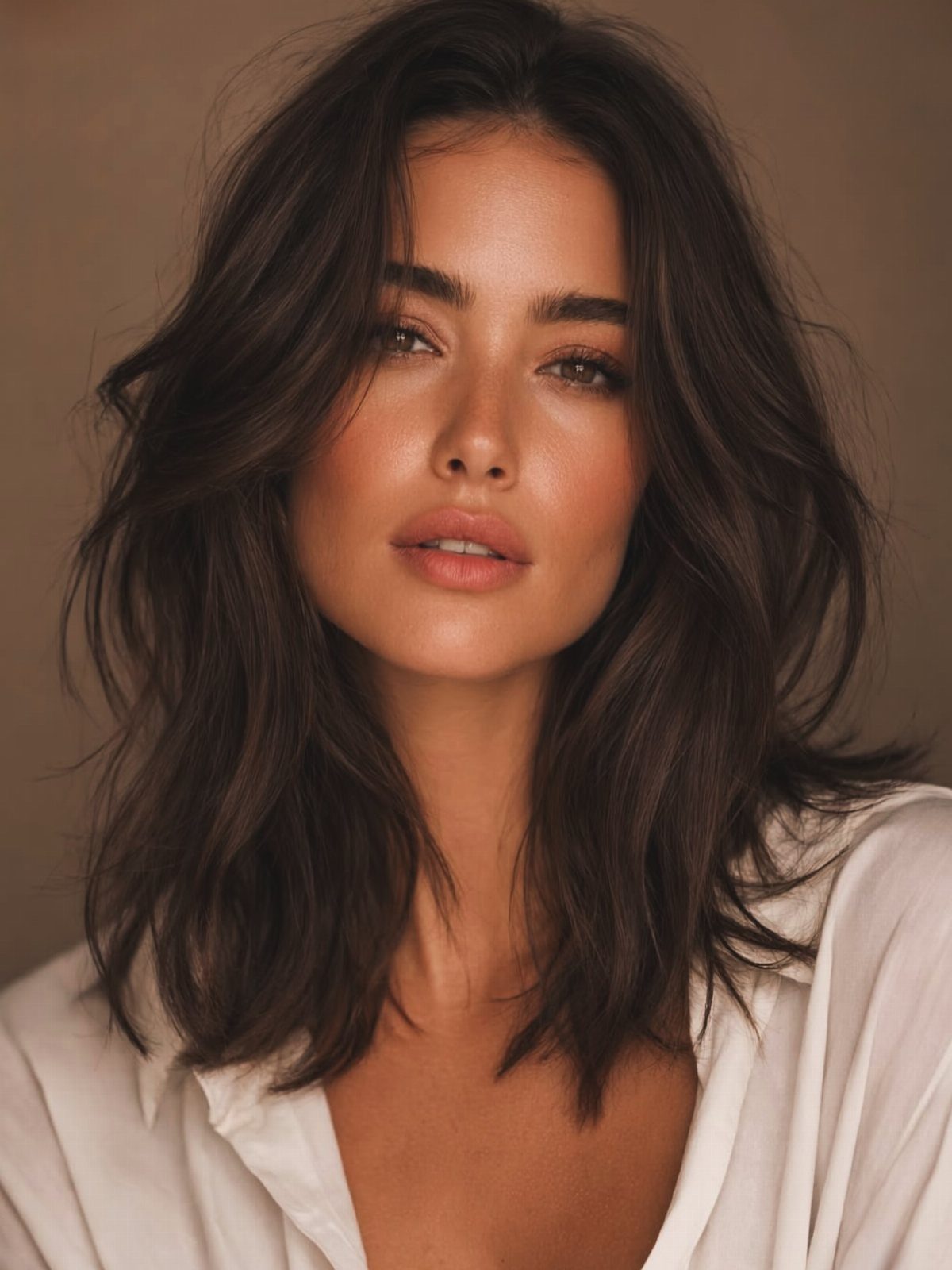
A lob with layers is the cut I would pick when thick hair feels too heavy at shoulder length but long layers feel like too much commitment.
The layers cut into the bulk, so the shape stays soft instead of flaring into a wedge.
Ask for layers that blend rather than step, and for the ends to be thinned from the inside.
Wavy hair like this one takes a loose bend from a curling iron or a few minutes with a diffuser. Expect to book a trim often, since a cut this short loses its shape quickly.
8. Heavy Layers with Bangs
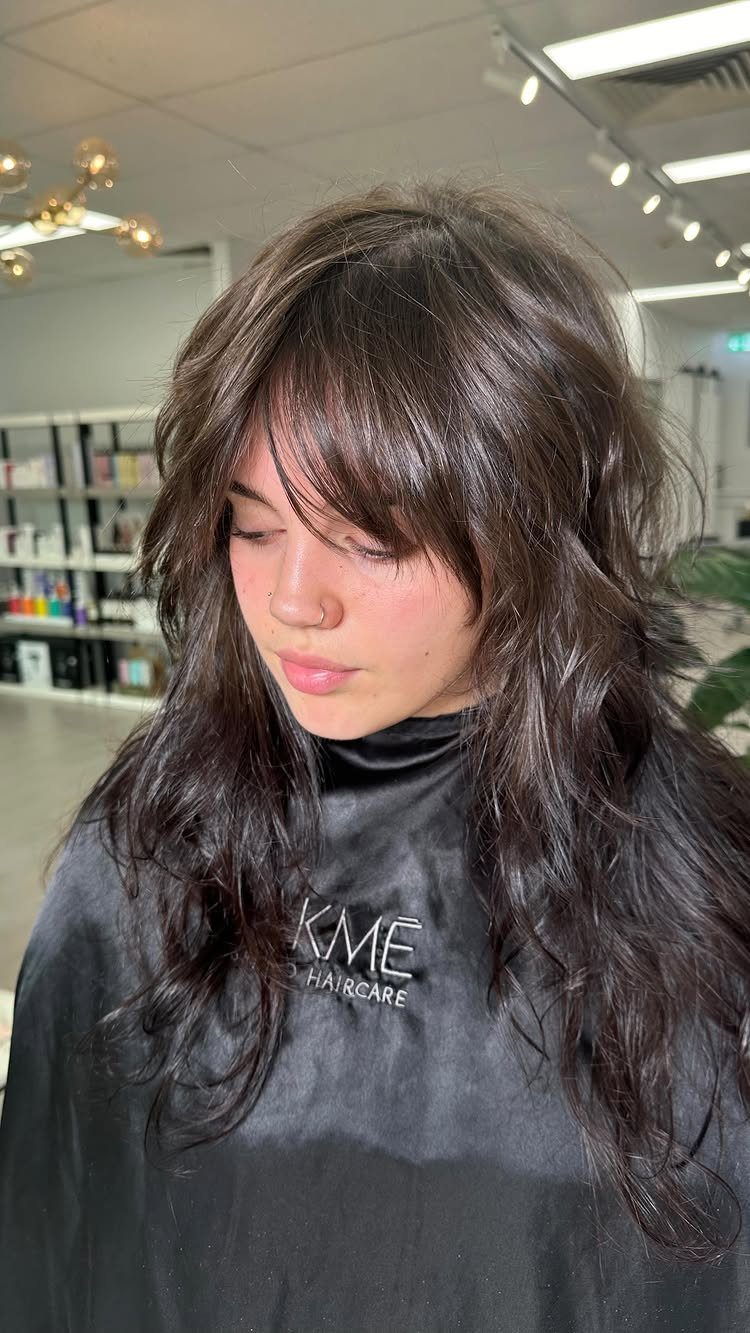
Full bangs on top of heavy layers put the drama at the face and the weight through the sides.
Heavy layers with bangs make a bold pairing for thick hair, and it suits someone who already enjoys styling and doesn’t mind a daily routine.
Ask for the bangs to be cut with the layers in mind, so they blend into the shortest pieces instead of sitting apart.
Thick hair makes bangs puff, so a round brush and a few seconds of heat are worth it every morning. The trade-off is upkeep: bangs need regular trims to stay in shape.
9. Inward-Curving Layers on Straight Hair
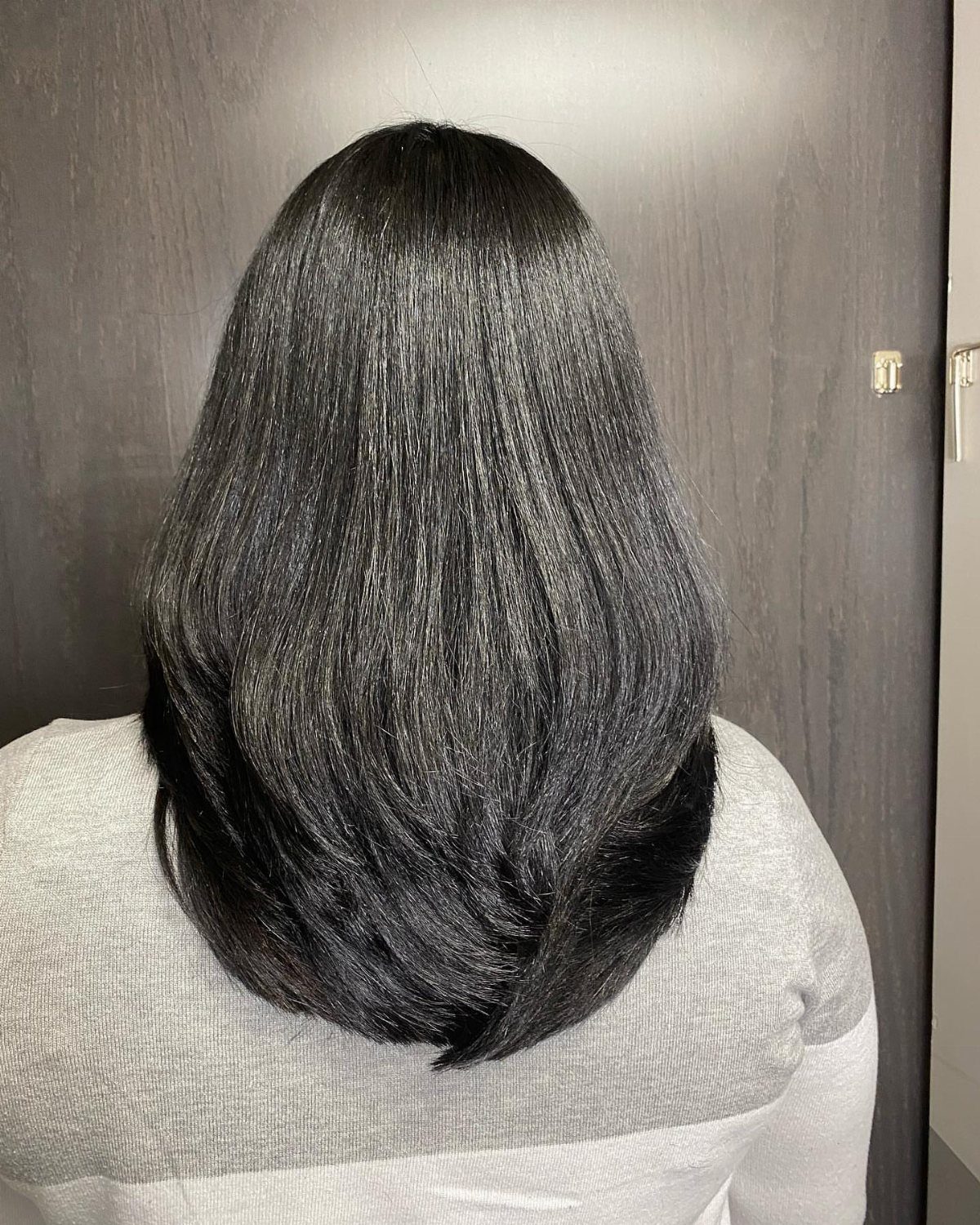
Inward-curving ends turn straight, thick hair into a rounded, polished shape, and the layers are what let the curve sit flat instead of bulging. On black hair the layer lines show clearly, which makes the cut worth getting right.
A flat iron, tipped inward at the bottom, can finish the curve. Straight hair shows uneven layers more than waves do, so choose a stylist who blends well.
10. Voluminous Cascading Layered Curls
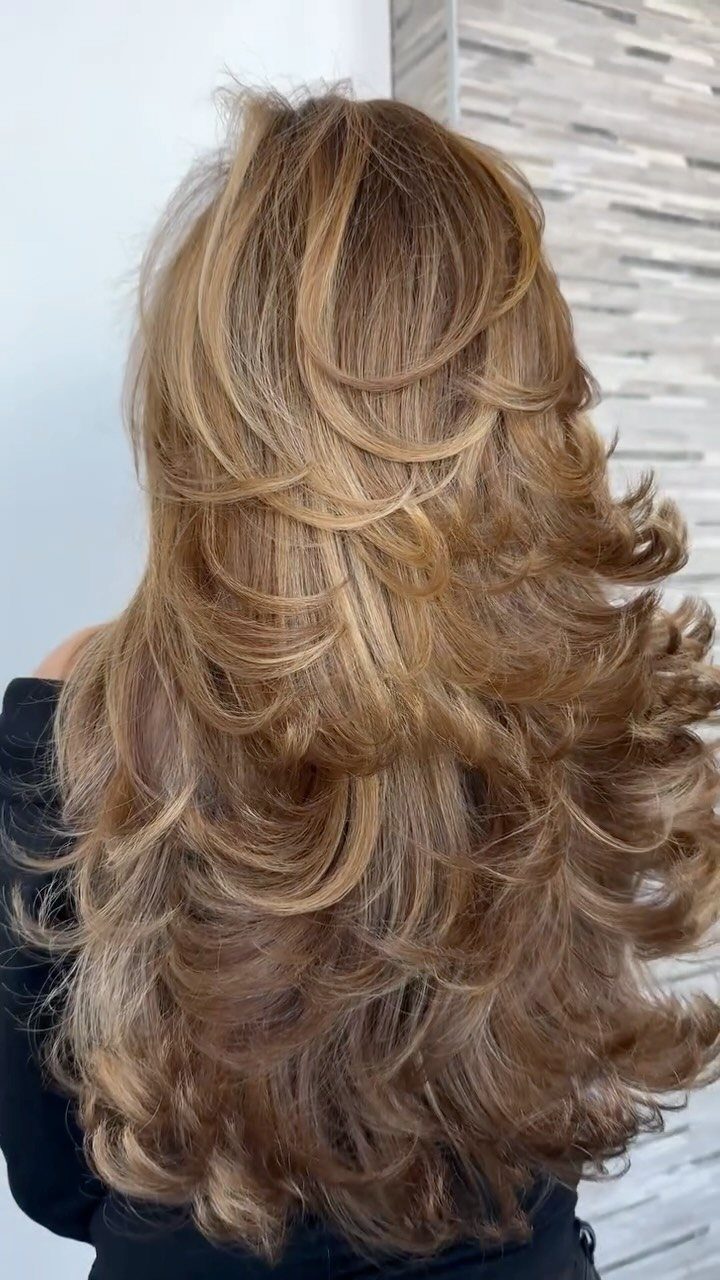
Cascading layers give thick hair room for curls to bounce rather than stack. The shorter layers lift at the top, and the longer ones fall in loose spirals below.
Ask for layers spaced through the lengths so each curl has space to form. Use a curling iron or rollers, and let the curls cool before you brush them out with your fingers.
I would skip heavy creams, since they weigh the curls down. This look takes real styling time, and humidity will loosen it.
Common Mistakes to Avoid
Layers cut too short at the crown are the first mistake I see, because they poke out and stand up instead of lying flat.
On thick hair, short crown pieces stick up and make a shelf, and they take months to grow out.
Choppy, unblended removal of bulk is the next one. Soft, blended layers look intentional; random pieces cut throughout look accidental.
Over-texturizing the ends leaves them frizzy and see-through. When the weight collects near the bottom, ask your stylist to thin it from underneath, not just chop the outer layers shorter.
A sensible target is taking out about 20–25% of the thickness at the mid-lengths and ends, which keeps movement without losing structure.
Watch the sides too. Too much width at that spot and the whole shape flares out into a triangle.
Used with a heavy hand on hair that is already thick, a razor can leave the same frizzy, uneven result, so ask your stylist which tool they plan to use and why.
Styling Tips for Thick Layered Hair
Skip the roots, where it adds weight and flattens volume.
Working in sections gives a sleeker, more finished blowout. Pull each section toward the back of your head with a round brush instead of straight down, and the layers fold into each other with visible movement.
Before you move on, make one last pass of the brush over each dry section with the airflow turned to cool. That seals the bend without disturbing the direction you just built.
If frizz is the problem, favor hydration and smooth drying technique over piling on product, since too much makes thick hair feel heavier.
How to Ask Your Stylist
Start with what bothers you about your hair.
Some clients want less bulk, some want more movement, and others want softer pieces framing their features. Each of those leads to a different cut, and your stylist can’t guess which one you mean.
Say your length plainly. Something like "I’d like to keep my hair long and add long layers" works, and so does "I’d like the bottom to be even all the way around."
Save a few reference photos and email or text them to yourself, so they are ready on your phone when you sit in the chair. A picture settles what words leave vague.
Frequently Asked Questions
Is layering good for thick hair?
For thick hair, layers rank near the top of what I’d recommend, because they take out bulk and give the shape room to move.
They cut out bulk and add movement while the hair keeps its fullness. Soft, blended layers read as planned, while choppy ones look like a mistake, so choose a stylist who knows how to blend.
What are the different types of layer cuts for long hair?
The main options are face-framing layers, long layers, the butterfly cut, the long butterfly cut, and cascading layers.
Face-framing layers shorten only the pieces beside your cheeks and jaw. Long layers run through the lengths, starting below the chin, so the bulk goes and the length stays.
What length is best for thick hair?
No single length wins, but long layers and a layered lob are the two I’d pick first. Long layers keep your length while removing weight.