Weight and tension decide which of these styles is yours: Faux Locs, Box Braids and Senegalese Twists pull harder at the root, while Flat Twists, Short Twists and the Pineapple Updo stay light on the scalp.
The range runs from a few minutes in a pineapple updo to extension installs that last 2 weeks or more.
With a sensitive scalp or fragile edges, start with something light like Flat Twists or a Pineapple Updo, and if you go for braids, ask for them snug, never tight.
1. Faux Locs
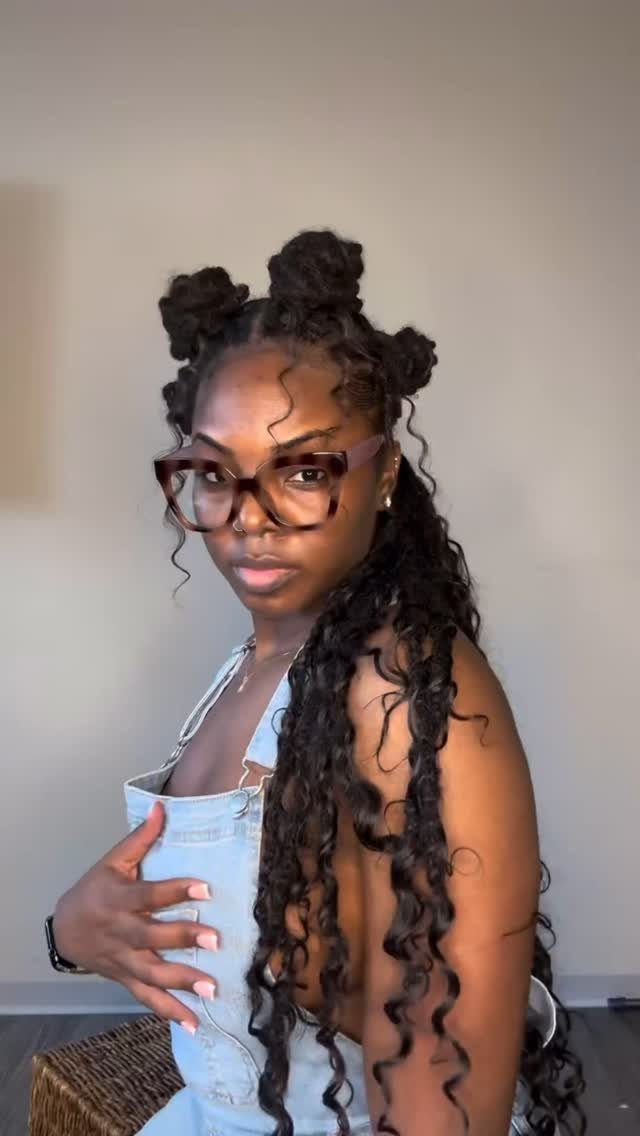
Faux locs read as locs without asking for a permanent decision, so they suit anyone who has been curious about the look but isn’t ready to commit.
The extension hair gets wrapped or braided around your own strands, which keeps your natural hair covered and protected until you take the style down.
Long, curly-ended locs like these are easy to pile into buns, so you can switch between up and down in minutes. Keep the buns loose at the base so the weight doesn’t pull on your edges.
2. Box Braids
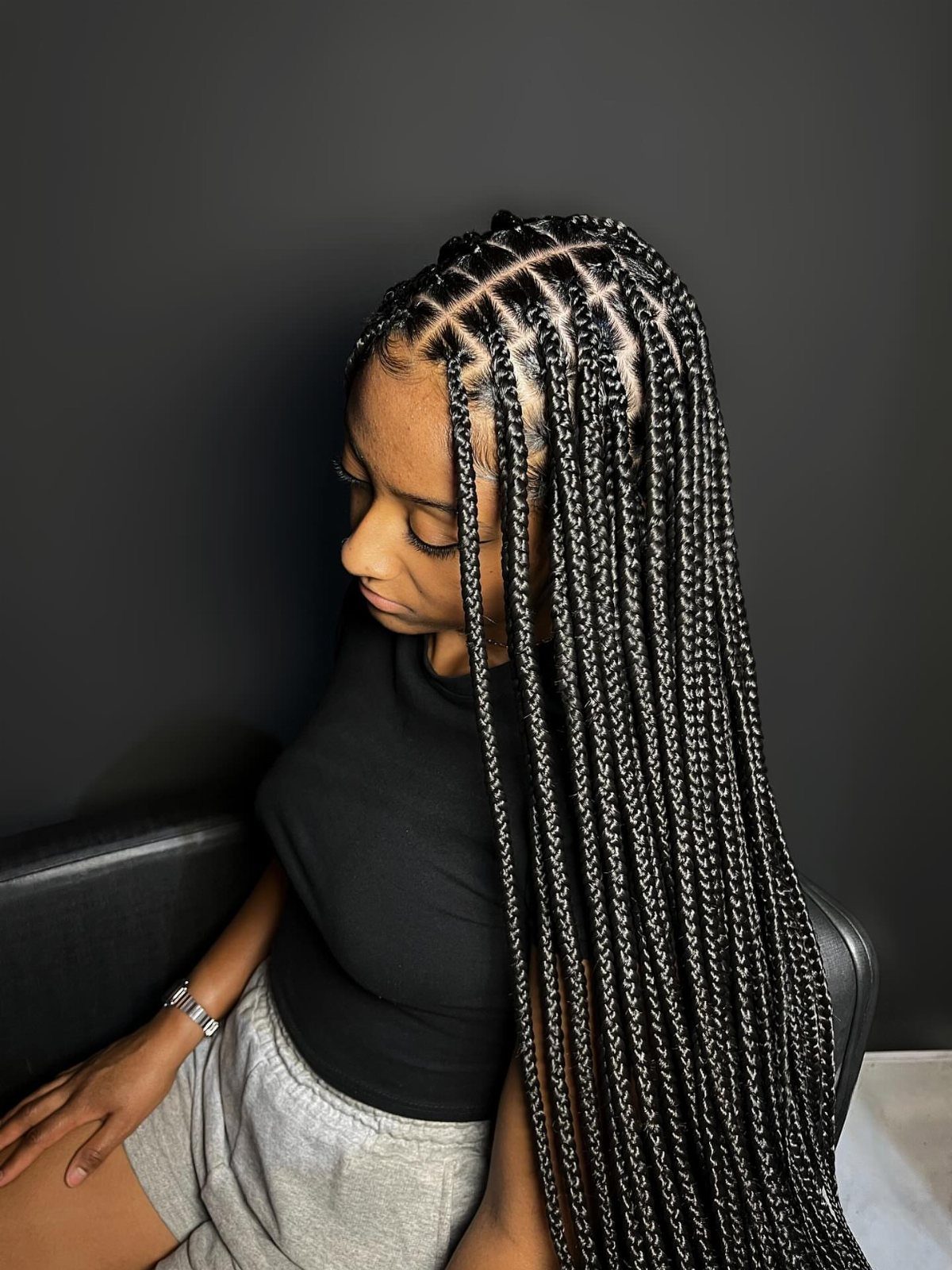
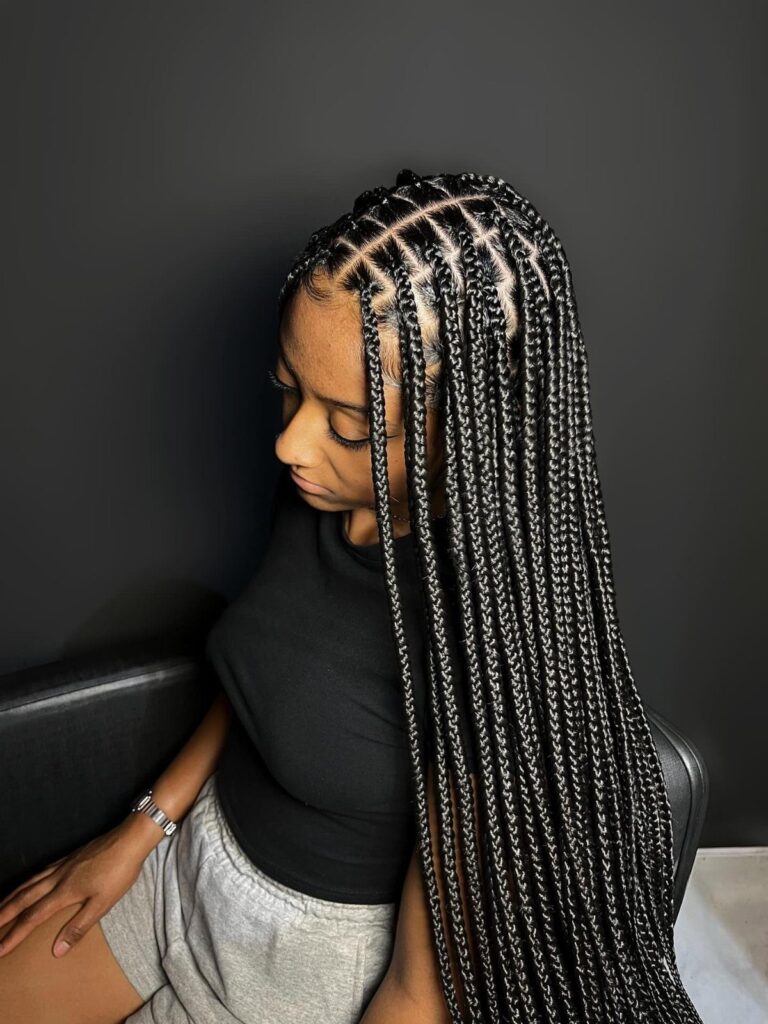
Length is the real decision with box braids. Long ones, like these, look dramatic and swing well, but they weigh more at the root, so a shorter cut is kinder to your scalp if you’re sensitive.
The classic square parting keeps the style tidy and easy to lift into a bun or ponytail. I’d pick black for a versatile look that goes with a plain tee and shorts or a dressier outfit alike.
3. Flat Twists
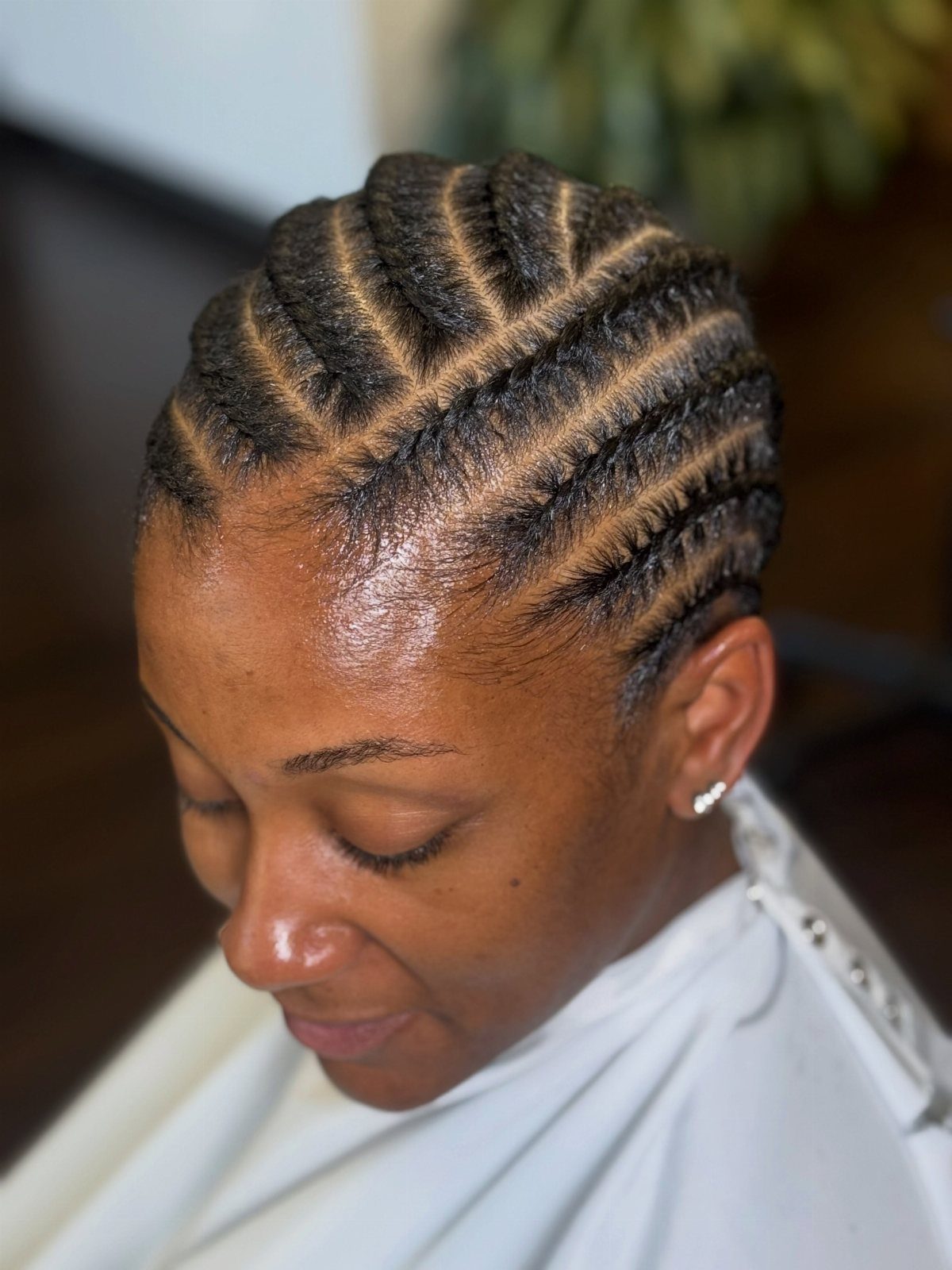
Flat twists look a lot like cornrows, but the technique is simpler: you twist two strands along the scalp instead of braiding three. For a neat, symmetrical scalp pattern with almost no learning curve, this is where I’d start.
They suit short appointments or a DIY afternoon. Because the pattern sits close to the head, a satin scarf at night keeps the lines crisp.
4. Cornrows
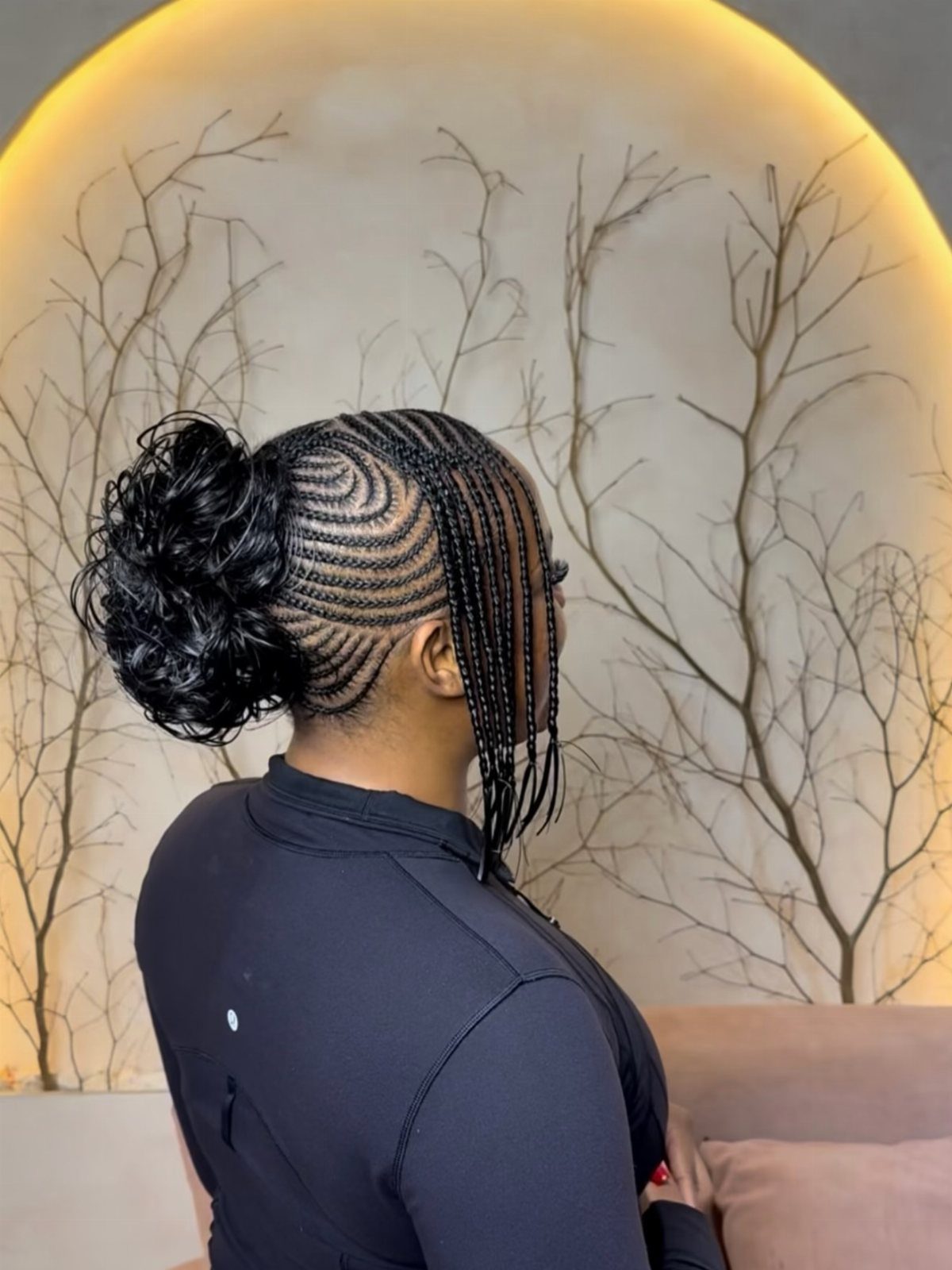
Cornrows work on every hair type and length, and that range is the reason they’ve lasted. Curved parts can sweep up into a curly bun or go almost any direction, so the pattern is easy to make your own.
Straight-back rows are the simplest option.
Curves look dressier, so pick them for an evening out. Leaving a few braids hanging adds movement without extra effort.
5. Senegalese Twists
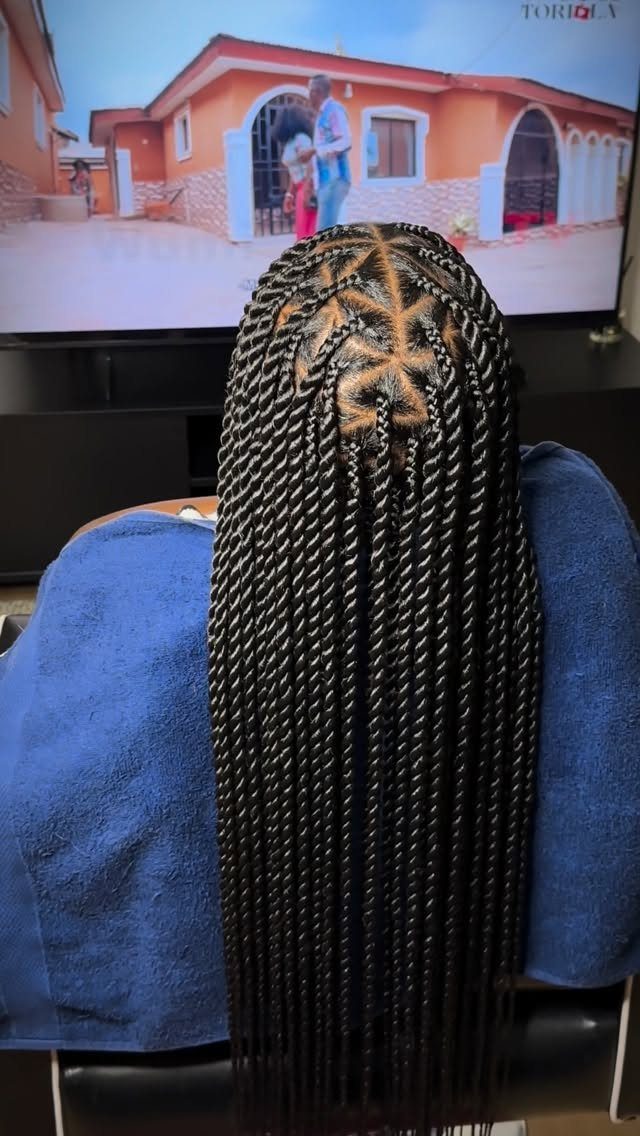
Senegalese twists are rope-like, smooth and sleek, with a polished look that fits office days as easily as weekends.
The geometric parting in this back view is worth asking your stylist about, since clean sections make the whole style look intentional.
Black is the safest color for a classic finish. Long twists get heavy, so pull them into a loose ponytail when they start to tug.
6. Halo Braid
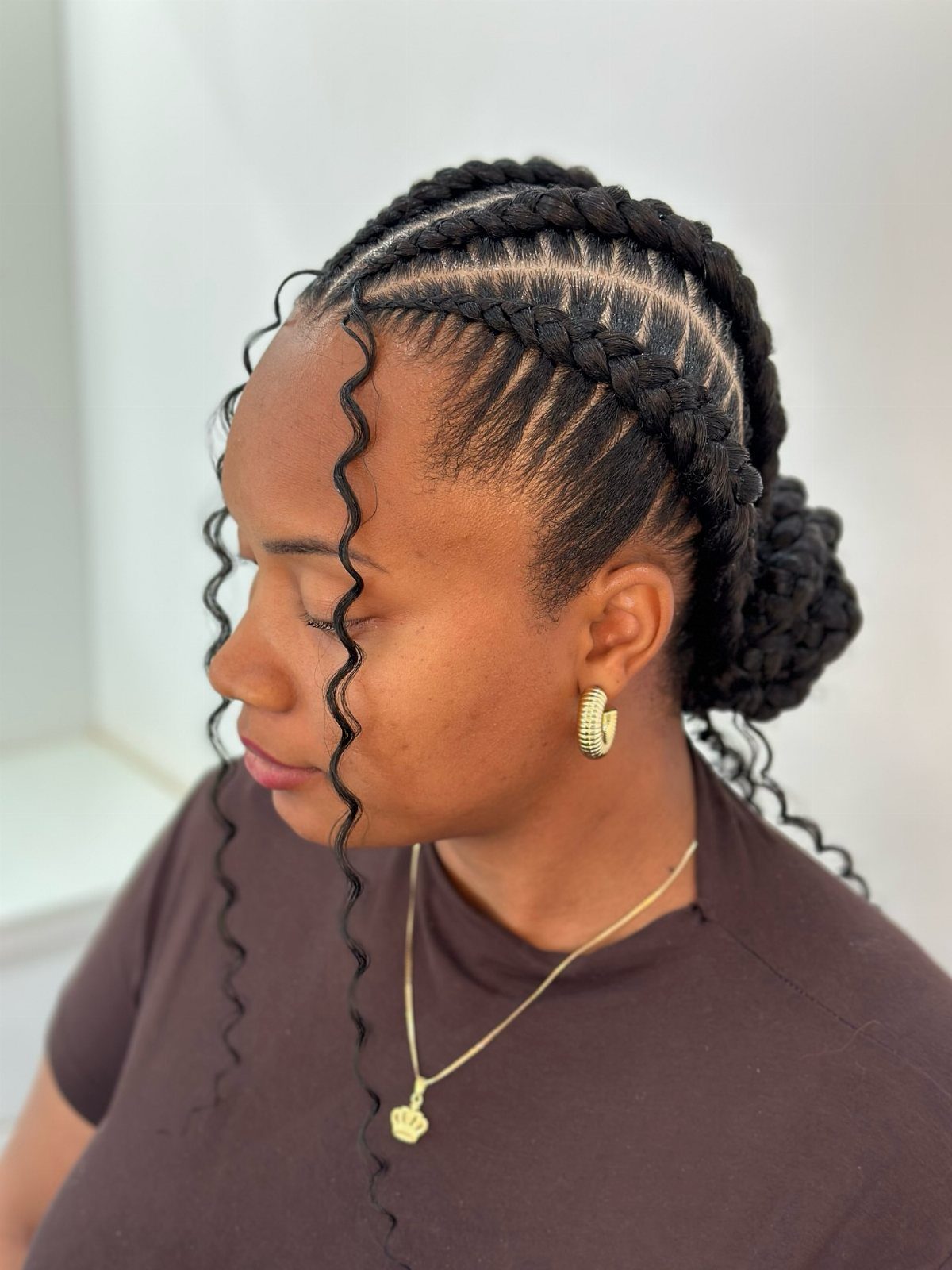
A halo braid wraps around the head like a crown, which frames the face better than almost any other braided style. Here the cornrows lead into a back bun, a tidy finish that keeps everything off the neck.
I’d pair it with gold hoops, since the pulled-back hair puts your earrings front and center. Ask for the braids to be snug but not tight along the hairline.
7. Pineapple Updo
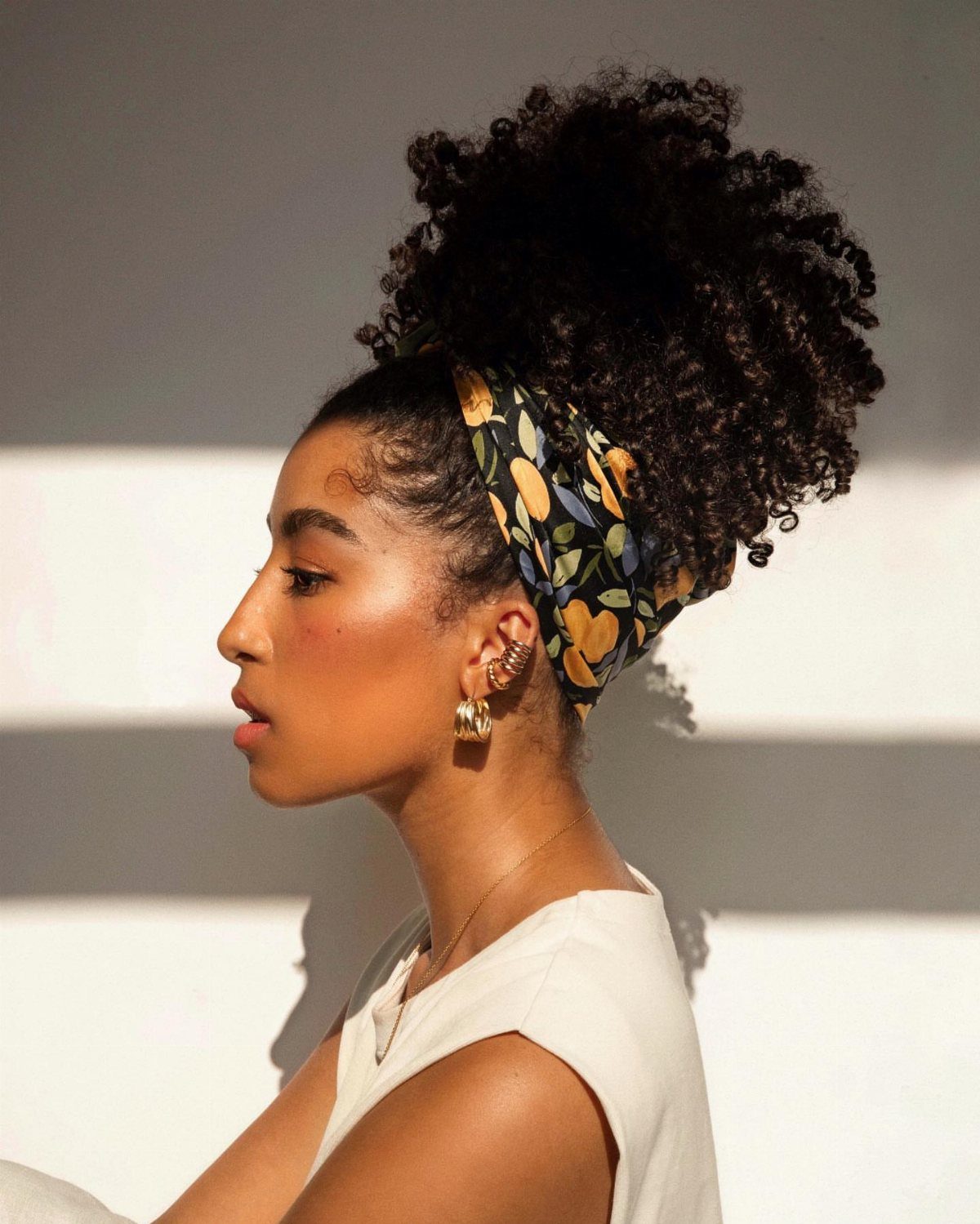
Gathering curls into a high pineapple keeps them off your neck and shoulders, so they aren’t rubbing against collars and sweaters all day. A scarf like this floral one adds color and a little extra cover around the base.
Keep the hold loose. A tight elastic pulls at the hairline, and the point of this style is to protect your curls, not strain them.
A pineapple updo takes only a few minutes, so it’s the easiest style here for a busy morning.
8. Curly Weave
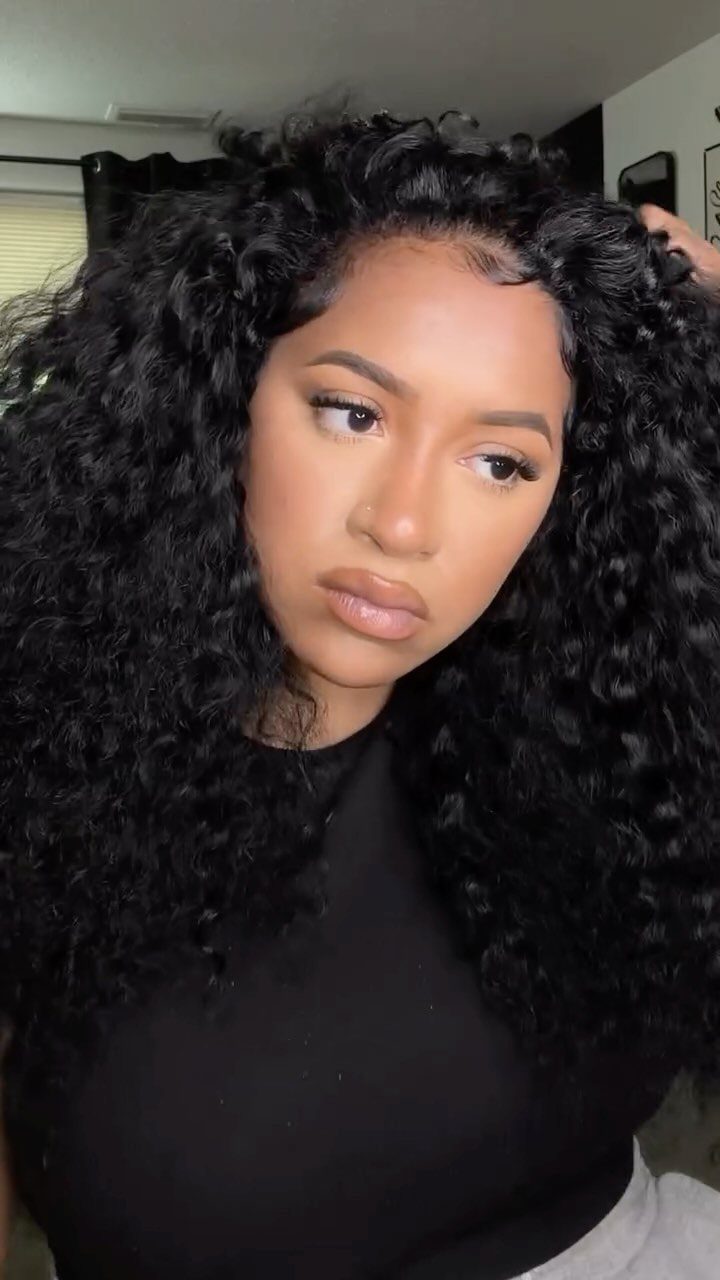
A curly weave lets your natural hair stay tucked underneath while the curls on top do the work. You get volume and length with no daily styling of your own strands.
Long, full curls like these look best with a plain top, so the hair stays the focus.
Choose a curl pattern you’d actually enjoy wearing for weeks, since you’ll be living with it. Hands off is the rule: the less you pull and restyle, the more protection your hair gets.
9. Short Twists
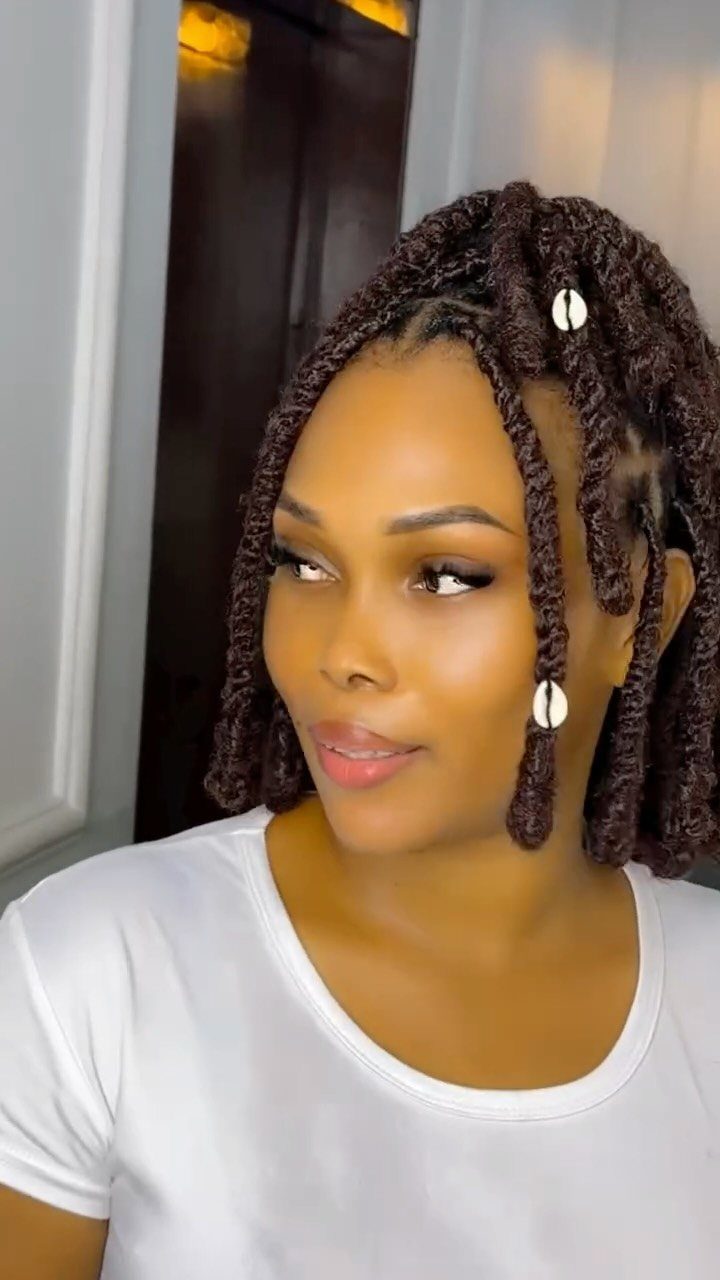
Short twists are the petite option here: easy to wear, light on the scalp, and quick to live with. With little length to manage, they suit anyone who wants protection without a long hanging style.
Small white cowrie shells clipped onto a few twists add detail with no extra styling.
Brown reads soft and natural against a white tee. I’d add shells only at a few twist ends so the style stays easy to wear.
10. Fulani Braids
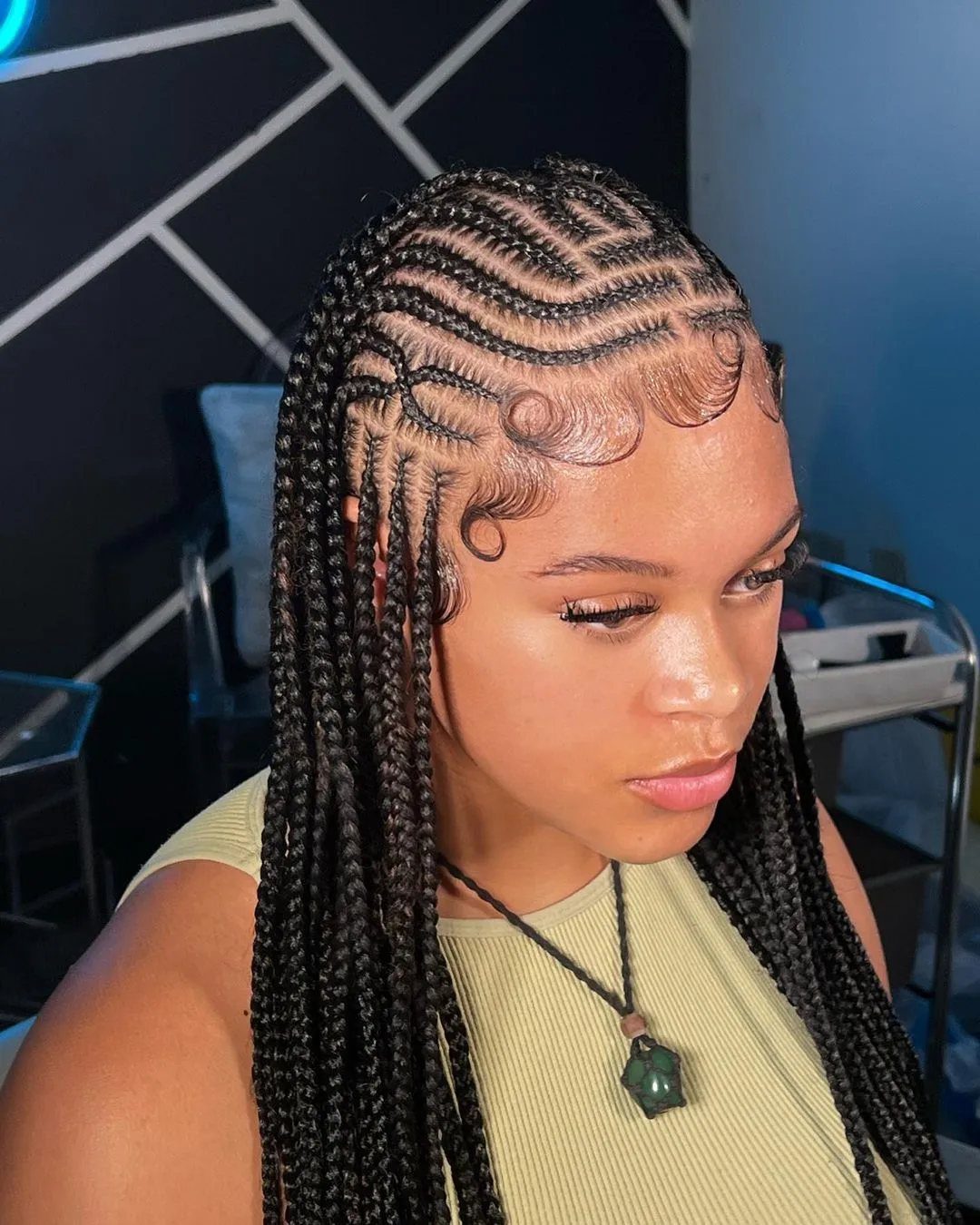
Fulani braids pair cornrows with long hanging braids, and the center cornrow running down the head is what gives the style its identity. Styled edges, like these, sharpen the whole look.
Decide on the cornrow pattern before the appointment starts and bring a clear reference, since the parting is the design. I’d keep jewelry simple: a necklace, as here, lets the braids stay the star.
11. Marley Twists
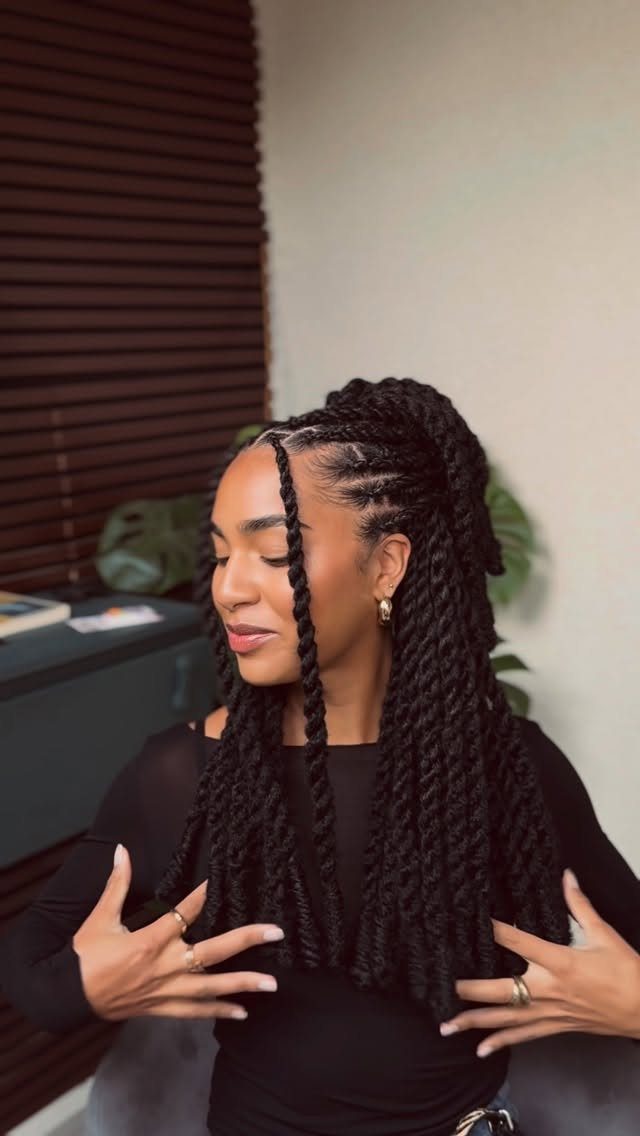
Marley twists use extension hair, much like box braids do, so the twists come out fuller than your own strands could make them. The texture is soft and slightly rough, and I like it for a relaxed, natural finish.
Black, as seen here, works with nearly everything, including a plain long-sleeved shirt. Long twists get heavy, so tie them back loosely when your scalp feels any pull.
12. Rubber Band Low Ponytail
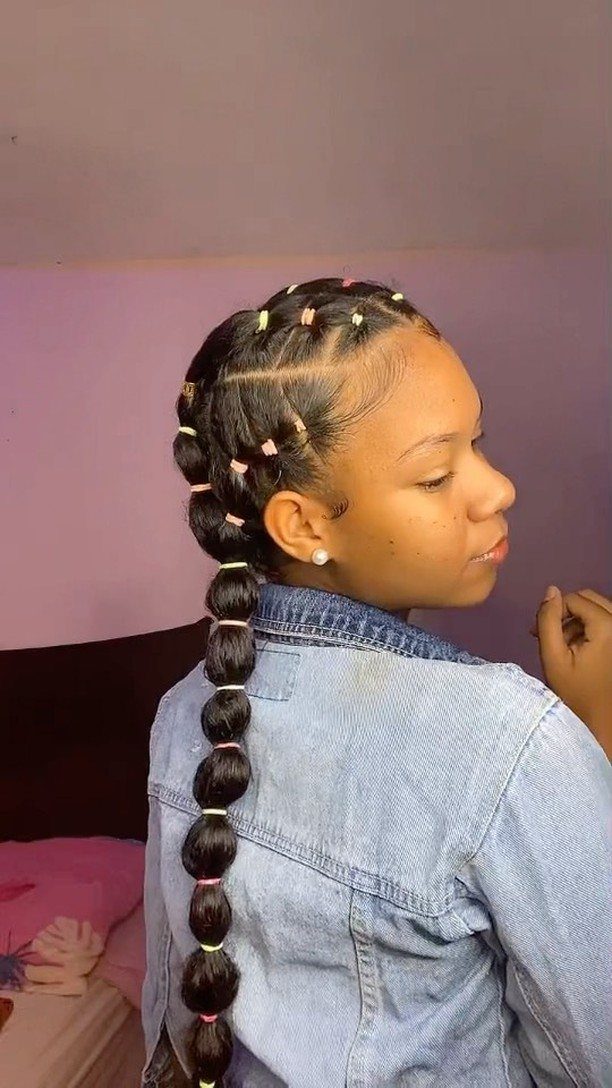
A low ponytail wrapped with colorful rubber bands is a good fit for short hair, because the bands hold sections in place without needing much length. The bubble effect comes from spacing the bands along the tail.
Pick soft bands made for hair, not office ones, so they don’t snag. A plain denim jacket works well here, because the bands should supply the color.
13. Passion Twists
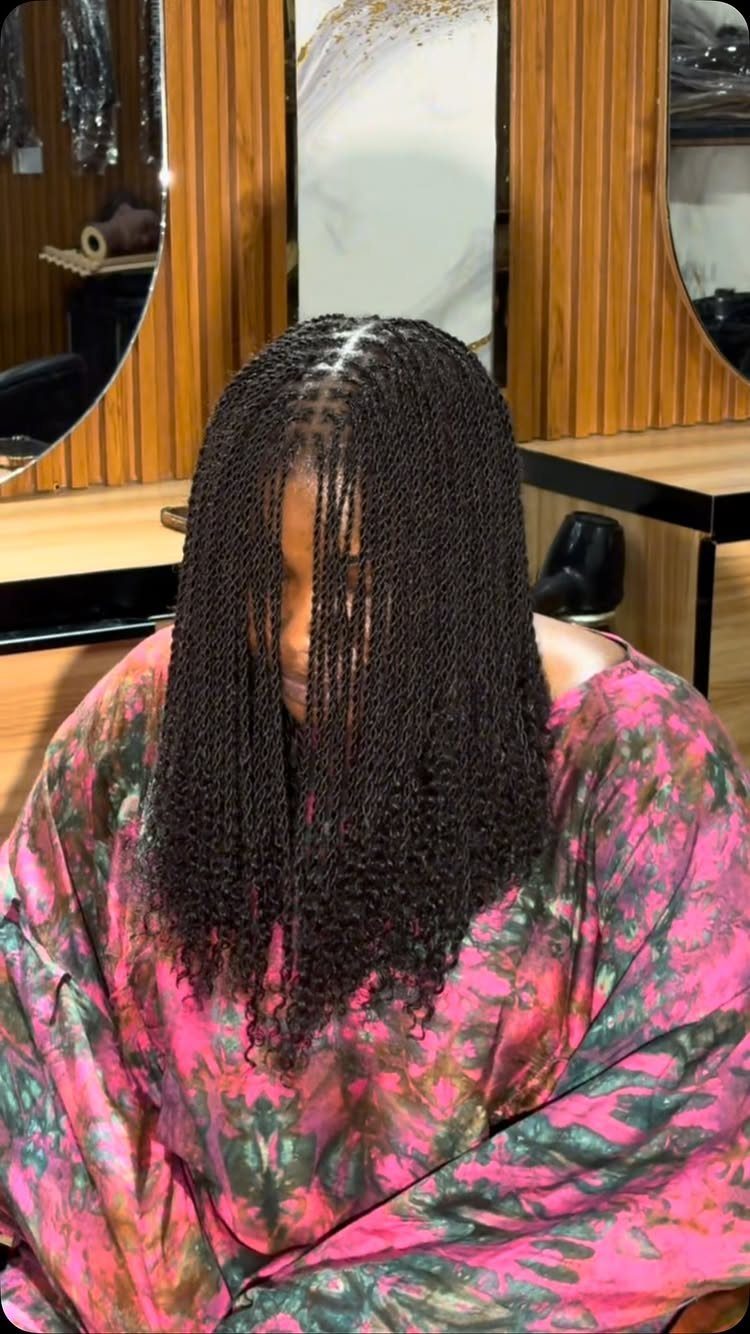
Passion twists sit between locs and twists: the soft, bohemian curl at the ends gives them a lived-in look that a smooth twist doesn’t have.
Long ones like these frame the face and can fall over one cheek, so the style reads relaxed rather than polished.
Because the twists hang loose, I’d tie them back at the nape when they start to pull on your scalp. Bright or patterned tops, like tie-dye, stand out well against the dark length of passion twists.
14. Goddess Braids
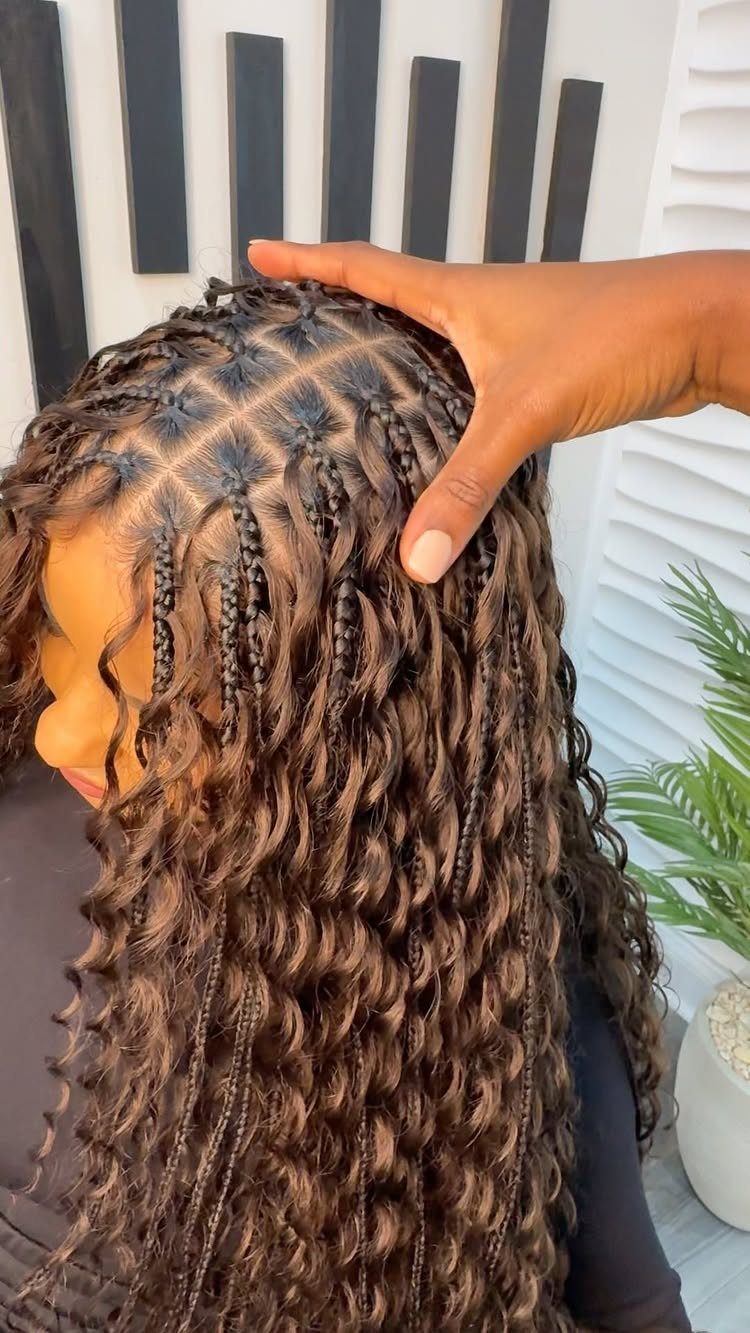
Thicker braids with curly strands left loose at the ends give goddess braids a softer finish than a flat, tight pattern.
Because the scalp lines stay the focus up top, clean parts matter more than anything else, so request them first when you book.
Brown, as seen here, looks warm and natural against most skin tones.
I’d keep the curly ends untouched, since the contrast between the braid and the curl is the whole look. Wear them with simple jewelry and a plain top.
Benefits of Protective Styles
Protective styles keep your ends tucked away, which cuts down on the tugging, pulling and heat that cause breakage.
Natural hair tends to run dry because scalp oils don’t travel far down the strand, so tucking the ends in helps hair hold moisture longer.
Hair that stays tucked away breaks less, so length retention is the biggest gain I see from protective styles. Hair that isn’t handled daily keeps more of what it grows, and over time that shows.
Weather matters too. Harsh winter wind and summer sun both dry out your strands, and a style that keeps your ends covered helps in either season.
Edges benefit as well, as long as the install is gentle. And since many styles last 2 weeks or more, you spend far less time styling on busy mornings.
"Whether it’s braids, twists, buns, or wigs, protective styles give your natural hair the breather it needs to grow and thrive."
How to Prep for Protective Styles
Start with a trim.
Getting rid of split ends before the install matters because damage travels up the shaft, and trimmed hair is also easier to detangle. A trim about every 3 months is a good habit even if your ends look fine.
Next, wash thoroughly. Hair should be clean, conditioned and moisturized before it gets tucked away, since you won’t have easy access to it for weeks.
Then deep condition on the same wash day. A strong, well-fed strand handles the weeks ahead better.
Finish by detangling fully while the conditioner is still in. Knots left behind get tighter under braids or twists.
Maintaining Protective Styles
Tension is the first thing to check. If a braid or twist pulls at your scalp or hairline while it’s being installed, say so right then, because ongoing tension can cause thinning and even traction alopecia.
Pillowcase friction roughs up strands and causes frizz.
Keep washing, too.
Product residue from gels and edge tamers collects on your scalp, so keep washing it on schedule even when your hair stays braided. Starting wash day with a clarifying treatment helps clear that residue.
Finally, take breaks between styles so your hair gets time to rest.
Frequently Asked Questions
What is a protective hairstyle?
A protective style keeps your ends out of sight and limits how often you comb, brush or restyle, so each strand deals with less pulling, rubbing and weather.
Ends are the oldest, driest stretch of each strand and snap first, so keeping them tucked away is what cuts breakage. Braids, twists, locs, sew-in weaves and updos pinned close all count.
What is the most protective hairstyle for natural hair?
Styles that cover your ends and need almost no daily handling protect best: box braids, faux locs and a curly weave are strong examples.
Less pulling and restyling means more protection, so the best pick is the one you can leave alone.
What is the least damaging hairstyle?
Loose, low-tension styles do the least harm: a pineapple updo with a gentle hold, or short twists, which are light on the scalp. Tension that never lets up can thin the hairline and, over time, lead to traction alopecia.
How long should I wear a protective style?
Aim for about 4 to 8 weeks, depending on the style, and most people do well near 6.
Past 2 months, hair can dry out and scalp tension builds. Give your hair 1–2 weeks off between styles, long enough to cleanse it well and follow with a deep conditioner.
Can I wash my hair during a protective style?
Yes, and you should keep washing on schedule. Dilute a sulfate-free shampoo, apply it to the scalp, rinse from the scalp outward and dry completely to prevent mildew.