How much fabric you want to manage on the day should guide the choice: an A-line lets you dance and take stairs with ease, while the Lavish Beaded Ballgown with Veil is something you feel in your shoulders and hips by evening.
Whatever you pick, the wedding shoes and exact undergarments belong at the fitting, because heel height changes where the hem falls.
1. In-store Try-on Appointments
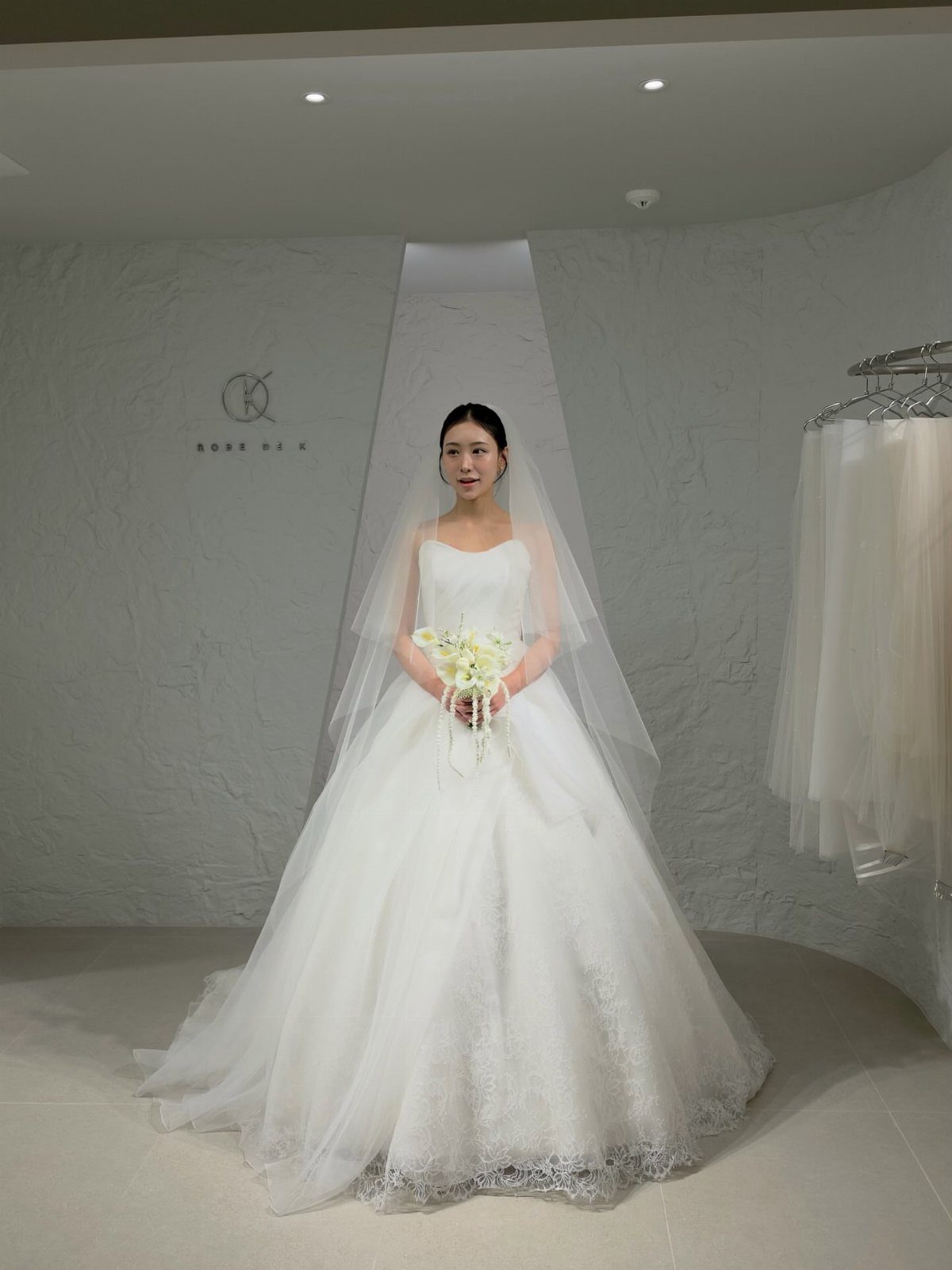
A fitting appointment lets you judge a dress the way it will actually be worn: with a veil on, standing up, in front of a full-length mirror.
Strapless styles especially need this, since only a try-on shows whether the bodice stays put when you move.
Book more than one boutique if you can, and wear a strapless bra and the shoes you expect to marry in. A dress that looks fine on a hanger can sit very differently once someone clips it to your shape.
Bring someone whose opinion you trust, not a crowd. Online shopping is easy, but a wedding dress is the one purchase I would want to see on my body first.
2. A-line Wedding Dresses
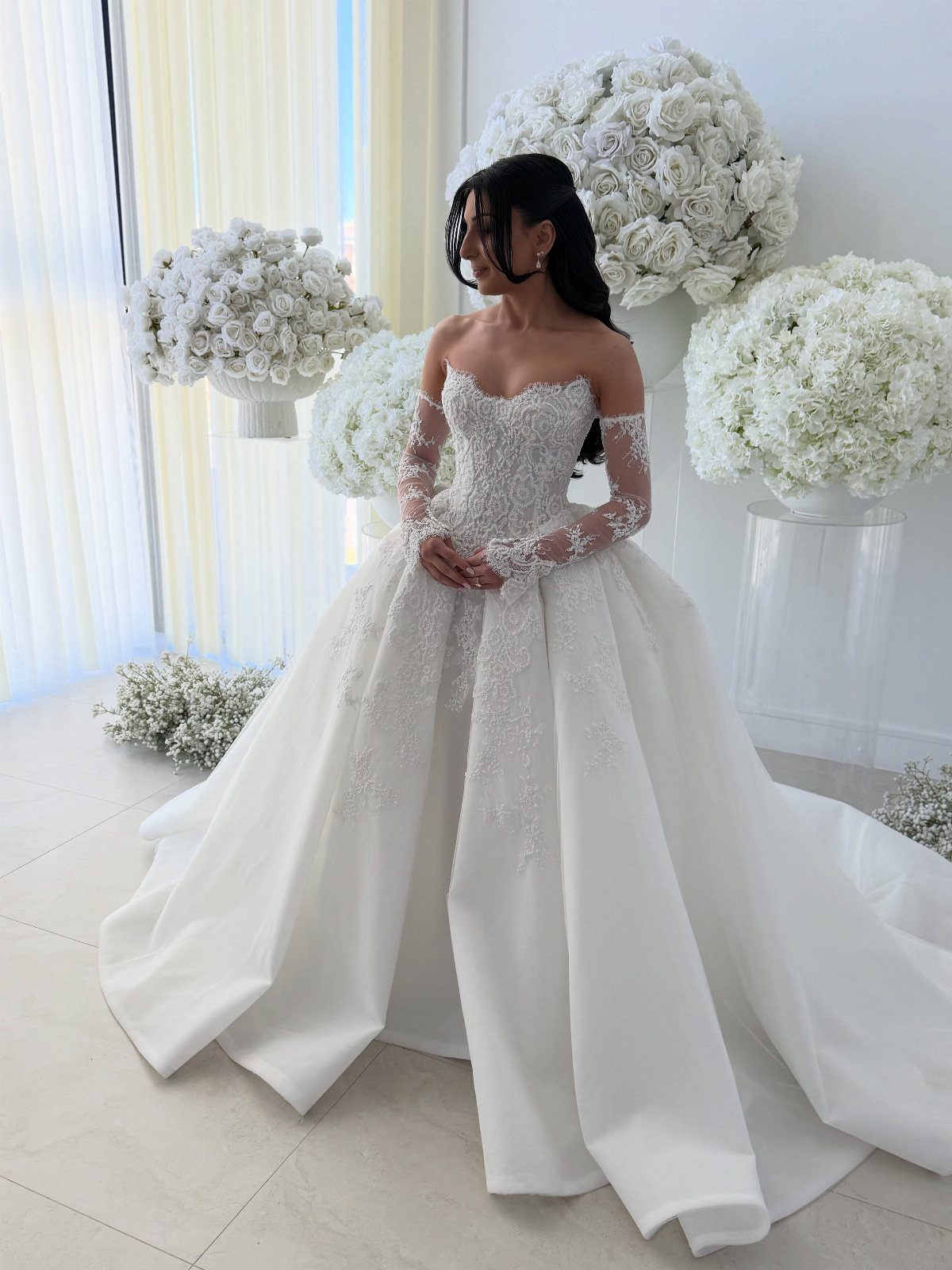
Lace sleeves on an A-line skirt give you coverage without the weight of a full ballgown. The silhouette fits close through the bodice and then widens gently from the waist, which is why it flatters so many body shapes.
For a shopper who values quality over quantity, this is the safest cut to invest in. It moves easily, it doesn’t need a huge skirt, and lace details can be simple or ornate depending on the budget.
A-line is my pick for a bride who plans to dance, climb stairs and sit down without managing a lot of fabric. A-line gives up some drama next to a ballgown, and that is the cost of the easier movement.
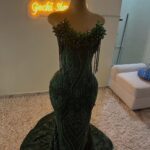
3. Fitted Shimmering Long-Sleeve Gown
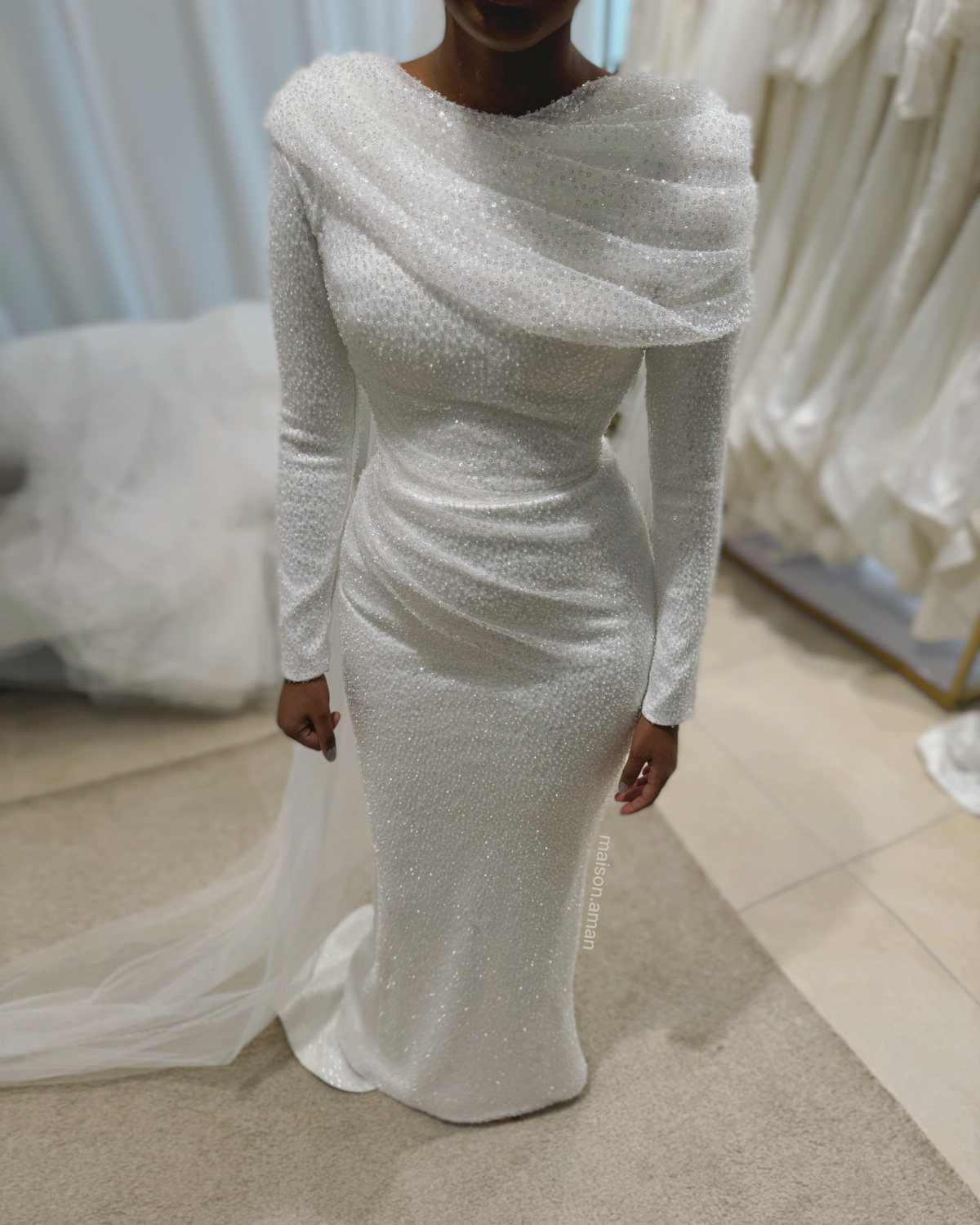
Shimmer changes the whole job of a wedding dress: with a glittery fabric, the shine is the decoration, so you can skip heavy beading and a big skirt.
A form-fitting cut with long sleeves and a draped neckline leans modern and fairly minimal.
Fit matters more here than anywhere else. A close silhouette shows every seam, so plan on alterations and ask to see the gown under different lights.
I like this for a winter or evening wedding. It is not forgiving, though, and you will want to sit, walk and raise your arms in it before you commit.
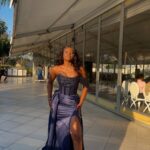
4. Off-the-Shoulder Slit Wedding Dress
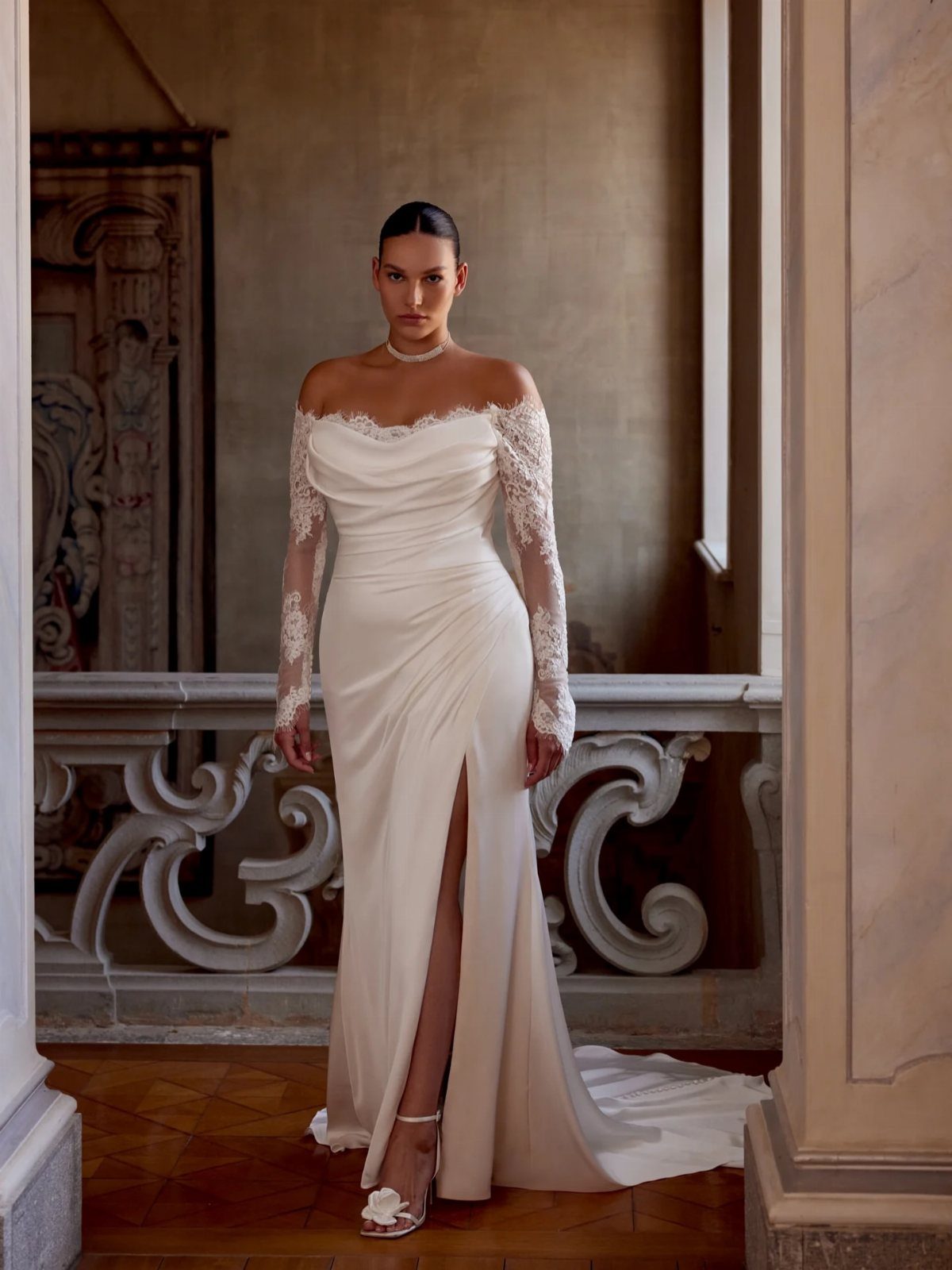
A high slit paired with off-the-shoulder lace sleeves gives you 2 focal points, so the rest of the dress can stay clean and simple. The neckline frames the collarbone and shoulders, while the slit adds movement as you walk.
Check how the slit behaves when you sit and step up: it should open smoothly without gaping at the top. A skirt in satin tends to drape well here, and your shoes will show, so choose them early.
I would choose this for a confident bride who wants a little drama without a huge skirt. If a slit feels like too much, ask whether it can be sewn shorter.
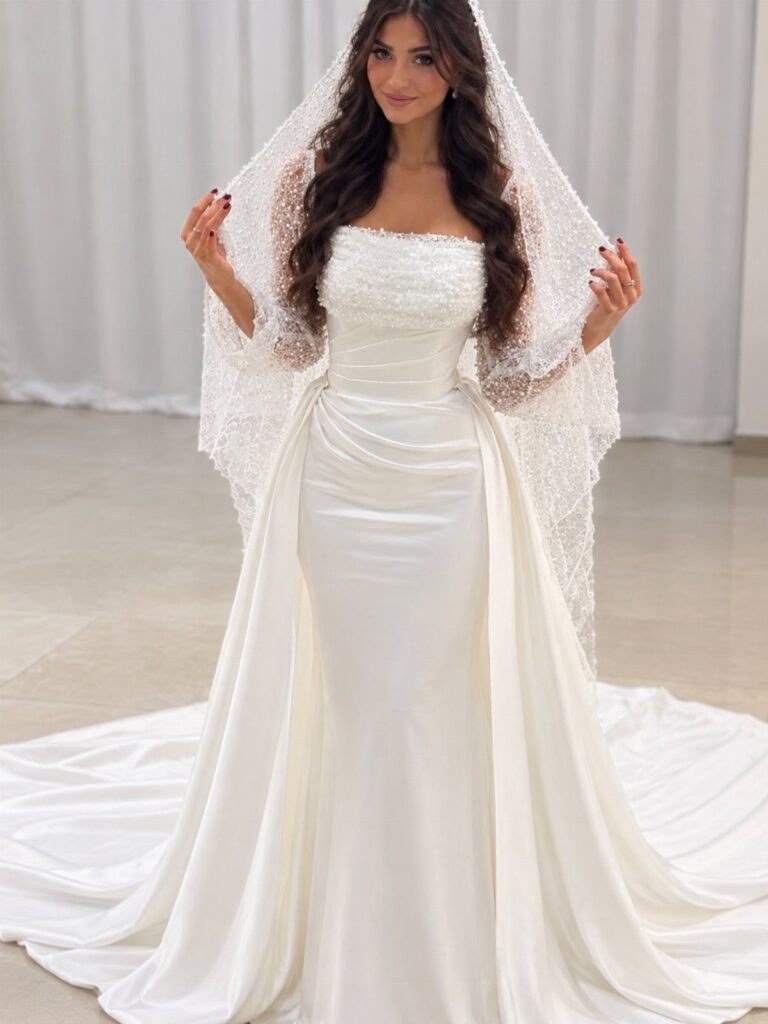
5. Lavish Beaded Ballgown with Veil
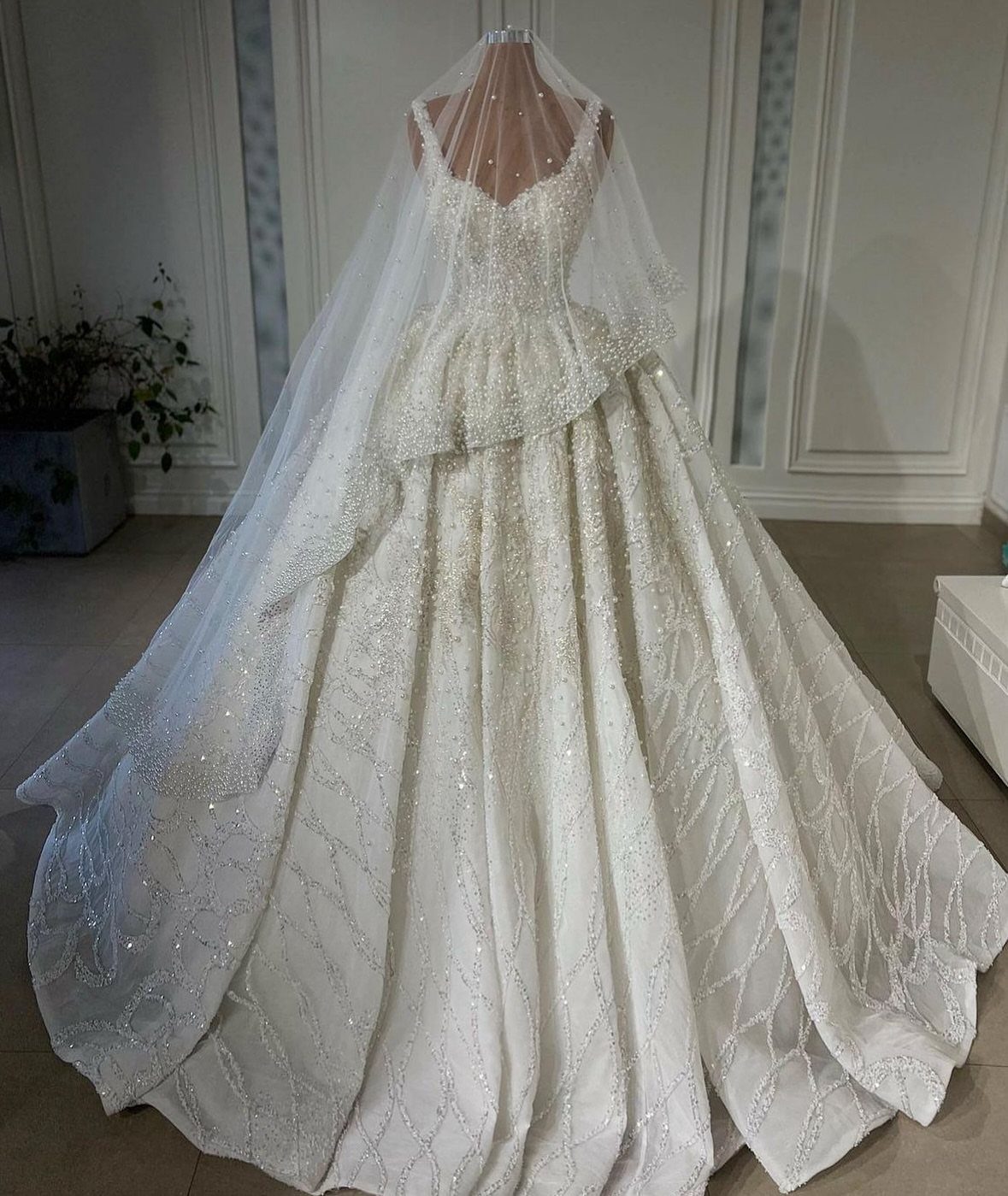
Heavy beading is the point of a ballgown like this, and the veil finishes it, so keep everything else quiet: simple earrings, hair pulled back, no competing necklace.
Expect weight. A fully beaded skirt is heavy to wear through a long day, so try it on and stay in it long enough to feel how your shoulders and hips handle the weight.
A dress this detailed also needs careful storage and cleaning, and costs more to alter.
Choose it if a traditional, formal look is the goal. A long veil is easier to manage if you ask for it to be detachable after the ceremony.
Advice for Fittings
Bring the wedding shoes and the exact undergarments you plan to wear on the day.
Heel height changes where the hem falls, and a different bra or shapewear changes how the bodice sits, so a fitting without them tells you less than it seems to.
If you don’t own the shoes yet, borrow a pair with a similar heel. Flats and heels give two very different hem lengths, and the seamstress will pin to whichever shoes you wear.
Cymbeline, a French bridal brand, publishes its own fitting tips for a successful try-on. Reading them before you go is a quick way to know what to prepare.
Take photos from the back and side too. The front view is the one everyone checks, but the rest of the dress is what guests see during the ceremony.
Choosing the Right Style
Start with your body shape, then check it against how you normally dress. A bride who lives in tailored pieces and simple jewelry will likely feel more like herself in a clean cut than in something heavily decorated.
Pick one feature to highlight, such as shoulders, waist or legs, and let the rest stay quiet. A dress that tries to flatter everything at once usually flatters nothing.
Try on at least one style you didn’t expect to like. Shapes you’d never pick off a screen sometimes fit best, and a few minutes in the mirror will settle it.
Choose the dress that feels like your own style on a good day, not the one that photographs best in someone else’s wedding.
Booking Appointments
Online booking is the easiest route: you pick a time, and the boutique knows to set aside a stylist and a fitting room for you. Some shops also accept walk-ins, which helps if you’re passing by or your plans change.
I would still book ahead for a serious try-on. A walk-in visit can mean a short wait or a rushed session, and a good fitting needs unhurried time.
When you book, ask how long the appointment lasts and how many guests the shop allows. Use walk-ins for a first look at what a boutique carries, then reserve a proper slot once you know which styles to try.