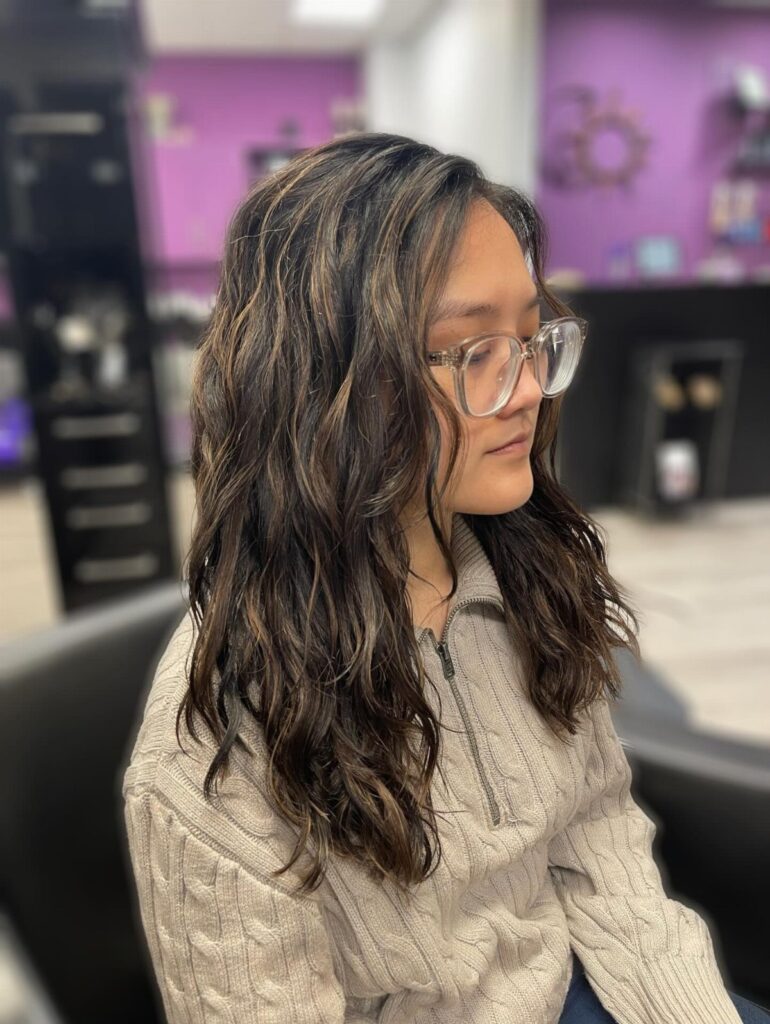
Length decides which 2A idea fits you: shoulder-length waves hold their bends and dry faster, while long fine hair straightens under its own weight and the waves fade toward the roots.
The range runs from a quick scrunch of light mousse on damp hair to a longer routine for long blonde waves or voluminous lengths, plus frizz control and a wash schedule that suits fine strands.
Across every cut and length, the product stays light, since heavy creams and oils flatten a pattern this loose.
1. Haircuts for 2A Hair
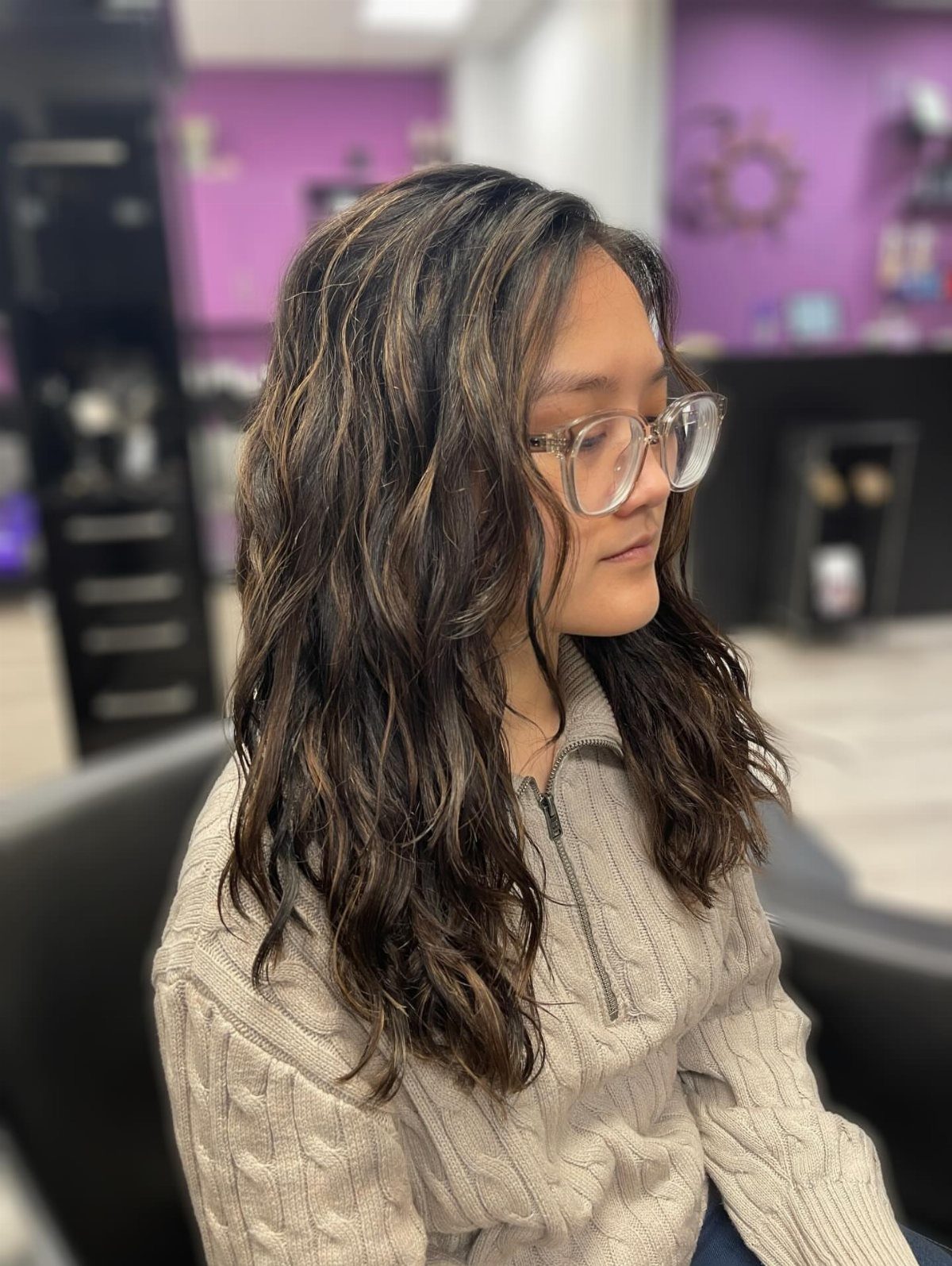
Soft layers do the most for 2A hair, because the pattern is loose enough that weight pulls it flat. Removing some of that length lets the bends show up.
Ask the stylist for long, blended layers rather than short, choppy ones. Choppy pieces can leave fine waves looking frizzy and uneven.
Bring a photo, and say plainly that you want to keep the natural wave rather than straighten it.
I would also ask the stylist to check the cut while the hair is dry, since wavy hair sits differently once it springs back up.
2. 2a Curls: Light and Natural
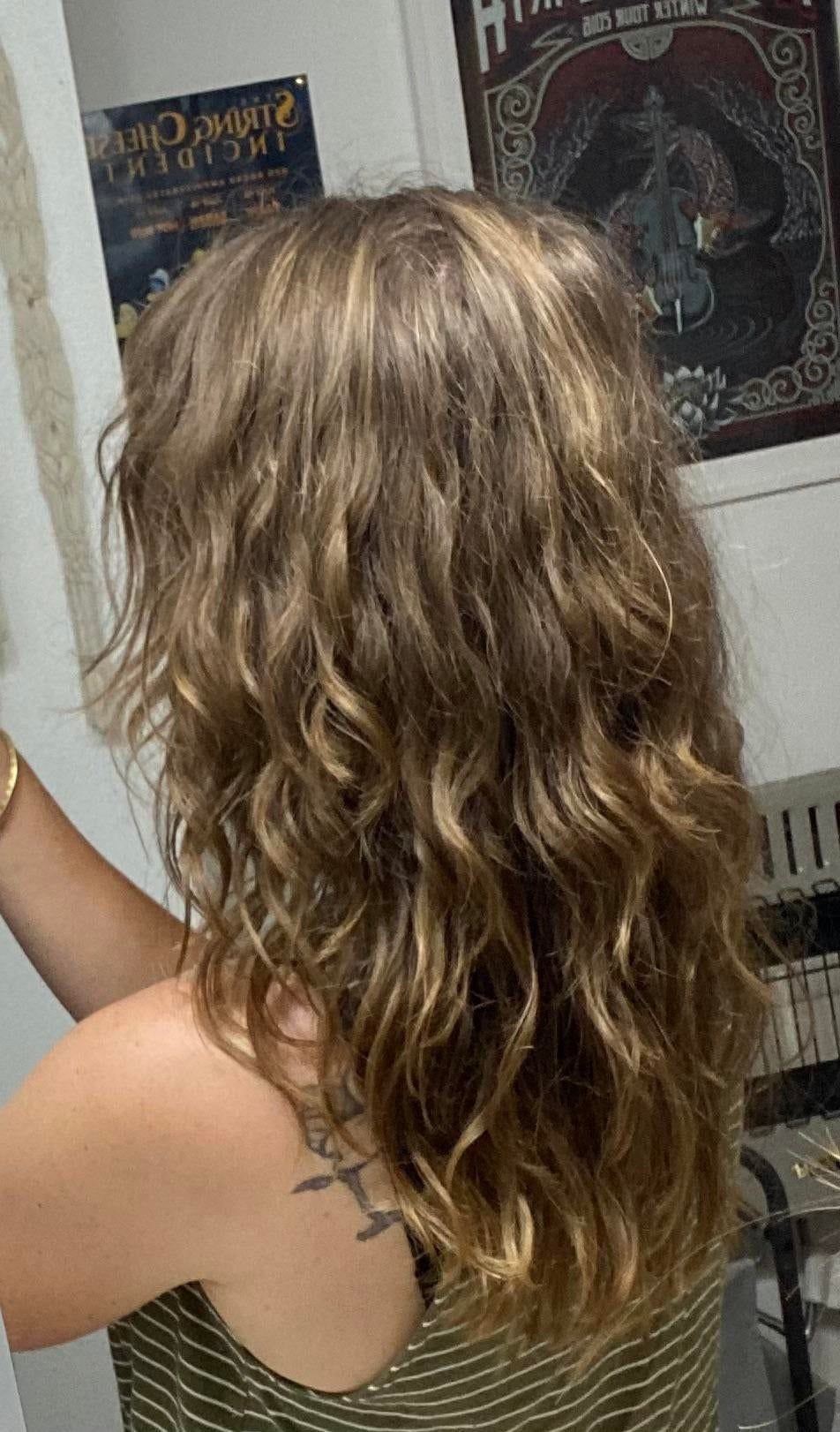
Of the type-2 patterns, 2a is the gentlest: loose, soft waves that tend to sit flat at the roots and only start to bend around mid-length and the ends.
Because the pattern is so light, heavy creams and oils tend to weigh it down. A light mousse or a little curl gel, scrunched in while the hair is damp, gives more shape.
Skip the brush once it dries, since brushing pulls waves into frizz.
3. Shoulder-length Loose 2A Waves
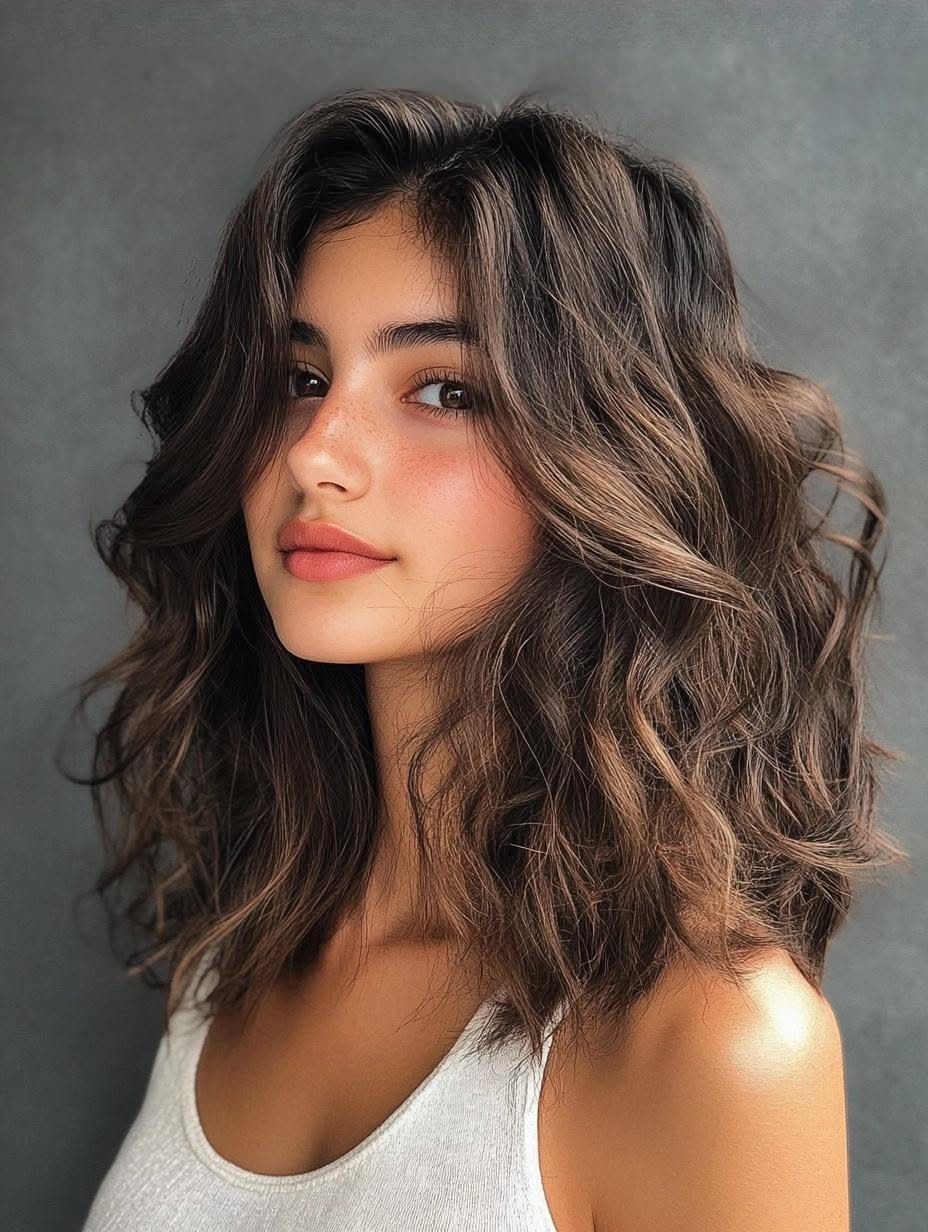
At shoulder length, loose 2A waves are easy to live with. Less length means less weight, so the bends hold better and the hair dries faster.
I like this length for anyone who wants waves without a long styling routine. On damp hair, a light-hold mousse scrunched upward from the ends usually does the job.
The trade-off: if you want a ponytail or a braid, shoulder length gives you little to work with.
4. Long Fine 2A Waves
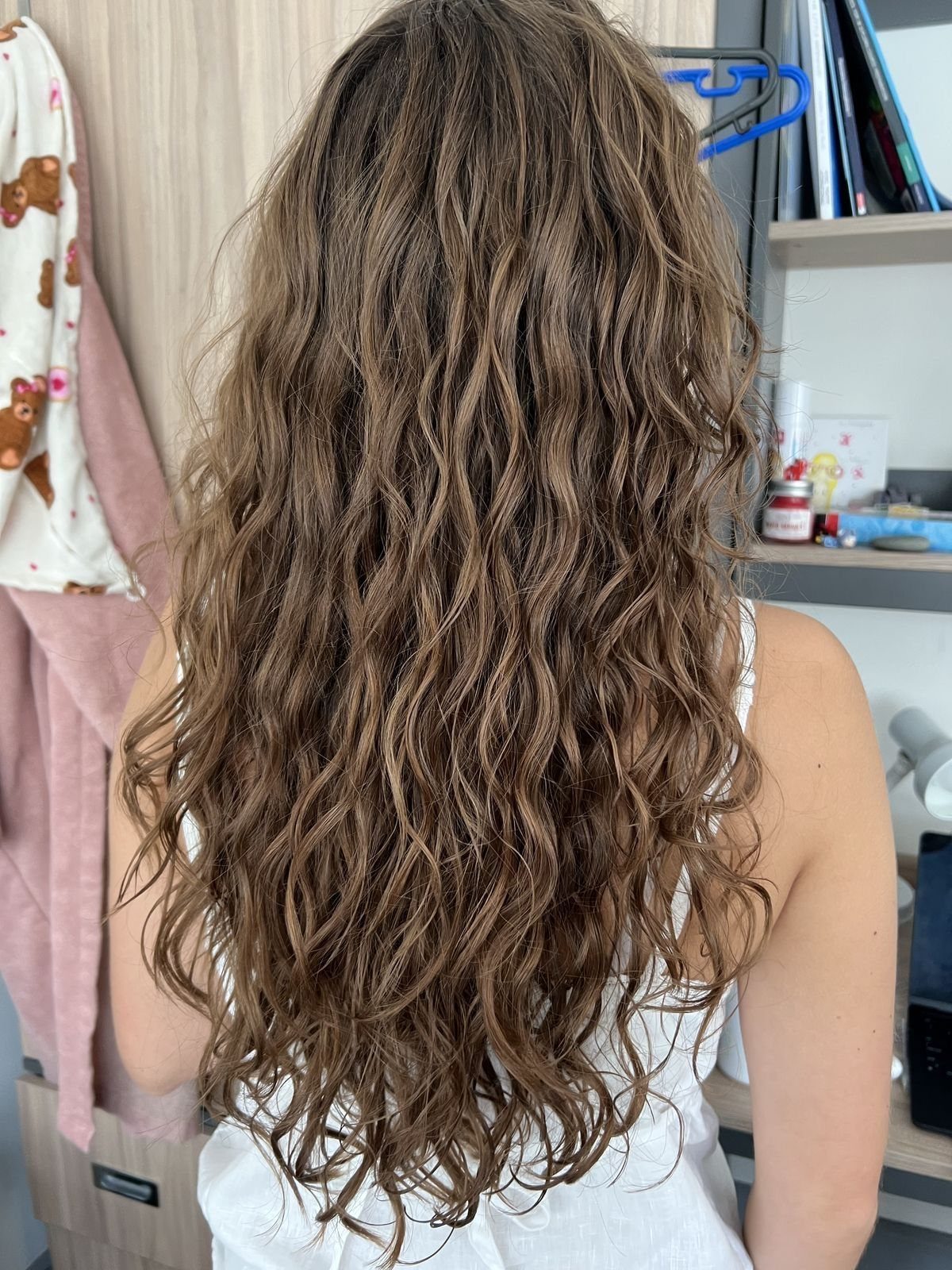
Fine hair in a long 2A pattern straightens out under its own weight, so the waves tend to start low and fade toward the roots.
Keep products light. Heavy butters and oils flatten fine strands quickly, so I would choose a weightless mousse or a sea-salt-free light spray and apply it only from the mid-lengths down.
Sleeping in a loose braid or a silk scrunchie can help the waves hold shape until morning.
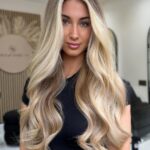
5. Long Blonde 2A Waves
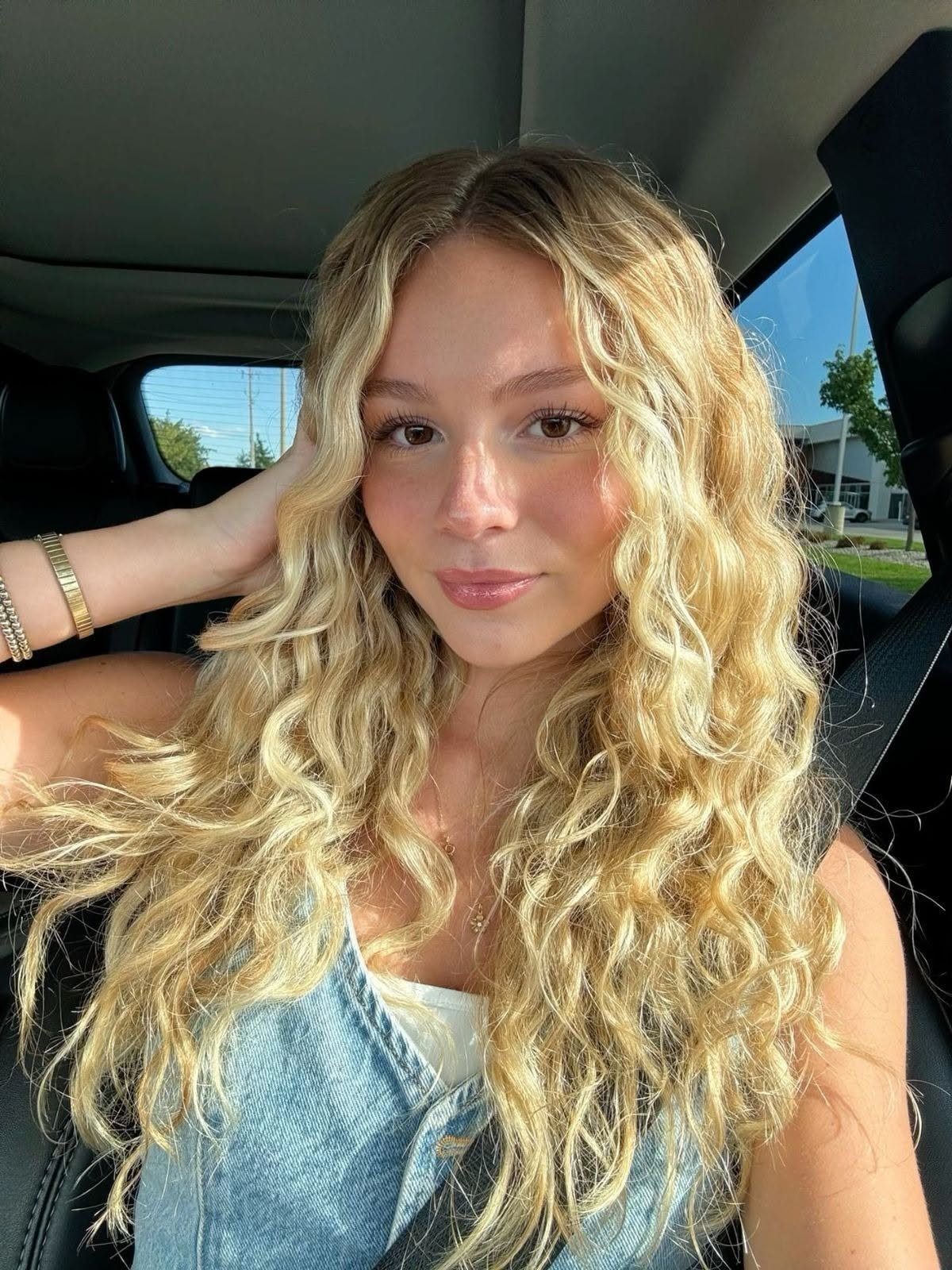
Blonde 2A waves ask for a bit more moisture, particularly if the color has been lightened. Lightening can leave hair drier, and dry waves lose definition fast.
A rinse-out conditioner left on for a few minutes, then a light leave-in, keeps the bends soft without weighing them down.
I would air dry whenever possible. If you use a diffuser, keep the heat low and the airflow gentle.
6. Voluminous Long 2A Waves
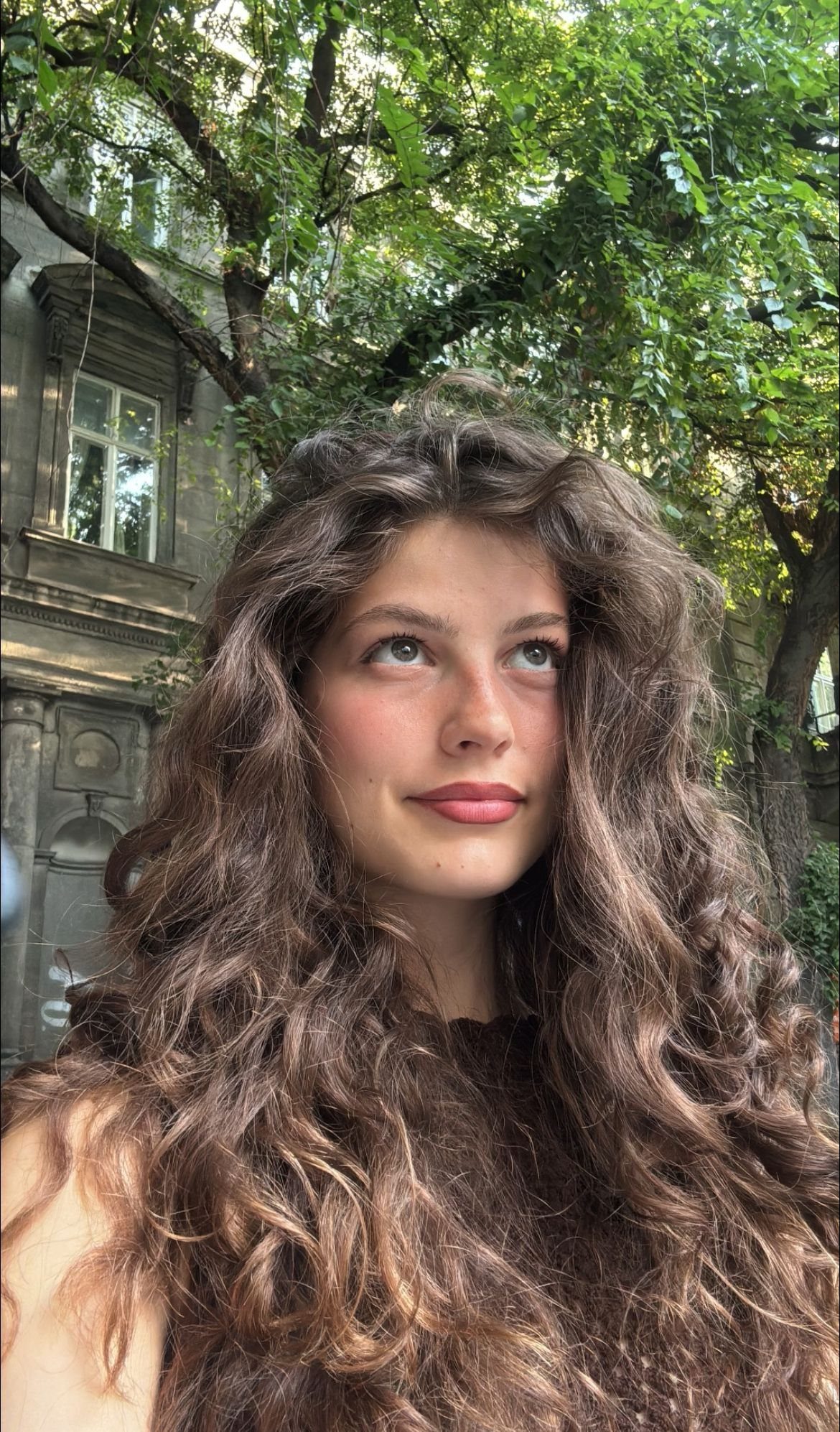
Big volume in long 2A hair comes from how you dry it, not from more product. Flip your head over and diffuse on low heat, lifting the roots as you go.
Apply a light mousse to damp hair first, then scrunch upward rather than smoothing down. Smoothing flattens the wave.
Thick hair holds shape well but takes longer to dry, so allow extra time. Once it’s dry, shake it out with your fingers rather than a brush.
Identifying 2A Hair
Repetition is what makes a wave a wave: if the bend shows up again and again, it’s 2A, and if it doesn’t, you likely have straight hair with some lift.
A single bend near the ends proves nothing, but two or more bends in a row down the strand do.
To check yours, look at dry hair with no product in it.
Look at one strand: a 2A hair stays straight for the first few inches off the scalp, then eases into a loose S shape that keeps repeating toward the ends.
2 more clues are roots that sit flat against the head and strands that run fine to medium in thickness. Because the pattern is so subtle, many people with 2A hair spend years assuming theirs is straight.
Frizz Management
On 2A hair, frizz tends to gather as a halo around the crown and along the part, while the lengths stay fairly smooth. Those are the shortest, newest strands, and the pattern is weakest there.
Humidity makes it worse. Tighter curls can hide frizz inside the pattern, but a loose wave has no such cover, so the same frizz looks like flyaways.
Put a light, hydrating cream or serum on damp hair to seal in moisture, and use a leave-in conditioner mainly on the ends.
Hair Care Frequency
Advice on washing 2A hair disagrees: some say daily, others twice a week. Washing 2–4 times a week works for most 2A hair, since the smooth shaft lets scalp oil slide down quickly.
I would let the scalp decide.
If the roots look flat and greasy, wash. Oil flattens the wave.
Work styling product into hair while it is still damp, not dripping and not nearly dry, because 2A waves clump best when there is some water left to hold the pattern. Scrunch upward and leave it alone while it dries.
Once it’s fully dry, scrunch gently to break the cast.
Frequently Asked Questions
What are the best hair products for type 2A hair?
A featherweight mousse or a small amount of curl gel does the job, worked in with a scrunch while every strand is still soaking.
Heavy butters, rich creams and most oils tend to flatten 2A waves because the pattern is too loose to carry that weight. On fine hair, apply product only from the mid-lengths down.
Is 2A hair wavy?
Yes. 2A is the loosest of the type-2 wave patterns, with soft, gentle bends rather than true curls.
The strand usually stays straight for the first few inches off the scalp, then eases into a loose S shape that repeats toward the ends.
How do I tell if my hair is 2A or 2B?
Look at dry hair with no product in it. A 2A strand falls straight from the part before it starts to curve, so the roots sit flat against the head.
If the waves show up closer to the roots and look more defined, that points to 2B. 2B is also thicker and a bit coarser, and it holds its shape longer, while 2A waves tend to drop within hours.
What are 2A, 2B, 2C, 3a, 3b curls?
They are steps on a scale from loose waves to tighter curls.
Think of 2A as the softest wave, 2B as waves with clearer S patterns, and 2C as the nearest to real curls, with deeper bends that begin at the root, thicker strands and plenty of body.
3a and 3b are the next group: true spirals, which are tighter than anything in type 2.