Your starting color shapes which of these looks makes sense, whether that is Blue Highlights on Brown Hair or Blue Highlights on Blonde Hair, and how much salon time each one takes.
The looks here run from Thick Vertical Blue Streaks that are meant to be seen to softer options like Teal Blue Highlights, and the bolder and wider the blue, the more often you will be back in the chair for touch-ups.
1. Thick Vertical Blue Streaks
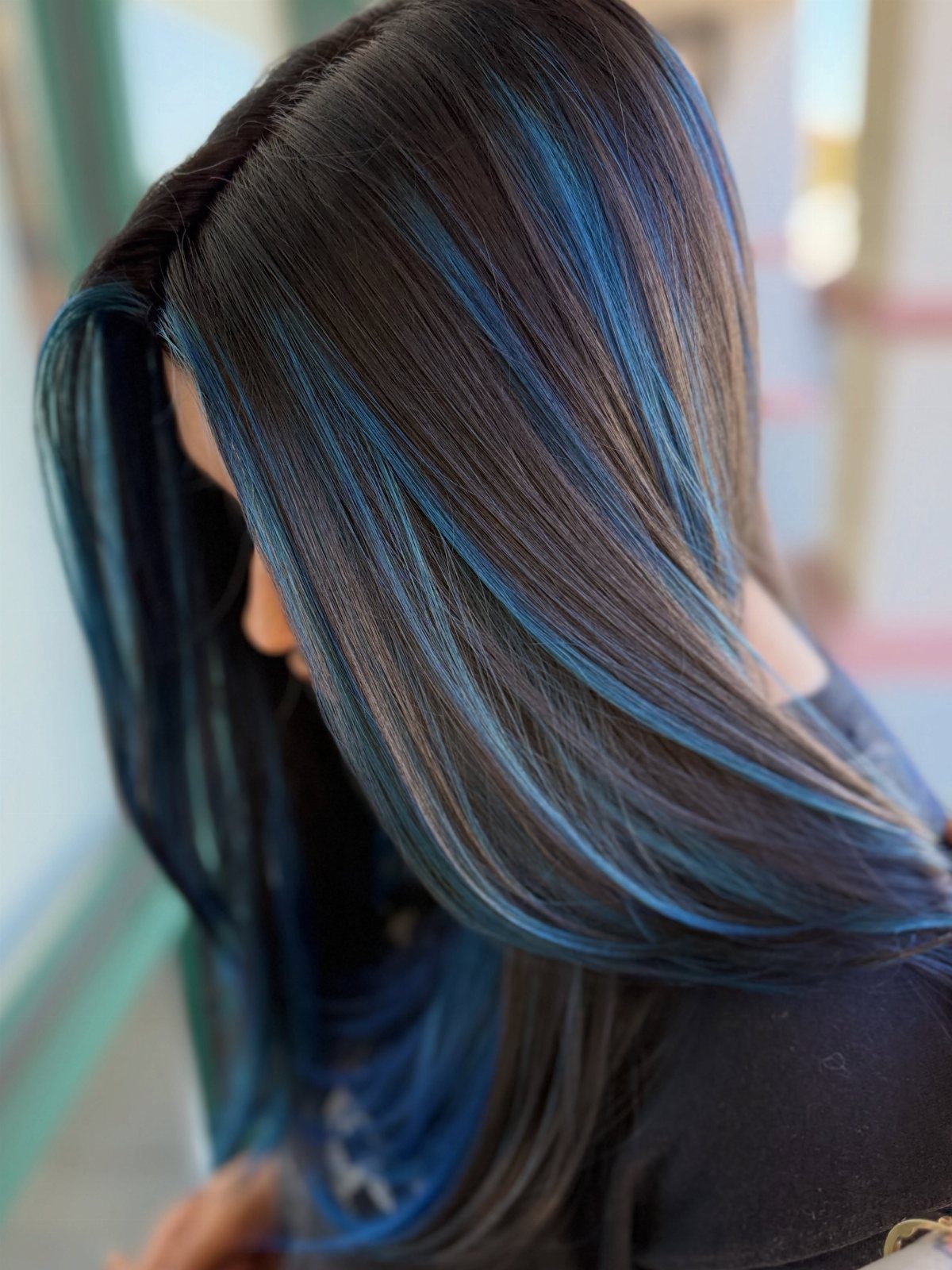
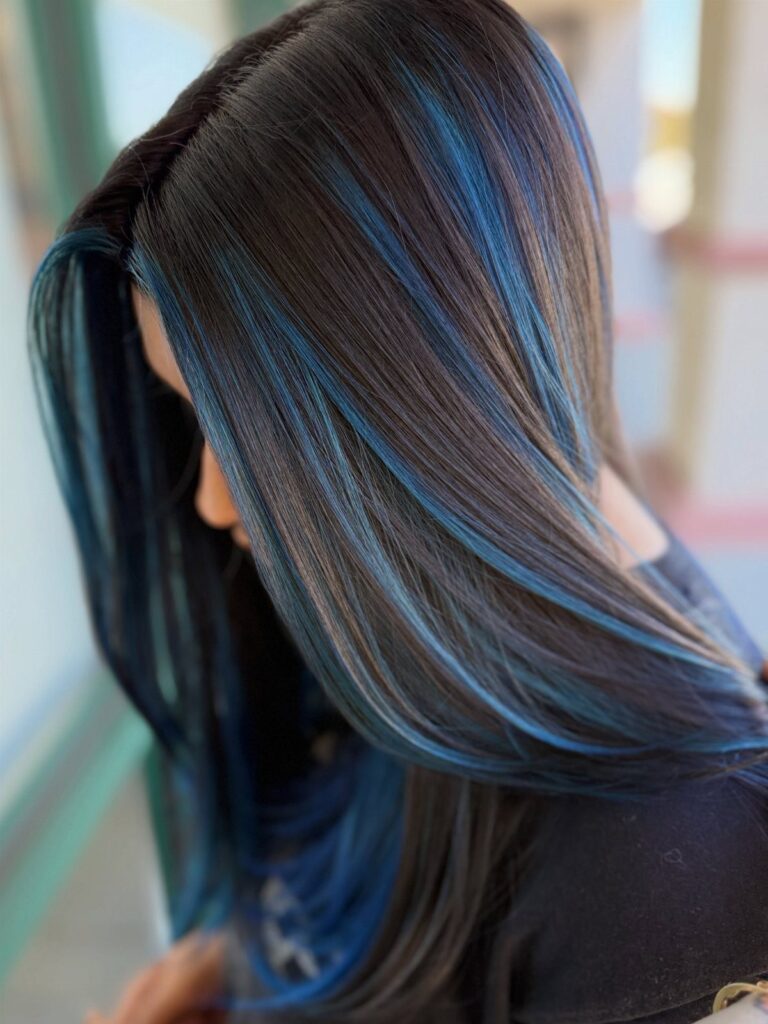
Thick vertical blue streaks read as a design choice, not a subtle accent, and that is why I like them on long dark hair.
The width of each section does the work: broad bands look deliberate, where thin ones can look like fading.
Ask your colorist for fewer, wider sections placed where the hair falls forward. Because dark hair has to be lightened before blue shows this bright, expect a longer appointment and a real upkeep commitment.
2. Blue Highlights on Brown Hair
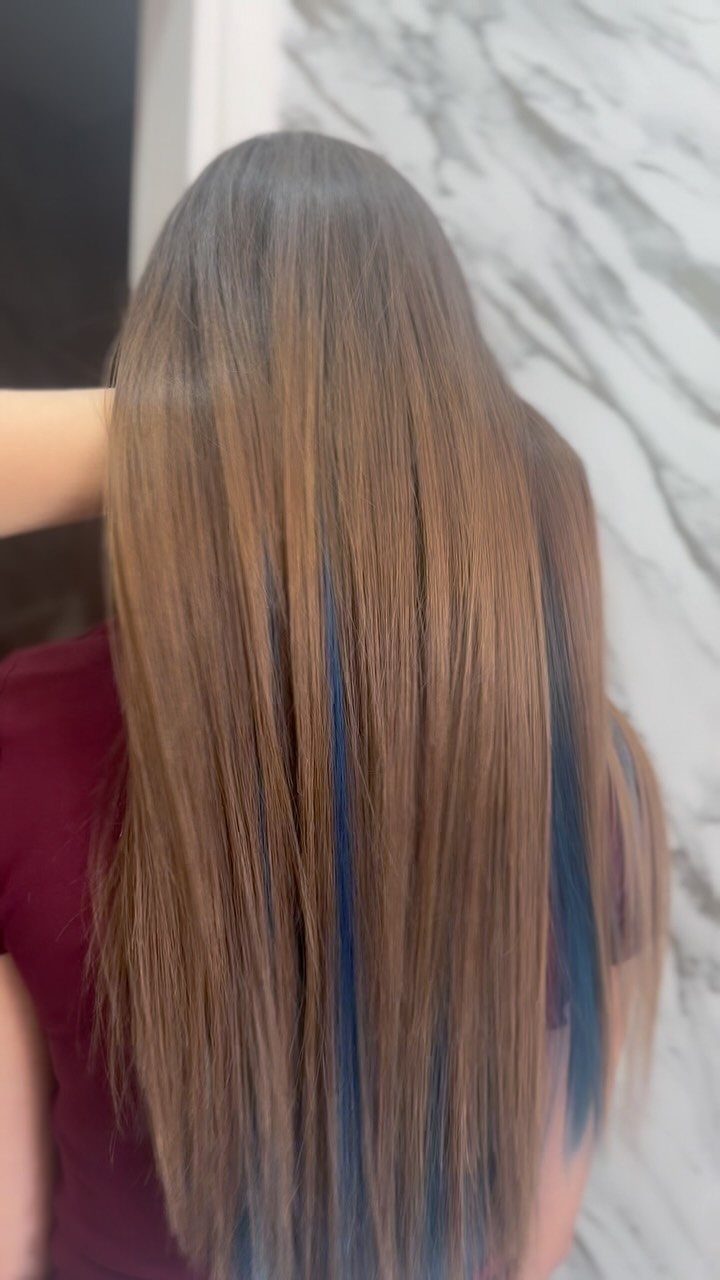
Brown hair can hide bright blue in its underlayers, so the color shows up in movement and stays quiet when the hair rests. That suits a reader who wants color without a full commitment at the office.
I would keep the blue thin and sit it a layer or two beneath the surface. Brown needs lightening before blue looks this bright, so ask for a test strand first.
3. Blue Curly Hair Highlights
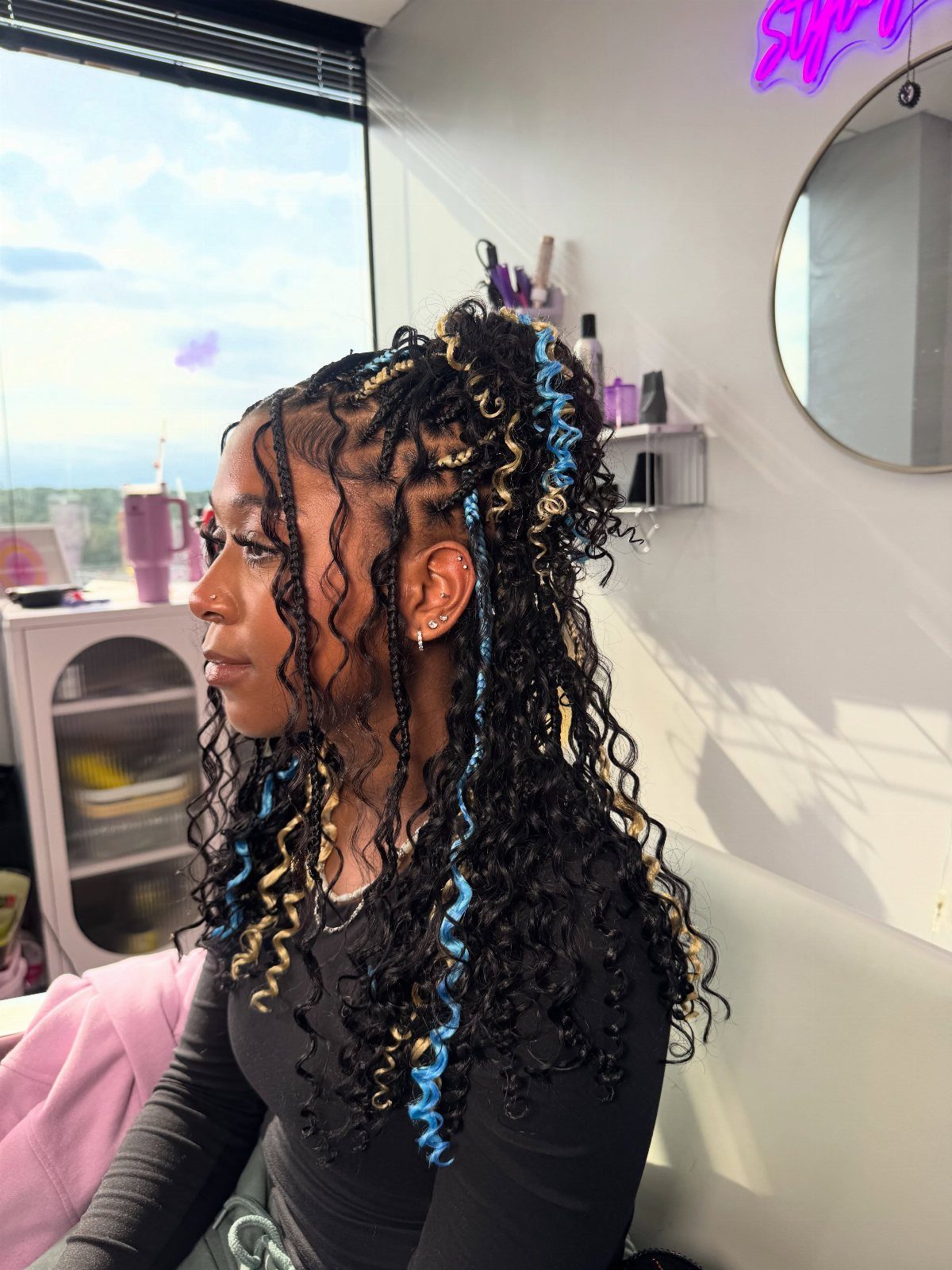
Curls break blue into pieces, so the color shows in ribbons as the spirals twist. Pairing it with blonde, as a half-updo can show, adds a second contrast without much extra effort.
Ask for the color to be placed on individual curls, not painted straight down a section, so each spiral picks up its own streak. Lift the half-updo high enough that the blue stays visible.
4. Blue Highlights on Blonde Hair
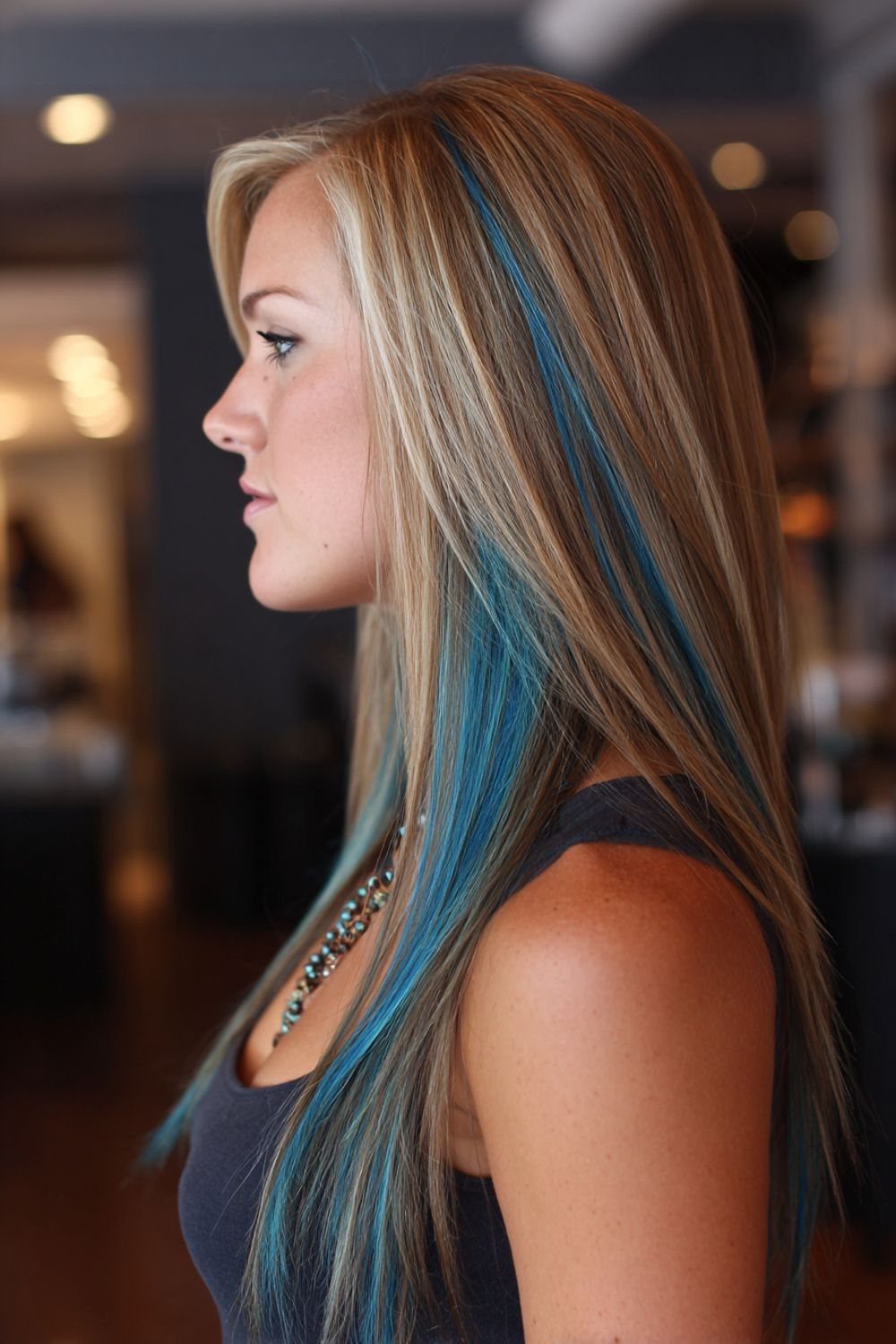
Blonde is the easiest base for blue, since the hair is already light and the streaks come out bright. The contrast is the appeal: blue against pale strands looks crisp and graphic.
Keep the streaks to a few chosen sections so the blonde still reads as the main color. Blue can fade to a softer shade over time, so plan on touch-ups if you want it vivid.
5. Alternating Blue and Black Streaks
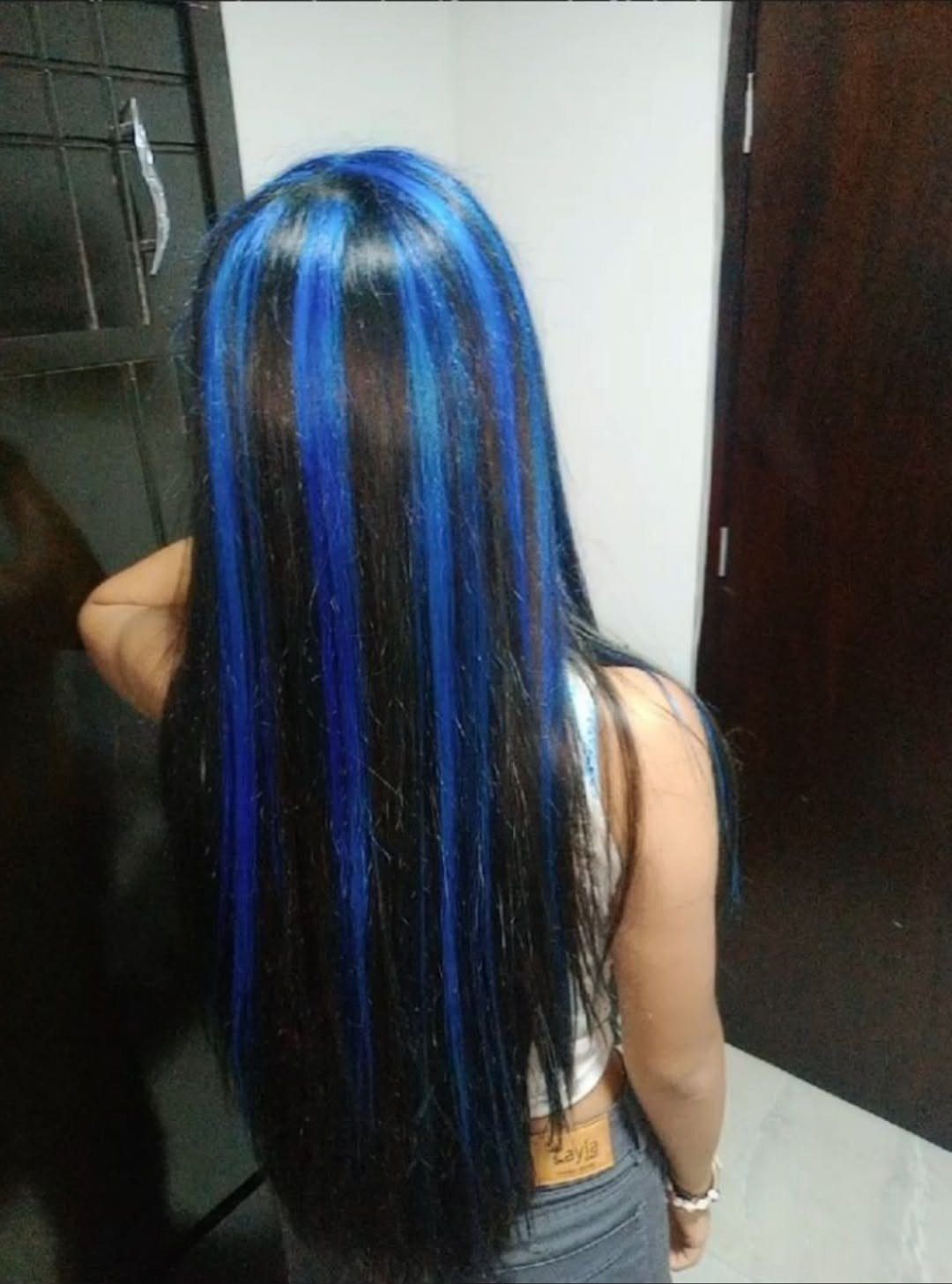
Thick bands of blue next to black give hair a striped, high-contrast pattern, and I think it works best on long, straight hair where the stripes stay clean from root to end.
Keep the sections equal in width, because uneven bands look like a mistake. Black is the hardest base to color, so expect lightening where the blue goes.
6. Teal Blue Highlights
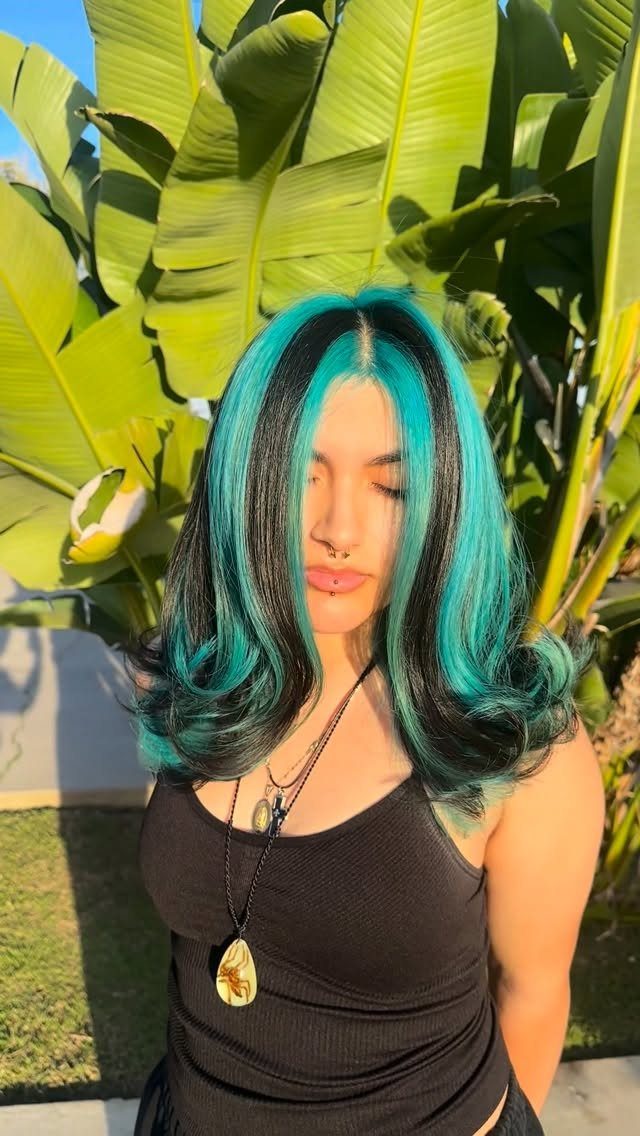
Teal leans greener than true blue, and placed in the face-framing pieces it works like a frame, lighting up the skin around your cheeks and jaw. Against black hair the contrast is strong.
If you want less commitment, color only those front sections. A teal shade also suits you if bright royal blue feels too stark near your face.
Frequently Asked Questions
What are skunk highlights called?
Skunk highlights are bold, contrasting streaks of color set against a base shade, and blue versions are often done as thick vertical bands or alternating stripes.
Width is what makes them read as intentional. Wide panels of color read as a choice you made on purpose; narrow ones tend to look like a dye job that has started to wash out.
What skin tone looks best with blue hair?
I can’t point to one skin tone that wins, but shade choice helps near the face.
If royal blue feels harsh beside your face, a teal with a little green in it softens the cheeks and jaw and keeps the color bright. Keeping color to the face-framing sections is also a low-commitment way to test it.