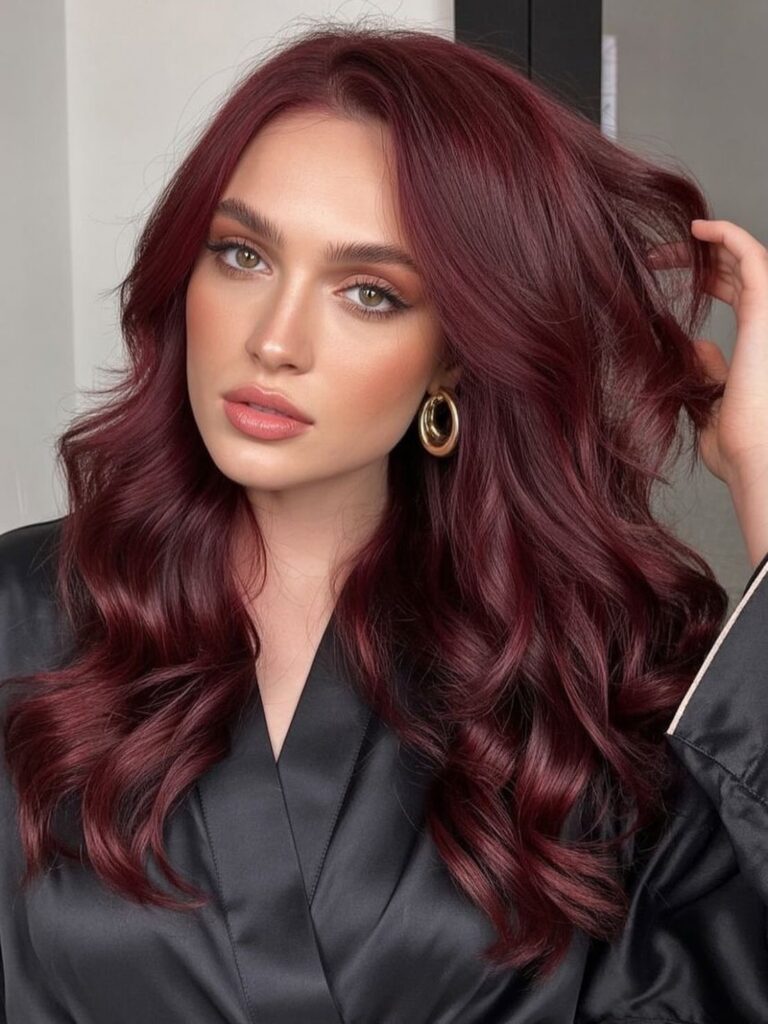
Dark velvet red ranges from a deep burgundy that only flashes red in the light to a glossy, bright sheen on sleek straight lengths, and the cut decides how much upkeep follows.
For color that blends into daily life, the deep burgundy or the velvet red and black ombre is the easier pick, since the ombre grows out gently.
1. Red Velvet Hair Color
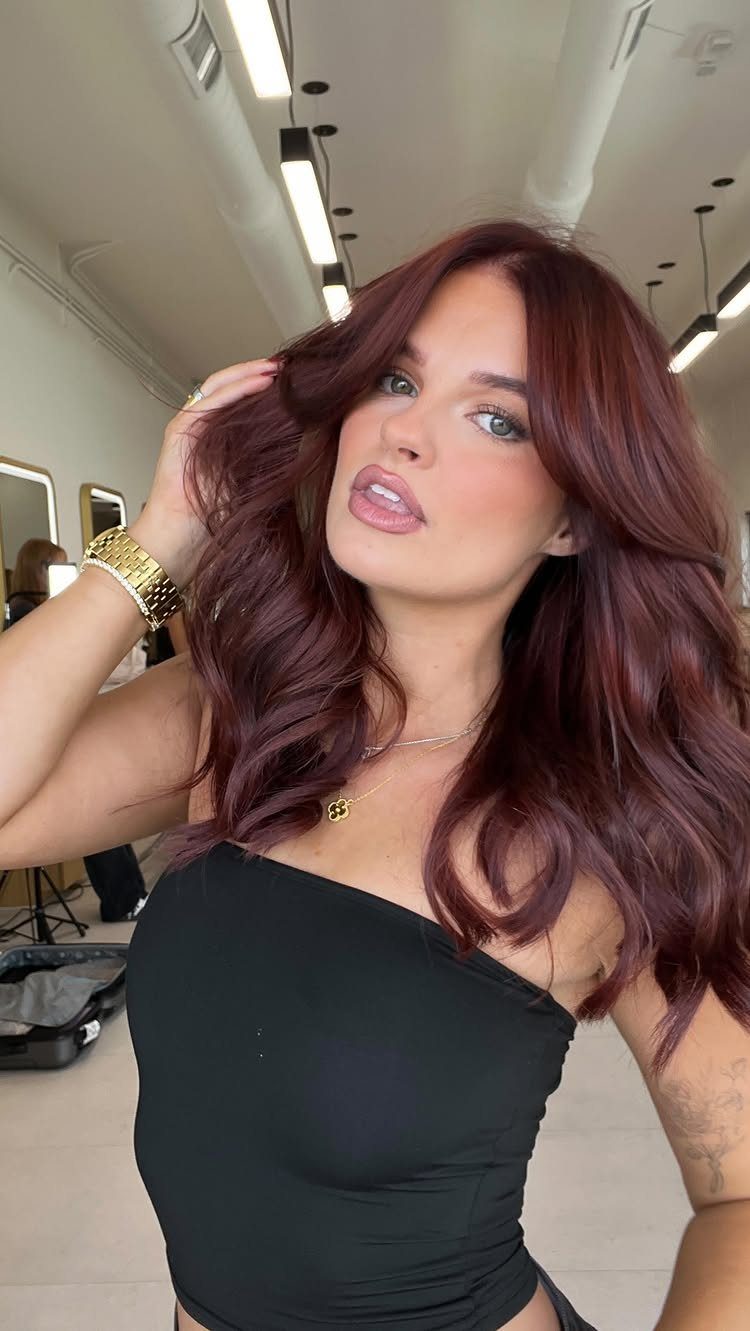
Red velvet sits between burgundy and cherry: dark enough to read as deep wine indoors, with a red glow that shows up under bright salon light.
On long, wavy hair like this, the waves catch the light and make the color look richer than it would on flat, straight lengths.
This shade beats a brighter true red with black tops and gold jewelry, which is how it looks here.
Ask your colorist for a deep red with a cool, wine-leaning undertone, and show a reference photo, because "red velvet" means different things to different people.
Expect to book regular touch-ups, since red fades faster than most shades.
2. Deep Burgundy Red Velvet Hair
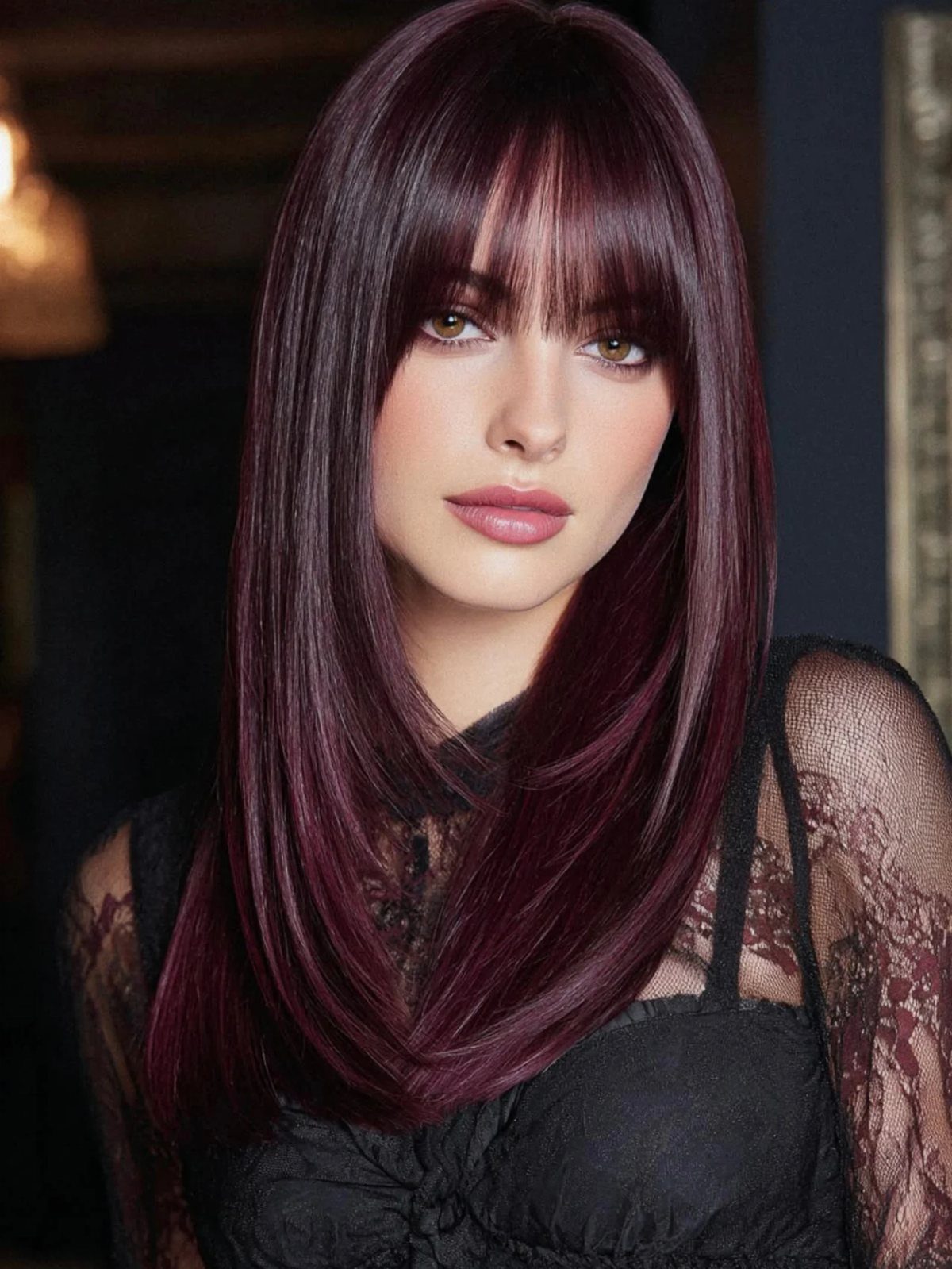
Burgundy pushes red velvet toward purple-brown, and the result is the most wearable version here. Against black lace and a dark background, the color looks almost like dark wine, with the red only showing where the light hits.
That quiet depth makes it a pick I reach for first for everyday wear. It looks polished without looking dyed, so it suits office days and evenings out alike.
Bangs add a soft frame, but they also mean one more thing to trim, so factor in a salon visit between color appointments.
3. Red Velvet Hair Bob Cut
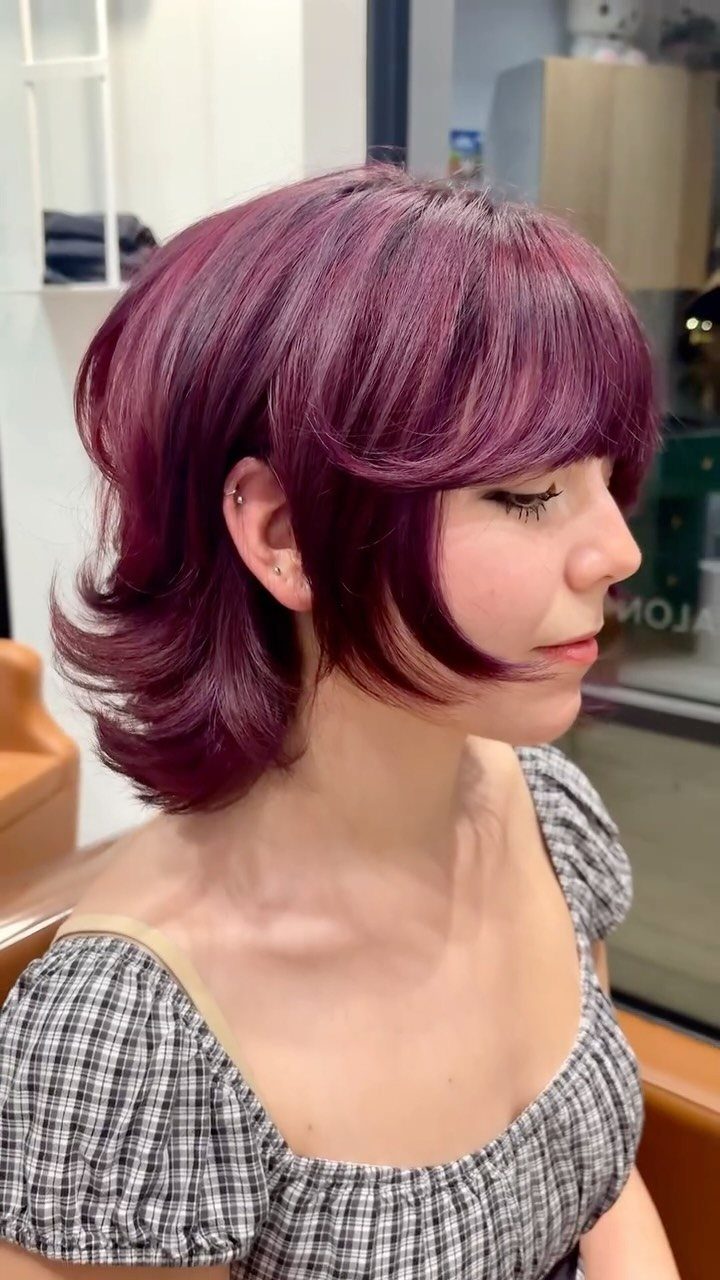
A layered bob in dark velvet red puts all the color in one place, right at jaw level, so every layer shows off the shade. The layers add movement, which keeps deep red from looking flat or heavy.
Short hair also needs less dye to cover, which means less product and less time in the chair. This cut is the right choice when the color should be the main event.
Bangs fit the look, but ask your stylist to blend them into the layers so the bob doesn’t look chopped in two.
4. Straight Dark Velvet Red Hair
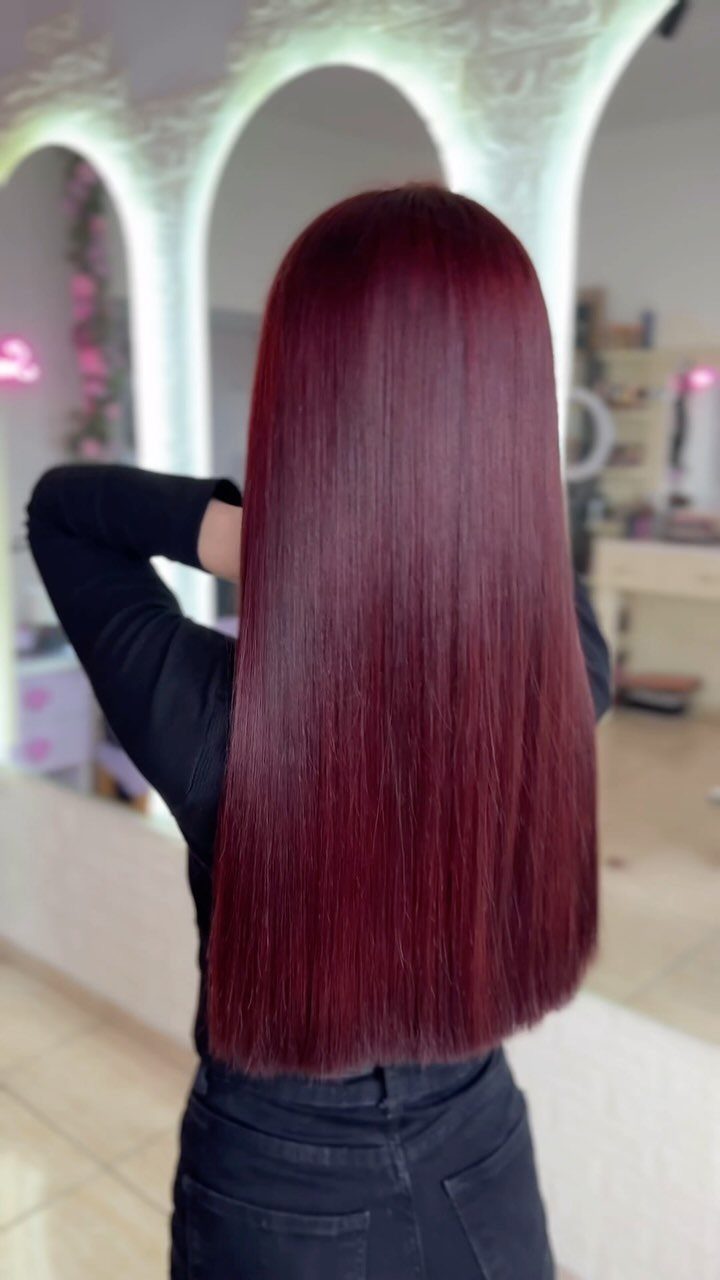
Sleek, straight length is where dark velvet red looks most like its name: smooth, dense and evenly lit, with none of the shadow that waves and curls create. From behind, the shade reads as one solid sheet of deep red.
That finish shows every split end and uneven patch, though. A glossing treatment and regular trims matter more here than on textured hair.
If you wear mostly black, as in this look, the red does all the work. Keep the rest of the outfit simple and let the hair lead.
5. Dark Velvet Red Hair with Bangs
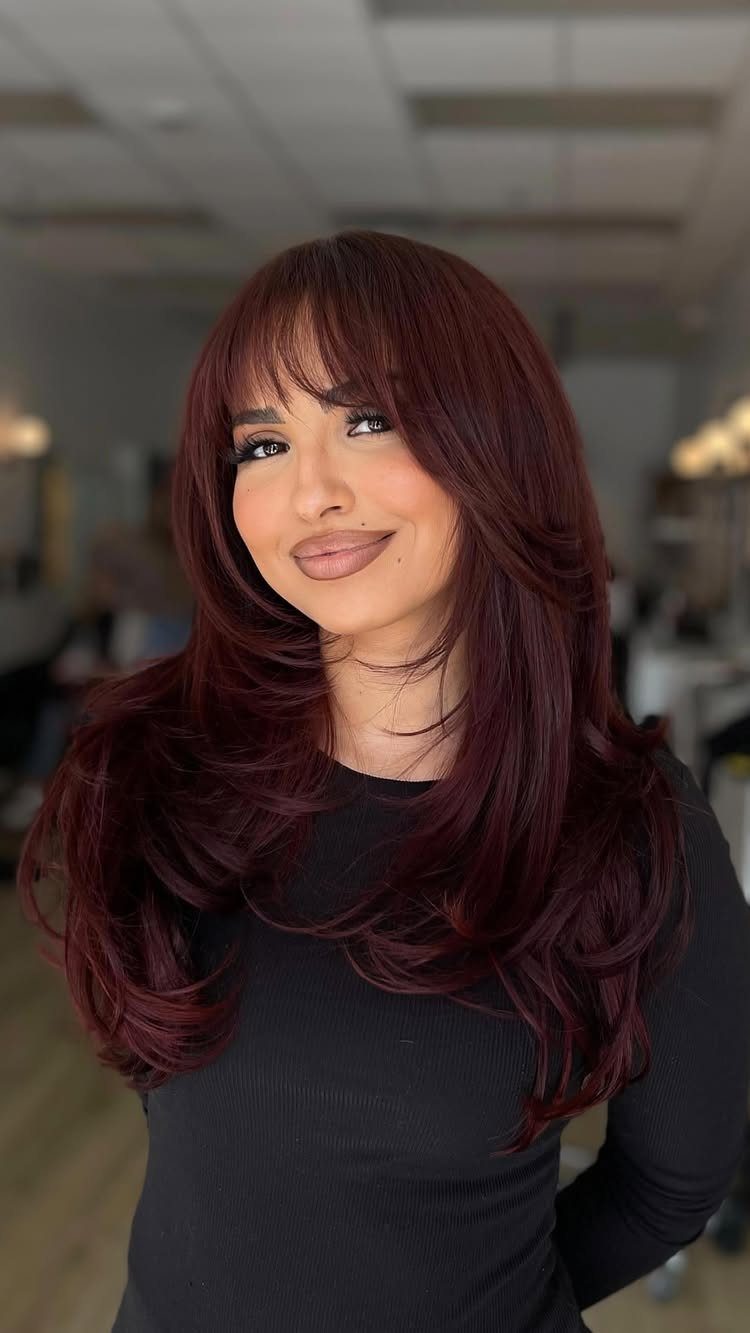
Fringe bangs and dark velvet red make a good pair because the bangs put color right where people look first. On long, wavy hair, the bangs also give the length a defined shape.
This combination suits anyone who wants one change that feels new without a full cut. Ask for wispy, face-framing bangs for softness, or a blunt line for drama.
Trade-off: bangs need frequent trims to stay in shape, and they can get oily faster than the rest of your hair.
6. Velvet Red and Black Ombre
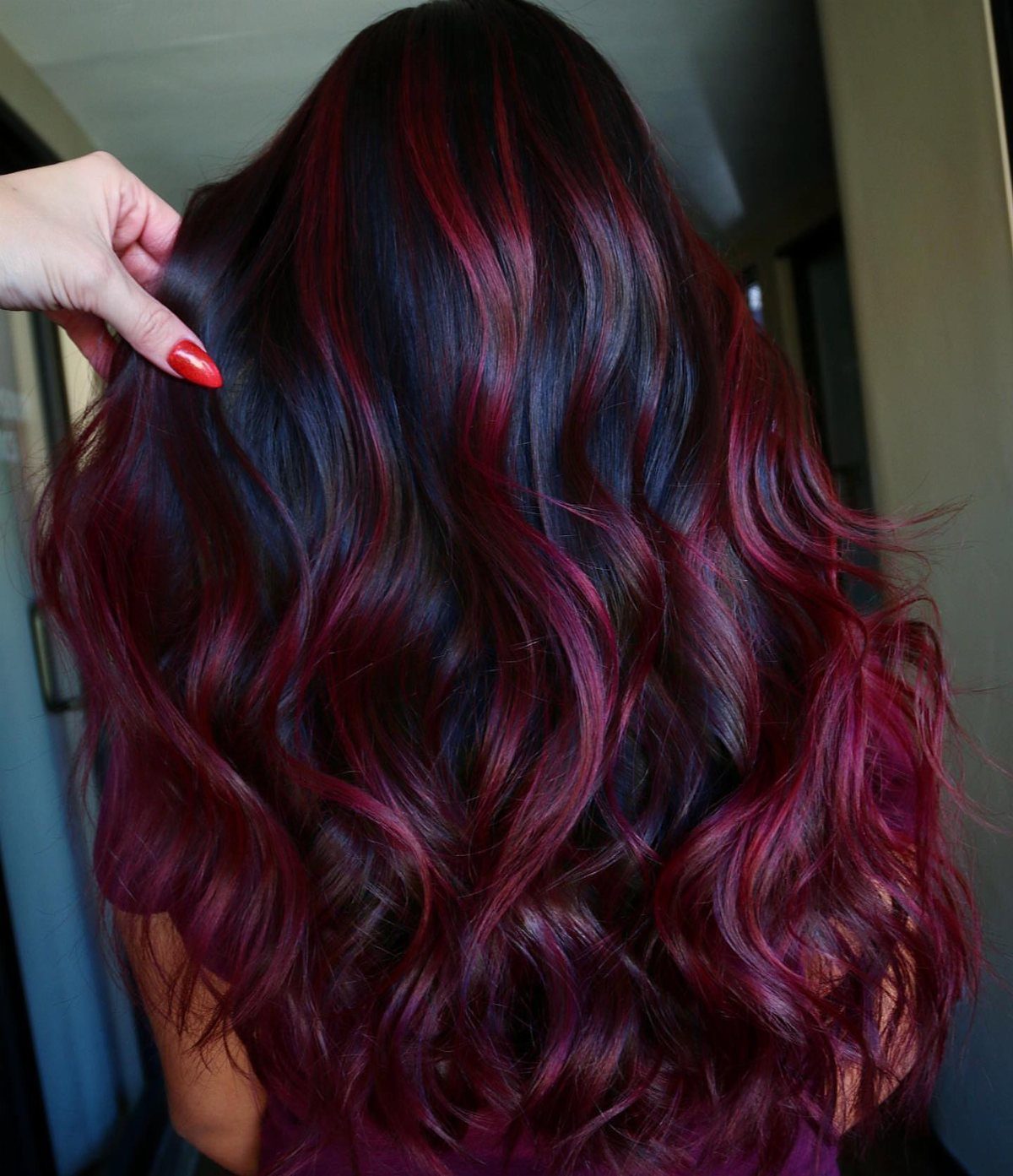
Here the red and black blend into each other, so deep burgundy melts into near-black instead of stopping at a hard line. On long, wavy hair, that gradient looks dimensional, with the red catching light in the curves.
This works well for anyone who wants the velvet shade without committing every strand to red. A darker base also grows out more gently than a solid color.
Ask your colorist to blend the transition softly, and point out on a reference photo where the red should start.
Frequently Asked Questions
What color is red velvet hair color?
Red velvet sits between burgundy and cherry. Indoors, red velvet reads as a deep wine, almost brown at a glance, and then a clear red glow shows up once bright light or sun hits it.
Since one person’s red velvet is another person’s burgundy, a reference photo saves you from a color you didn’t ask for.
How to choose the shade of red velvet hair color for your skin tone?
Start with your skin tone, then match the undertone. For warm undertones, I’d lean toward the auburn or copper-leaning versions; cool undertones usually look better in burgundy or maroon, where the red carries a hint of purple.
Your natural hair color matters too: lighter hair does better with a more subdued, darker red, and darker hair can carry brighter shades.