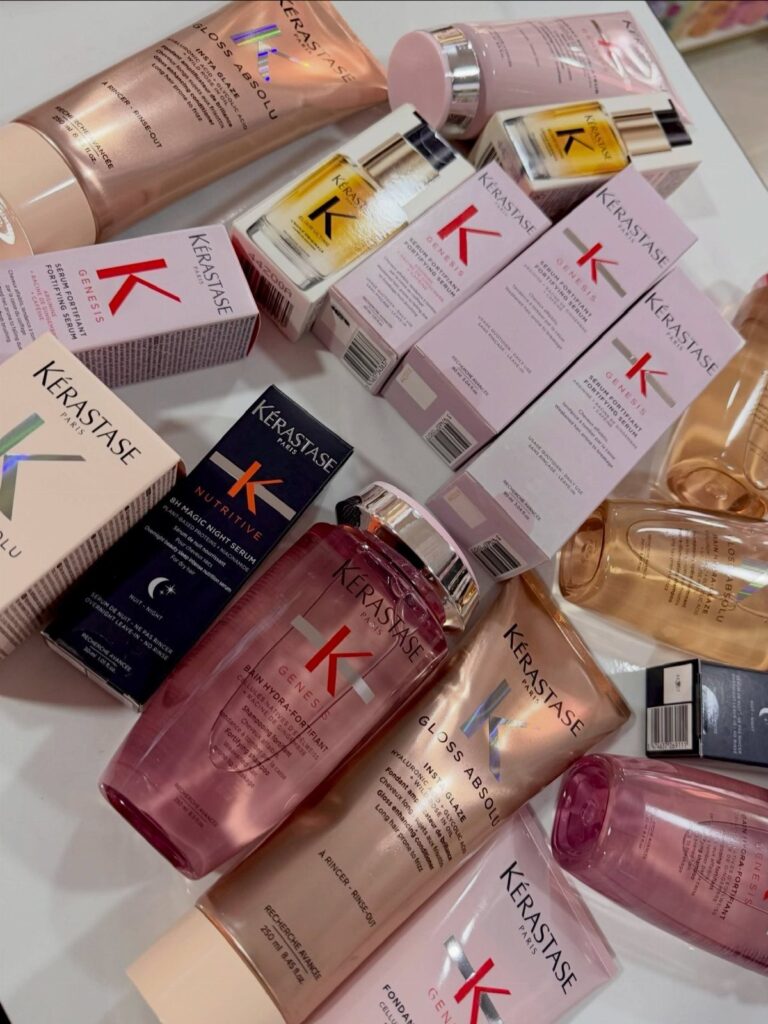
These picks range from a weekly scalp scrub and a few drops of oil to a Kérastase mask that costs well above drugstore prices, plus habits that cost nothing, like shampooing only 1–3 times per week.
Your biggest problem decides where to start: dryness calls for a deep conditioner, an oily or itchy scalp for the scalp care products, and thinning or shedding for a doctor’s blood test before any supplement with iron or biotin.
Pick one problem, buy for it, and give it several weeks before judging the result.
1. Scalp Care Products
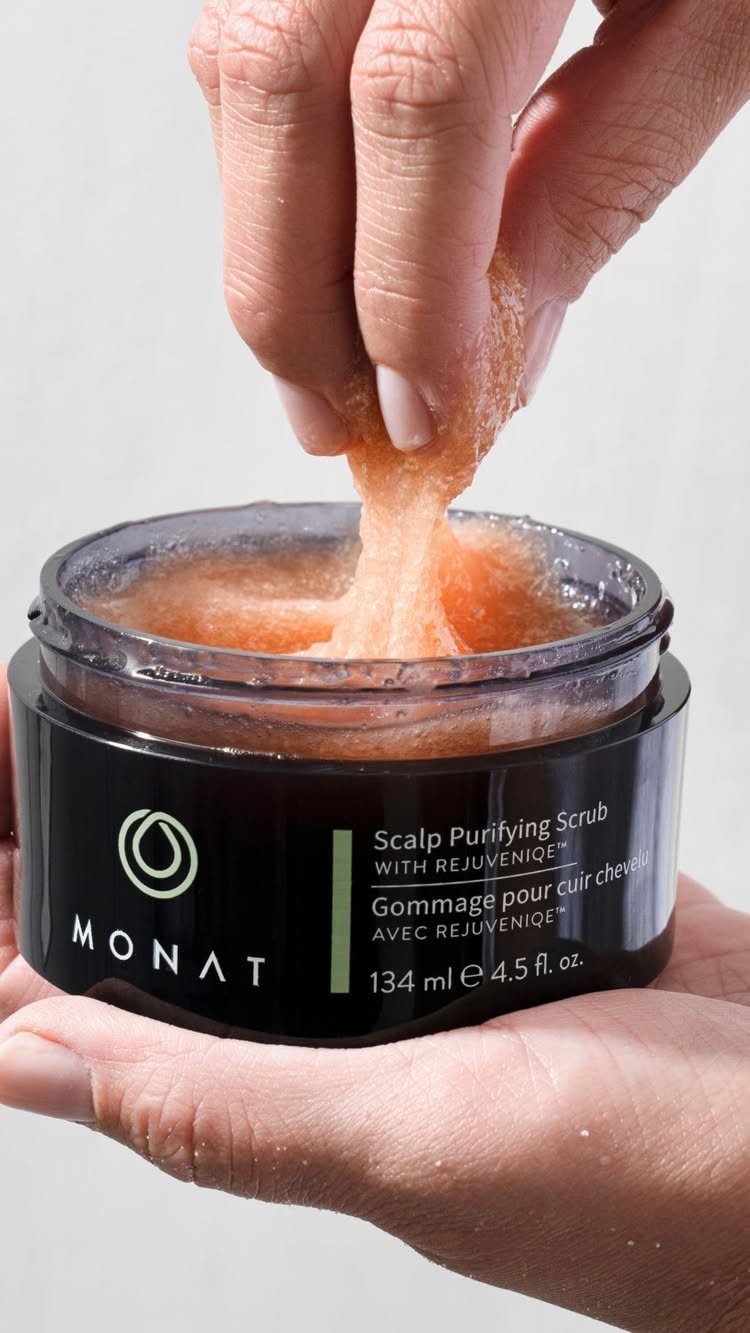
A scalp scrub in a jar works like a facial exfoliant for the skin under your hair: you scoop it out, work it into damp roots, and rinse.
A purifying scrub like the peach-colored Monat one pictured earns a place if product buildup or oily roots are your main complaint.
Use it with fingertips, never nails, and keep it to a weekly routine rather than a daily one. Scrubbing too often can leave a scalp irritated, and healthy hair starts there.
2. Kérastase Hair Products
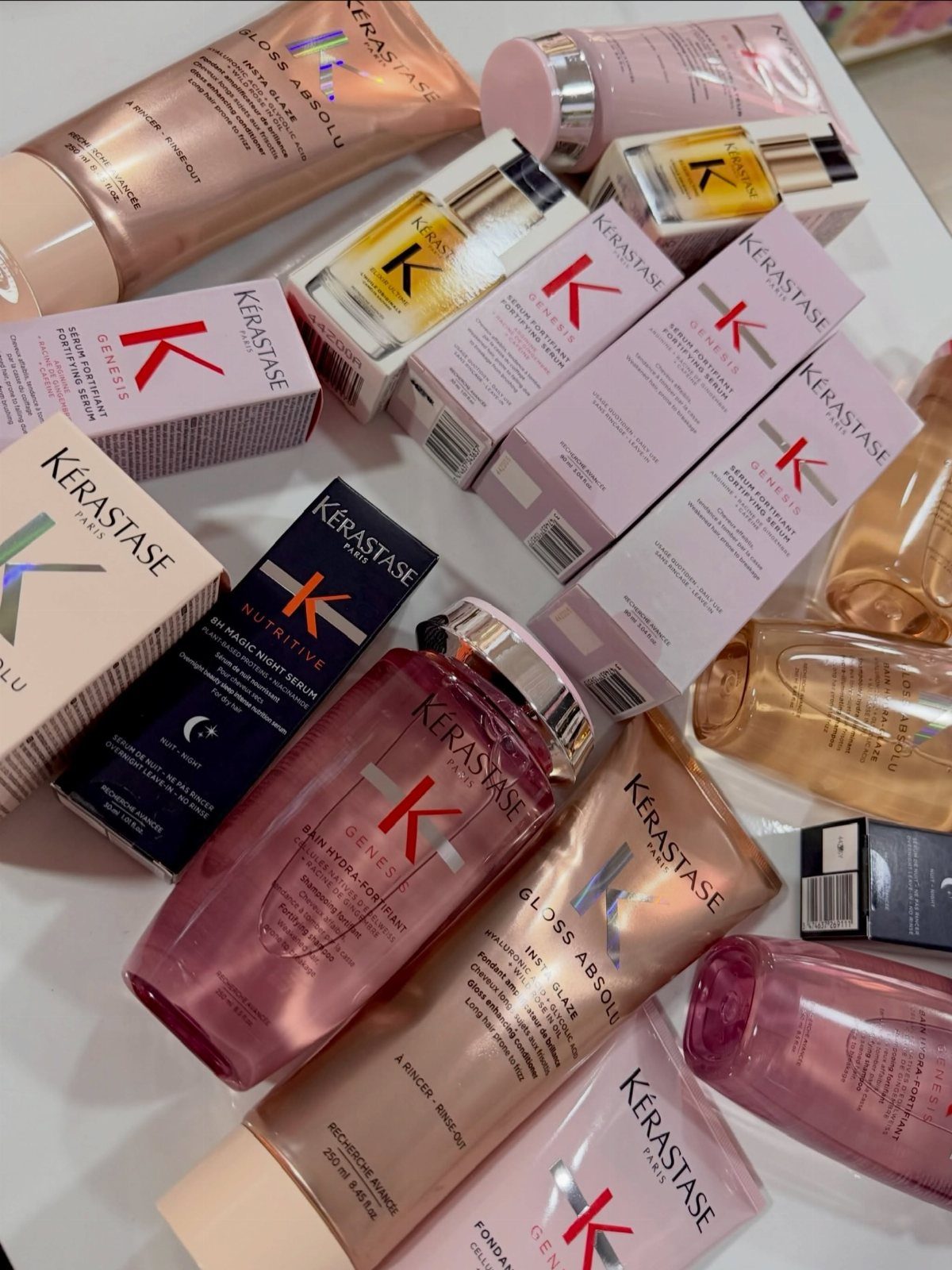
Kérastase is the splurge line here, so spend on one or two products, like a mask or a leave-in, rather than filling the whole shelf with it.
The pink and gold range includes Gloss Absolu, Genesis and Nutritive, which are aimed at different problems: shine, thinning-prone hair and dryness.
Pick the line that matches your biggest concern instead of buying a matching set. Cost is the trade-off, since salon-level formulas run well above drugstore prices.
3. Nutritional Supplements
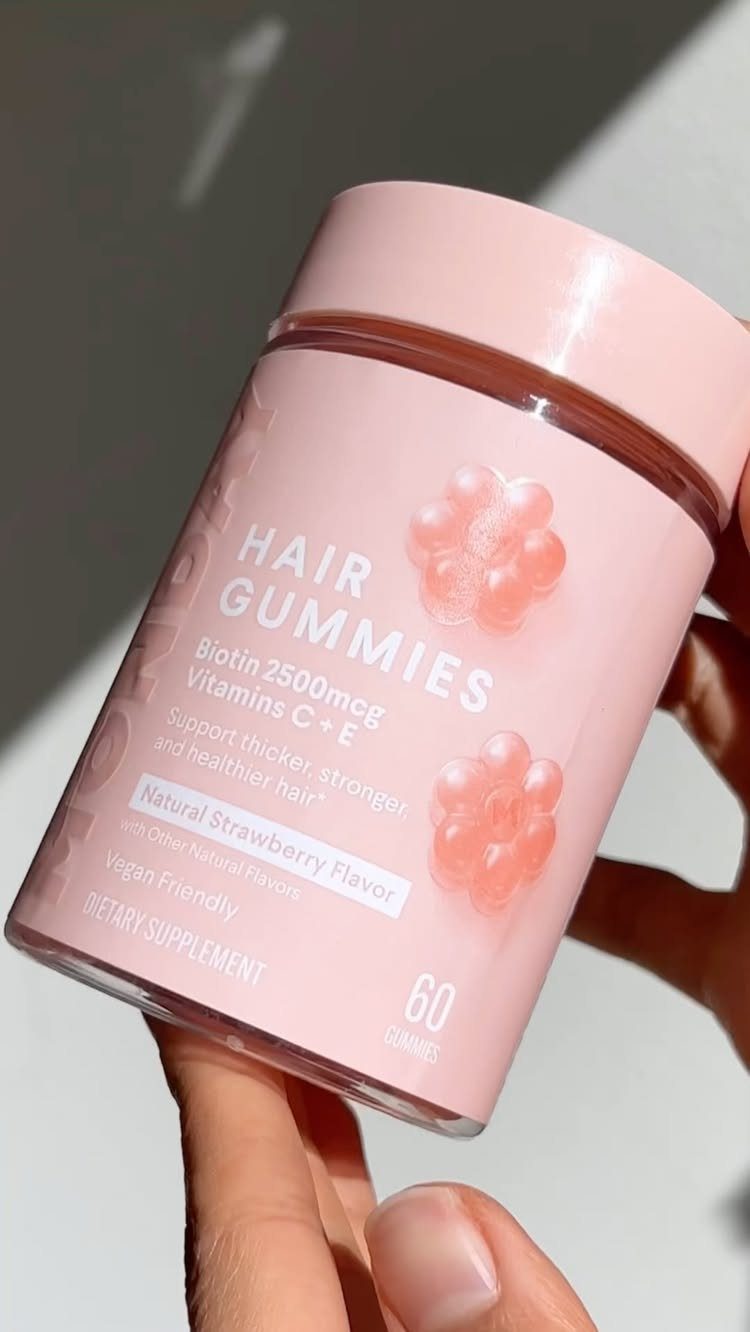
Gummies are the easiest supplement to stick with, which counts for a lot.
Gummies with Biotin and Vitamins C+E are easy to take, but check the label for how many make a serving before you work out how long a bottle lasts.
Supplements work slowly, and no gummy replaces a decent diet. If you take other vitamins or have a health condition, a quick check with your doctor is smart before adding biotin.
4. Heat Protectants
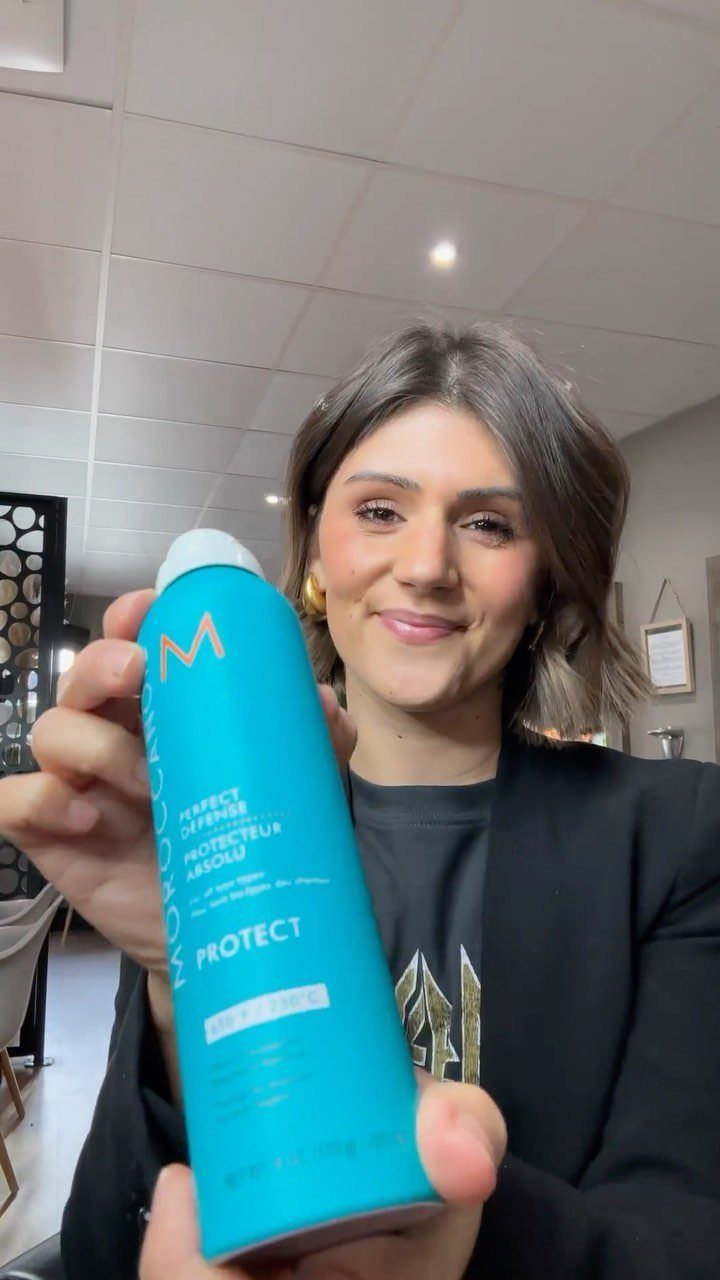
Heat protectant is the cheapest insurance a flat iron or blow dryer owner can buy. A spray like the blue Moroccanoil Perfect Defense bottle goes on damp hair before drying, and again on dry hair before any hot tool.
Mist it evenly through the lengths and comb it in, so no section gets skipped. A heat protectant won’t make high-heat styling harmless, so lower the temperature where you can.
5. Satin Pillowcases
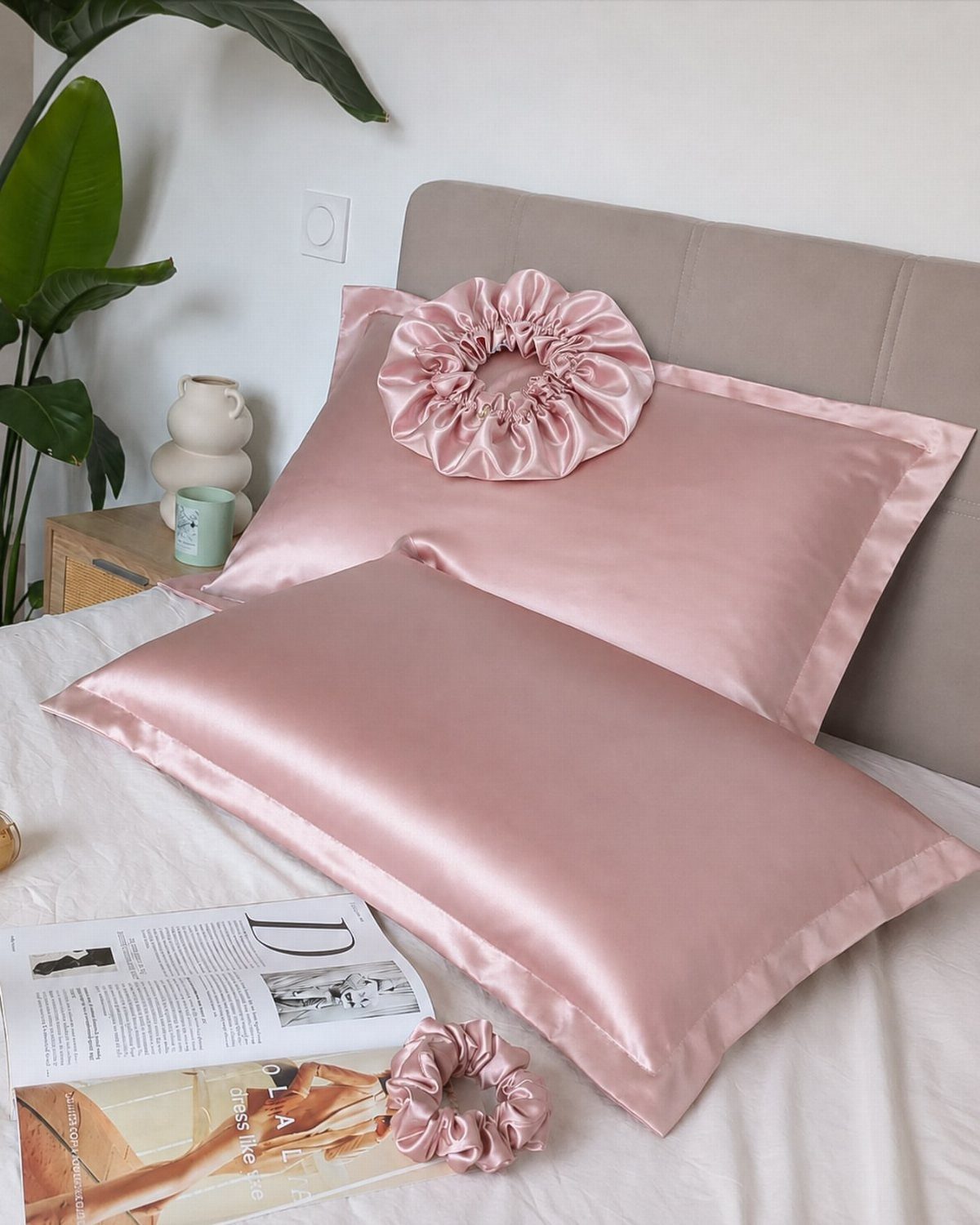
Sleeping on satin cuts down the friction that roughs up hair overnight, which shows up as less frizz and fewer tangles by morning.
A pillowcase set with matching scrunchies is a smart buy, since it protects hair both on the pillow and in a loose sleep ponytail.
Buy two so one is always clean. Satin feels slick at first, and some people find their head slides around a bit.
6. Hair Oils
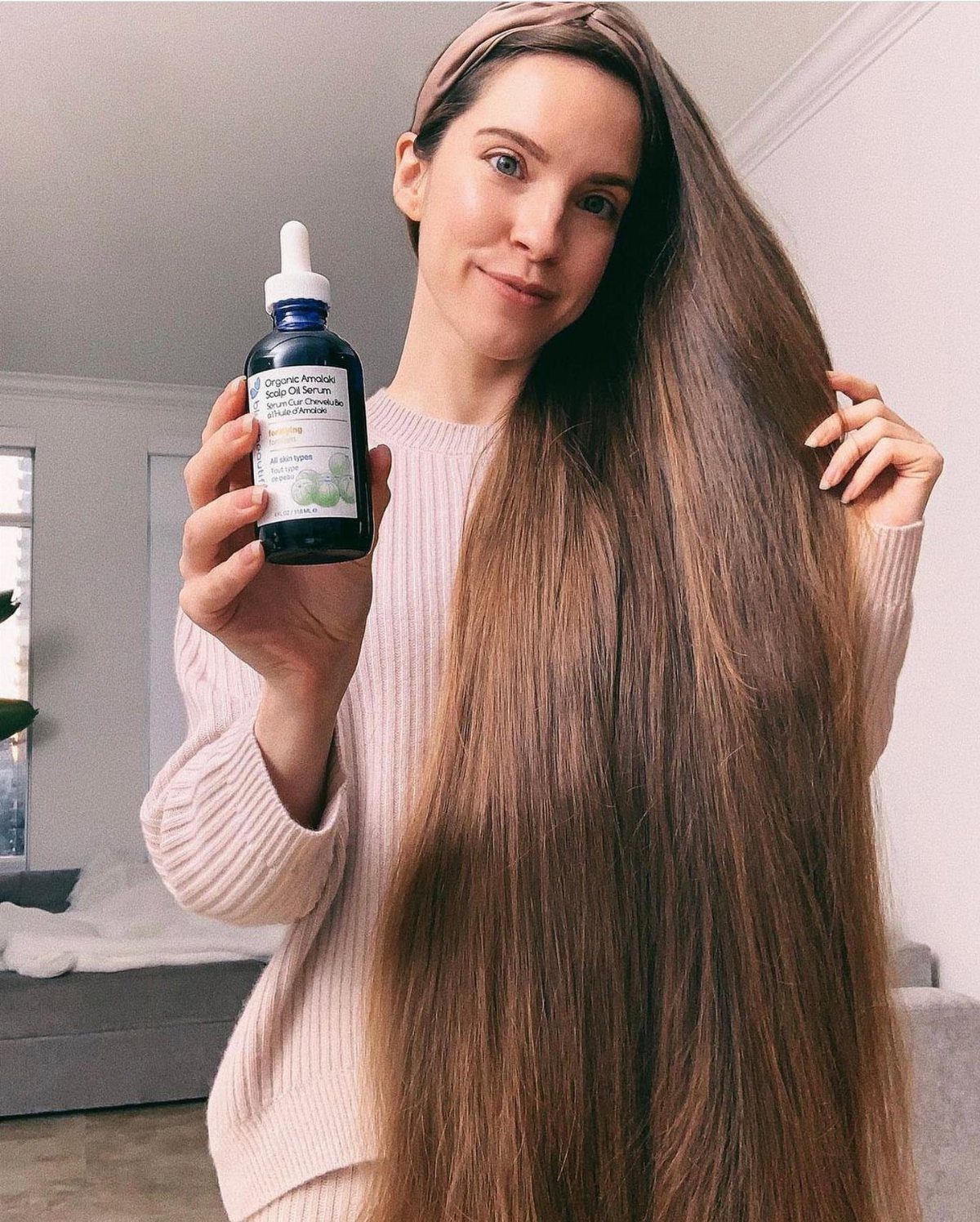
Oil is a finishing step, not a cleanser, and a few drops go a long way. Smooth a small amount of oil, such as an amla oil serum, through the mid-lengths and ends of dry hair to soften frizz.
Start with 2–3 drops and add more only if needed. Fine hair gets weighed down fast, so keep it away from the roots.
7. Deep Conditioners
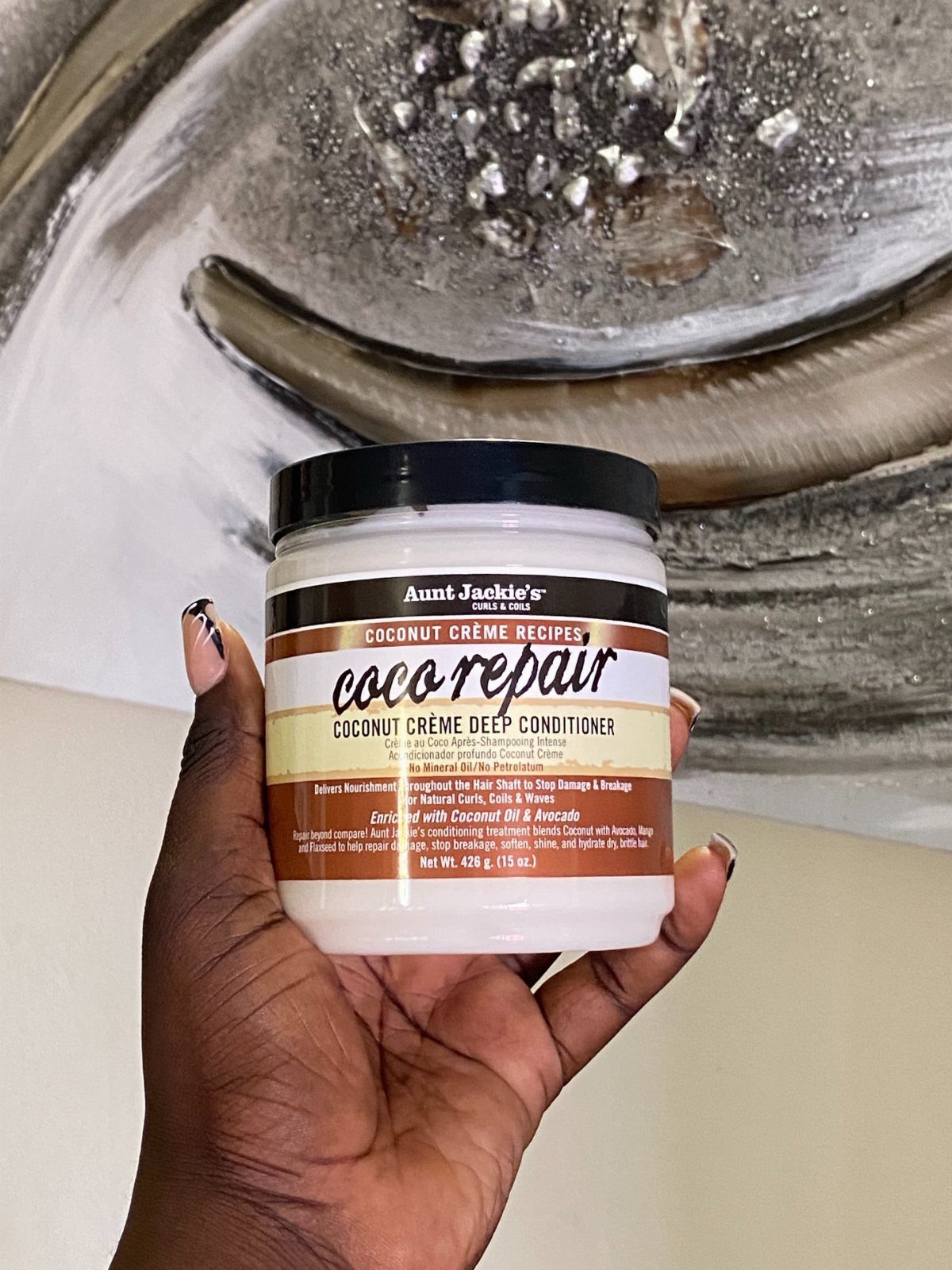
Coconut crème in a jar, like the Aunt Jackie’s Coco Repair deep conditioner pictured, is a rinse-out treatment that sits on hair far longer than a regular conditioner.
It suits dry or rough lengths that need more than a quick pass in the shower.
Apply it to clean, damp hair from mid-lengths to ends, comb it through, and leave it on for the time the jar directs. Rinse well so nothing is left behind to weigh hair down.
Keep it on the lengths and off the scalp if your roots get oily. Fine hair may do better with it every other wash than every wash.
Healthy Hair Routine
Shampoo only 1–3 times per week, using a gentle, nourishing formula. Washing more often than that strips moisture most hair can’t spare.
A conditioner after every shampoo puts back the moisture that cleansing strips out, and it makes detangling a lot less painful.
Seal the routine with a few finishing steps: heat protectant before any hot tool, then a serum or oil on the ends to smooth them.
Consistency matters more than any single product. Hair changes slowly, so choose a routine aimed at your actual problem and stick with it for several weeks before deciding whether it works.
Repairing Unhealthy Hair
Start with the shampoo and conditioner. Choose sulfate-free formulas with ingredients like keratin, biotin, or ceramides, since these are made to strengthen and hydrate.
Protein firms up weak strands, so if hair starts to feel stiff or brittle, go back to a moisturizing mask.
Turn down the heat tools, and space out chemical services like color and relaxers instead of layering them. Coloring and relaxing in the same stretch of time is hard on hair that is already struggling.
Trim damaged ends on a regular schedule. A split end keeps traveling up the strand, and only a trim stops it.
Diet’s Impact on Hair Health
Hair is built from what you eat, so a varied, nutrient-rich diet shows up in strength over time. Iron, zinc, vitamin C, the B vitamins and omega-3 fats are the nutrients most tied to stronger hair that grows longer.
If your diet has gaps, a daily multivitamin is a reasonable starting point. Collagen is another option, and production drops by about 50% by the mid-50s, so it may be worth considering as you get older.
Iron deserves special attention. Low iron is a common cause of thinning and shedding in women who haven’t reached menopause, and bringing levels back up can restore some of that density.
Ask your doctor for a blood test before taking an iron supplement, rather than guessing.
According to board-certified dermatologist Anetta Reszko, MD, the best hair care over 50 accounts for post-menopause changes in scalp and hair health. “Declining estrogen levels can contribute to reduced density, increased dryness, and slower growth,” Dr. Reszko says.
— Vogue
Frequently Asked Questions
What are the best products for healthy hair?
Moisturizing and strengthening products do the most work: a gentle sulfate-free shampoo, a conditioner after every wash, and a deep conditioner for dry lengths.
Before any flat iron or curling wand, a heat protectant goes on first, and a few drops of oil on the ends finish the job.
Buying a full matching set matters less than matching each product to your main problem, whether that’s dryness, buildup or breakage.
How do I make my hair extremely healthy?
A steady routine does more than any single product. Shampoo only 1–3 times a week, condition every time, protect hair from heat, and trim damaged ends regularly.
Do supplements help hair health?
They can help, but slowly, and no gummy makes up for a poor diet. Biotin and vitamin C+E gummies are the easiest kind to stick with, so check how many make a serving.
Biotin is worth a quick call to your doctor first if you already take other vitamins or manage a health condition. For iron, get a blood test first instead of guessing.