Hair length, natural texture, and how long the braids need to last should pick your style for you, well before any saved photo does.
Styles on the list range from fine micro braids and a braided bob to jumbo braids, stitch braids, and a braided faux hawk, so the time in the chair and the upkeep differ a lot.
1. Knotless Braids
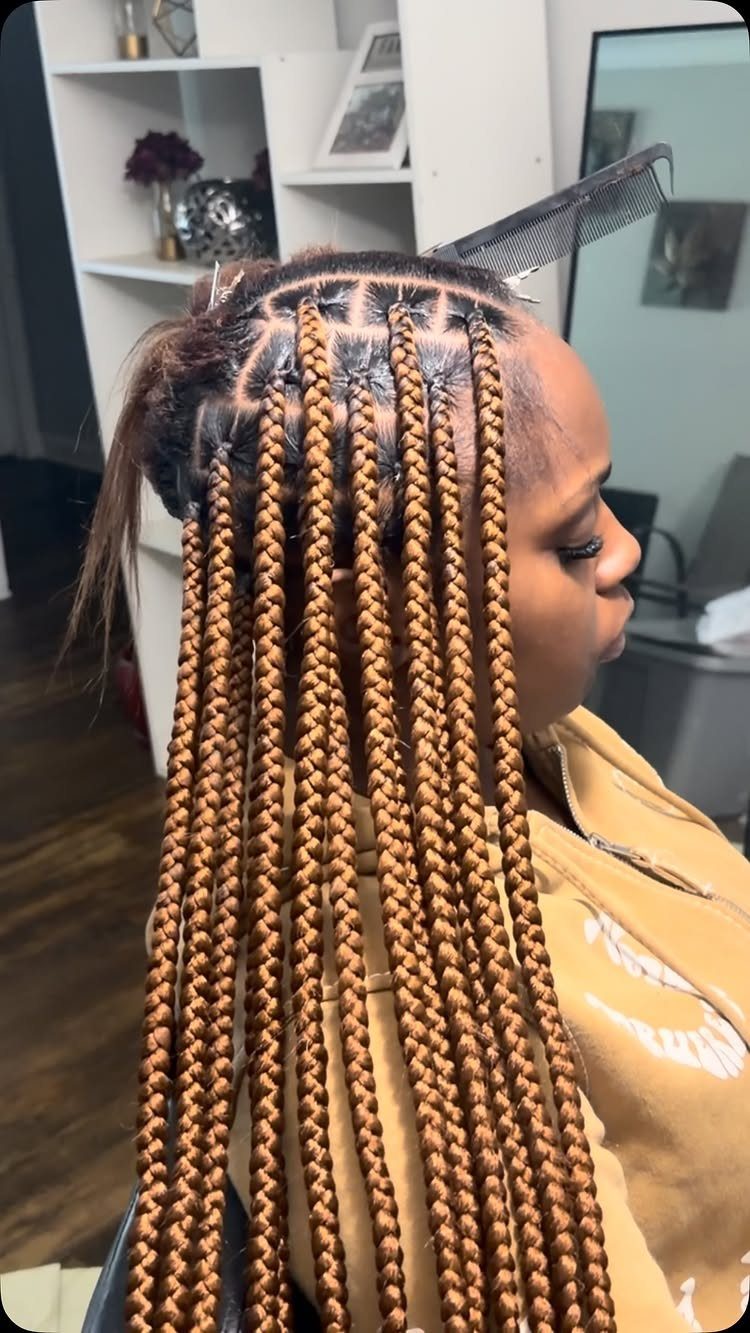
Starting the braid without a knot at the root is what separates this style from standard box braids, and it shows at the scalp: the hair lies flat and looks like it grows out of the head.
Ask your stylist for a neat, even grid by name: knotless braids look best when every part is crisp and the same size.
I like honey tones like this one because they read soft against most skin tones. A clean part line matters more than length, so bring a photo of the grid pattern you want.
2. Goddess Braids
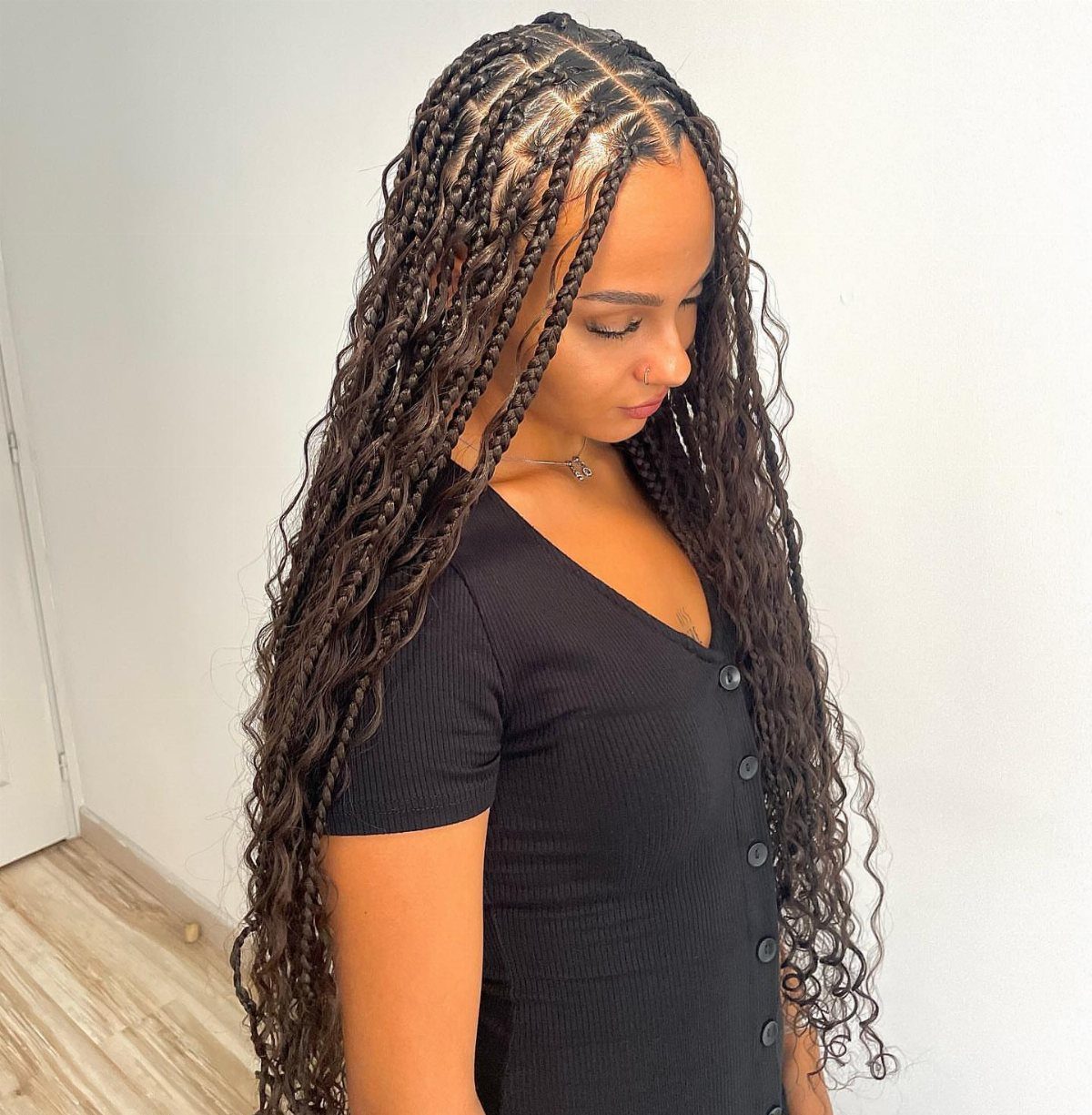
Thick braids that end in loose curls give this style its volume, and the curls do the work a finished bun or ponytail would otherwise do.
Because the braids are chunky, the style suits a casual outfit like a plain ribbed top best. I would keep the curled ends in mind when choosing a stylist: ask to see how they finish them before you book.
3. Triangle Box Braids
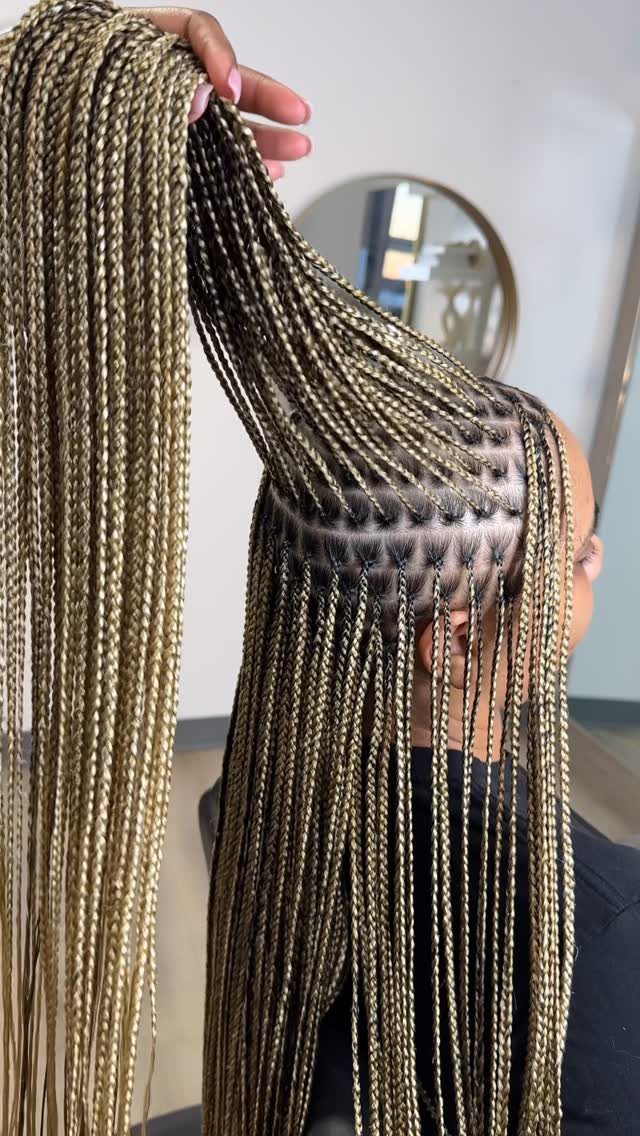
Triangle-shaped parts at the scalp are the signature here, and they can be seen clearly when the hair is lifted.
Blonde mixed with brown makes the triangle sections easy to spot, because the lighter strands catch the eye along each part.
Square parts are the standard alternative, so choose those for something less distinctive. I would pick triangles when I want a small detail that makes ordinary box braids look planned.
4. Fulani Braids
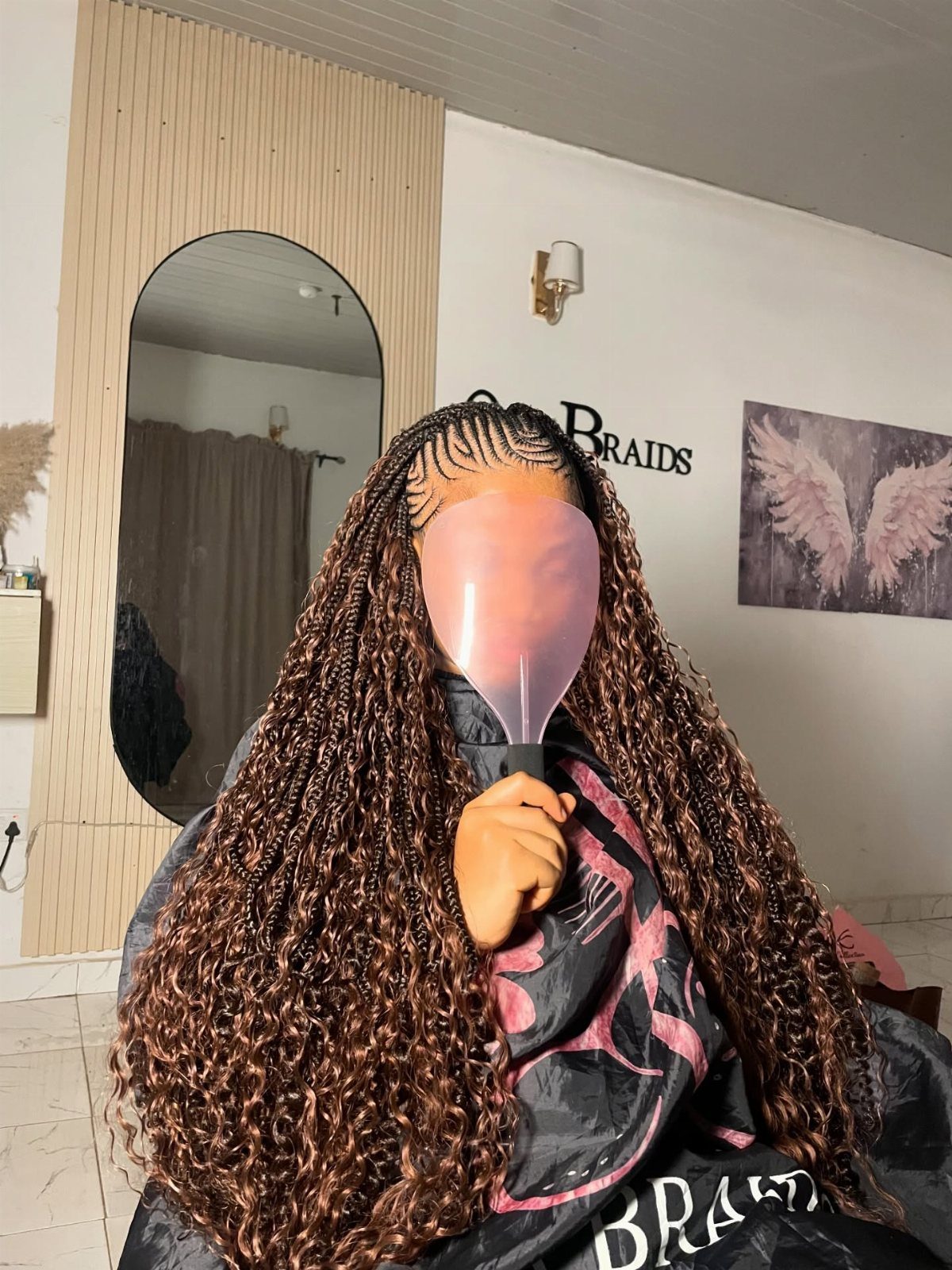
Fulani braids combine cornrows at the front with box braids through the length, and the pattern on top is where you decide how much personality you want.
Curly ends soften the whole shape of Fulani braids, so ask for them left loose or added with curly braiding hair.
Ask your stylist to sketch or show the cornrow layout before starting. A simple center design suits daily wear; a more detailed one suits an evening out.
5. Jumbo Braids
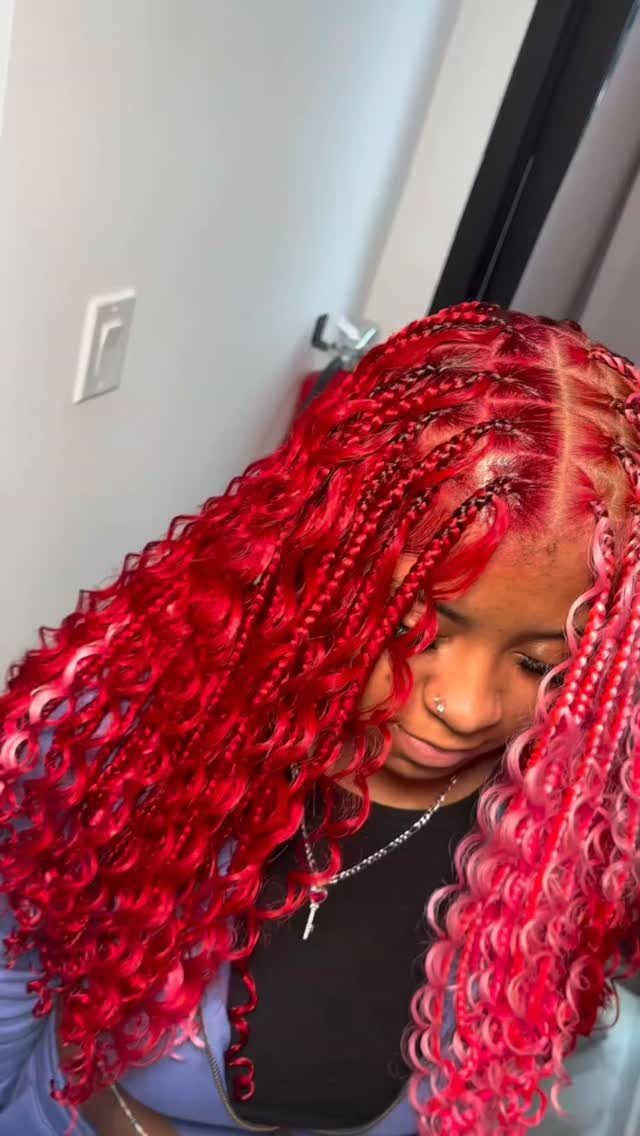
Bold color and thick sections are what make jumbo braids work: fewer, bigger braids mean the style makes its statement from a distance.
Plain clothes balance it.
A black shirt and a simple jacket let the hair carry the outfit, and silver jewelry suits the warm tones. I would choose jumbo when I want impact without a complicated look.
6. Braided Ponytail
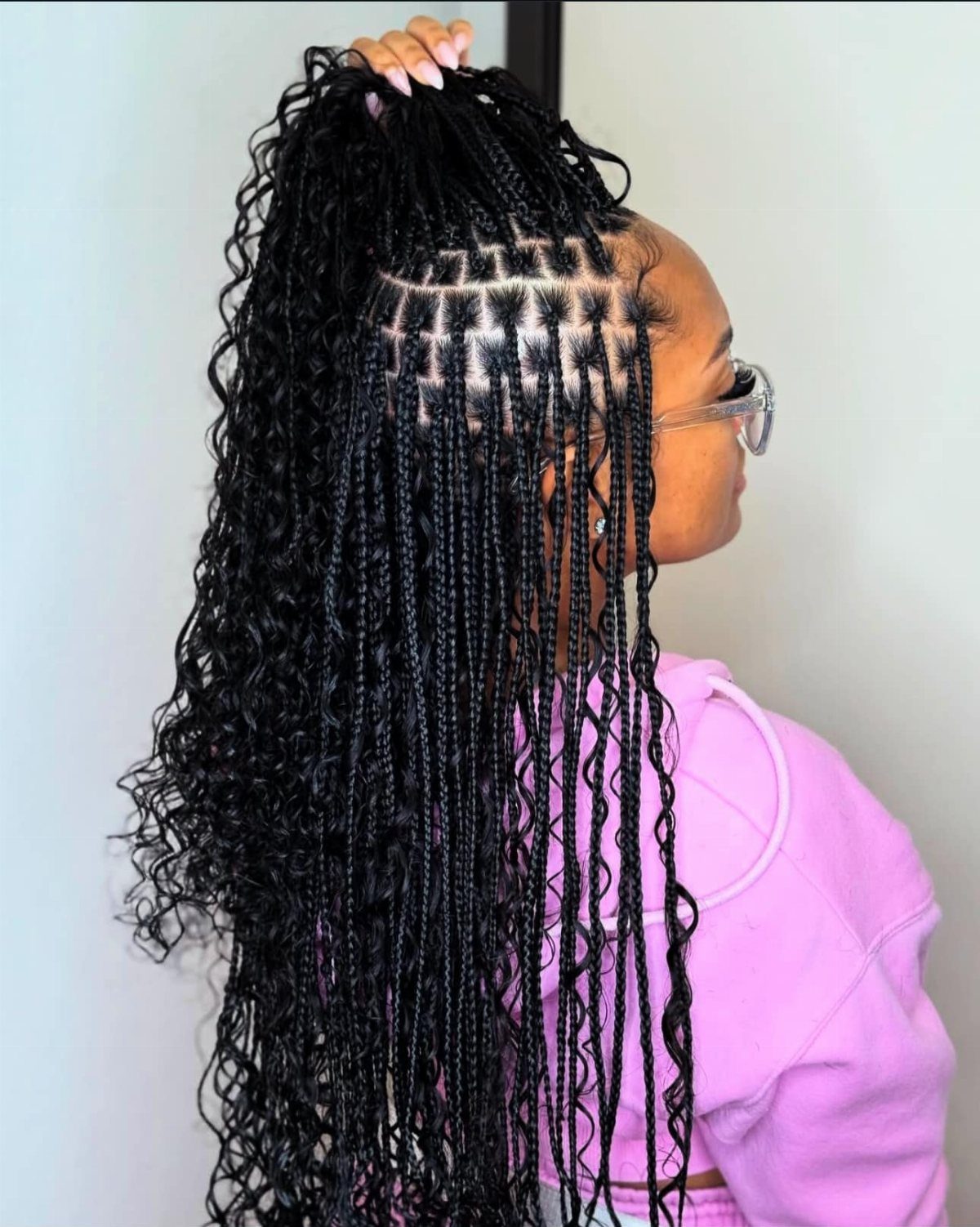
Pulling long braids up into a high ponytail is the easiest way to wear them when you want the length off your neck. It also shows off the face, which pairs well with glasses.
Leaving the tail ends curly gives a braided ponytail some bounce and movement. I like this for workdays and errands because it takes one hair tie and a minute, and it works with a hoodie or something more dressed up.
7. Cornrows
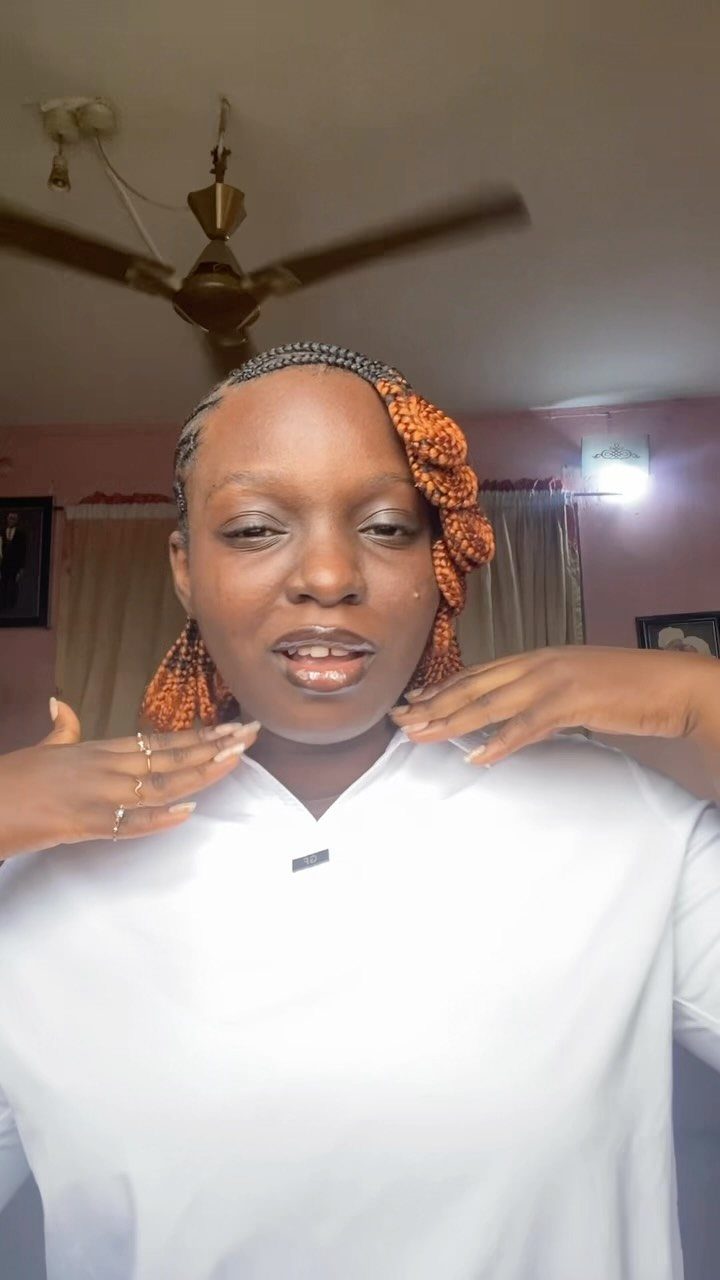
Cornrows sit flat against the scalp, so the pattern is the whole style: straight back, curved, or a mix of directions. Orange-brown like this one makes each row easy to see.
Bring a photo of the pattern you want, since the parting is what you are paying for. I would choose cornrows for a low-fuss look that keeps hair off the face and neck.
8. Passion Twists
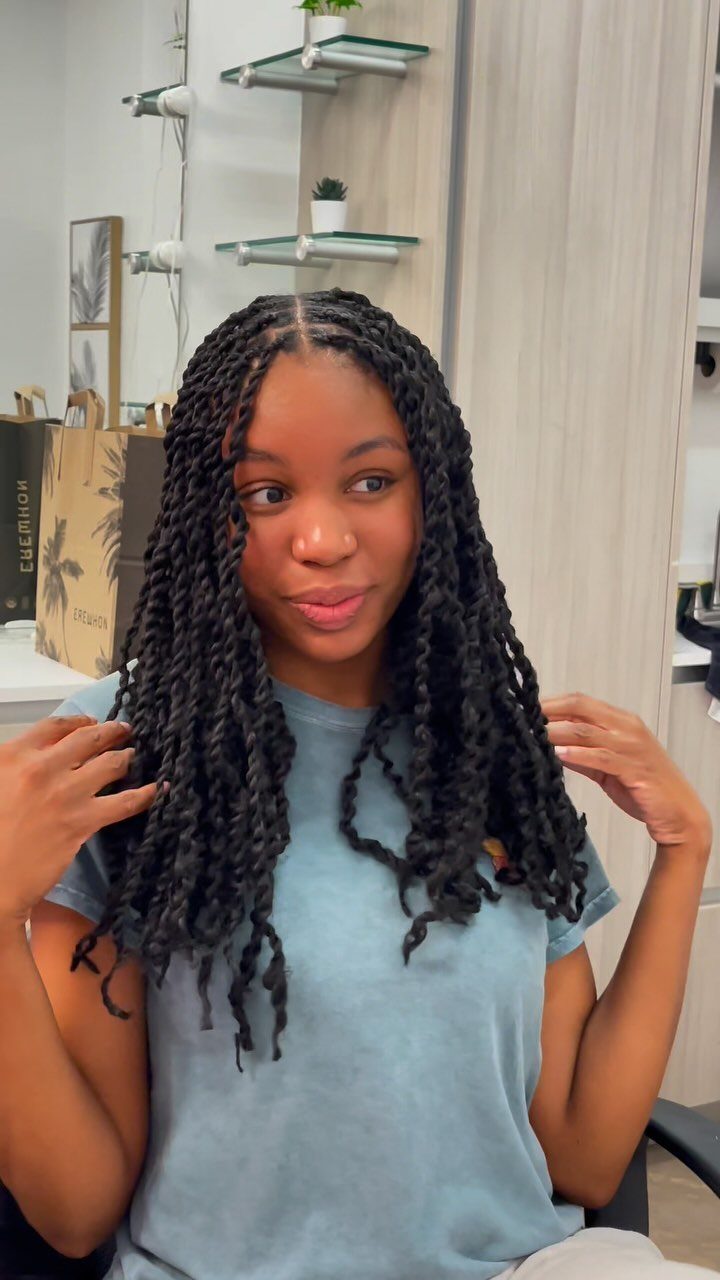
Passion twists are made by two-strand twisting textured extension hair, often a water wave style, which gives the length a soft, bohemian finish instead of a sleek one. Long and black, as here, they look full without feeling heavy.
A plain tee like this light blue one is enough, because the hair already has movement. I would pick them over standard box braids when I want something relaxed and a little less polished.
9. Micro Braids
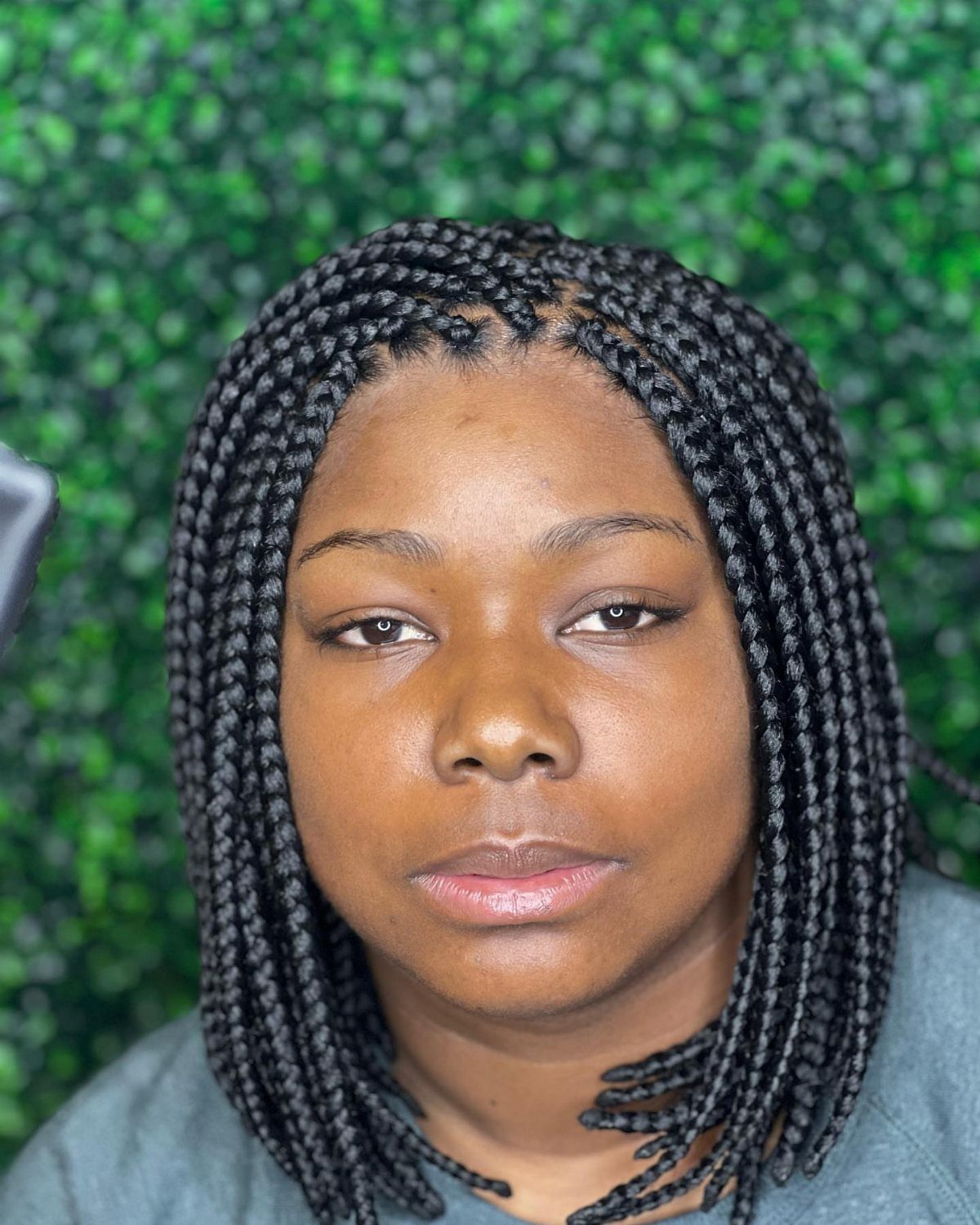
Micro braids are tiny and fine enough to pass for strands of hair, so the finished look is light and swingy, especially cut into a bob.
Because each braid is so small, the style needs a stylist with a steady hand and a clean parting technique. I would also expect a longer appointment than for larger braids; ask about the time before you book.
10. Braided Bob
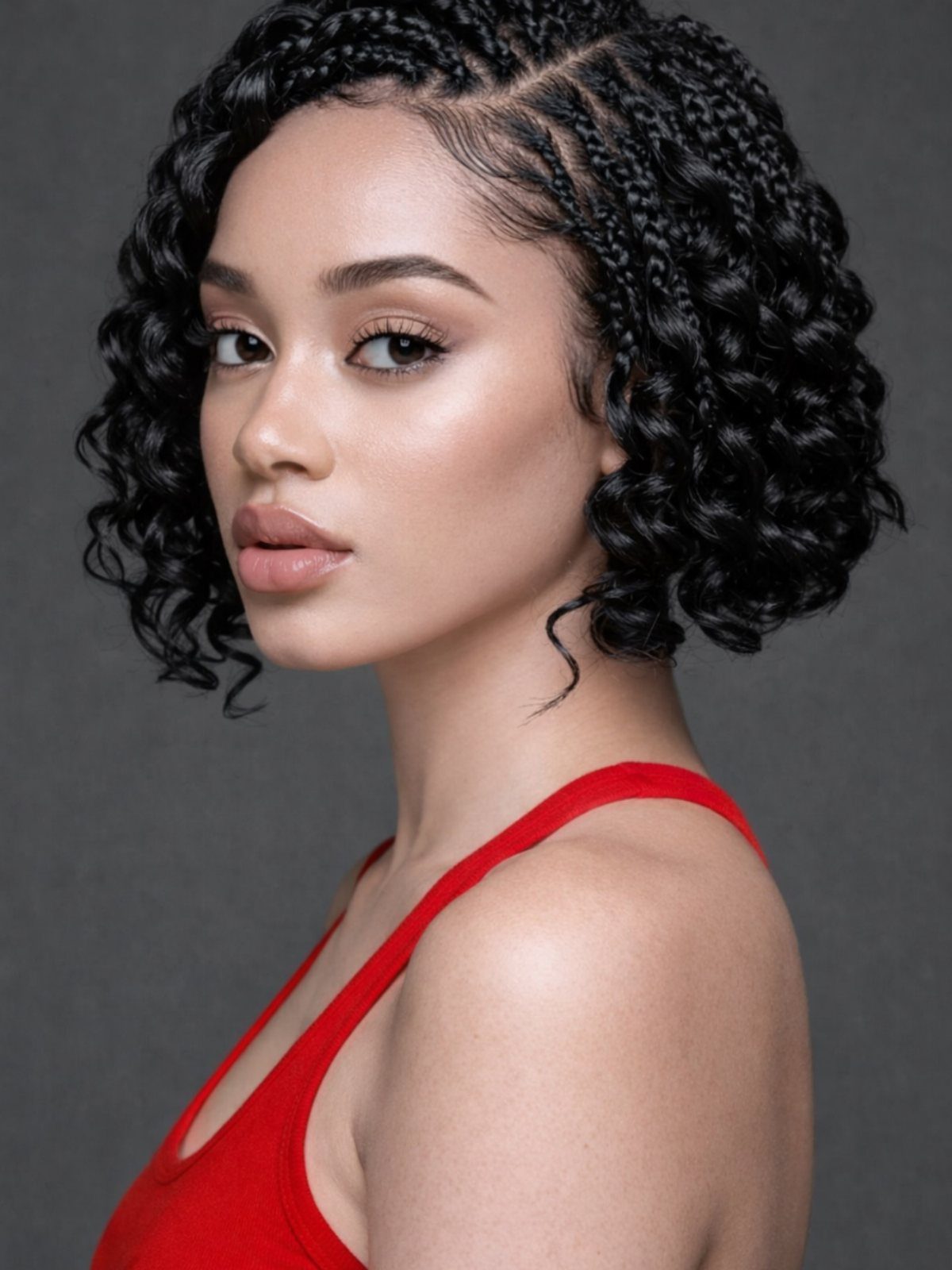
Short braids cut into a bob keep the structure of braided hair without the weight of long lengths. Curly ends, like these, soften the line at the jaw.
A bob suits a simple top and works for people who dislike braids hanging past the shoulders. A braided bob reads as neat and put-together to me, and the blunt cut makes the outline easy to see.
11. Ghana Braids
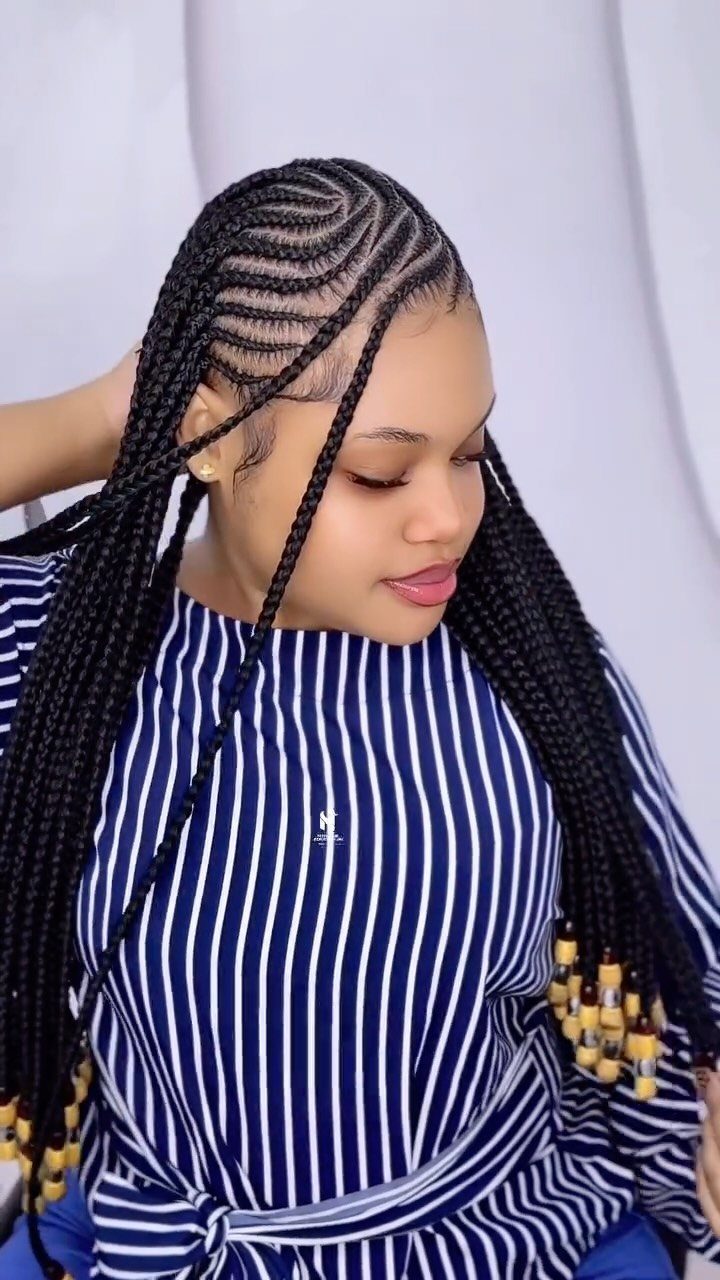
Curly hair takes well to Ghana braids, and when the braids are long and black, beads sit on them beautifully. Wooden or gold beads add detail without changing the braid itself.
For a quieter result, ask your stylist to put beads on just a few braids. Stripes and other simple tops let the beading stand out, so I would keep the outfit plain.
12. Crochet Braids
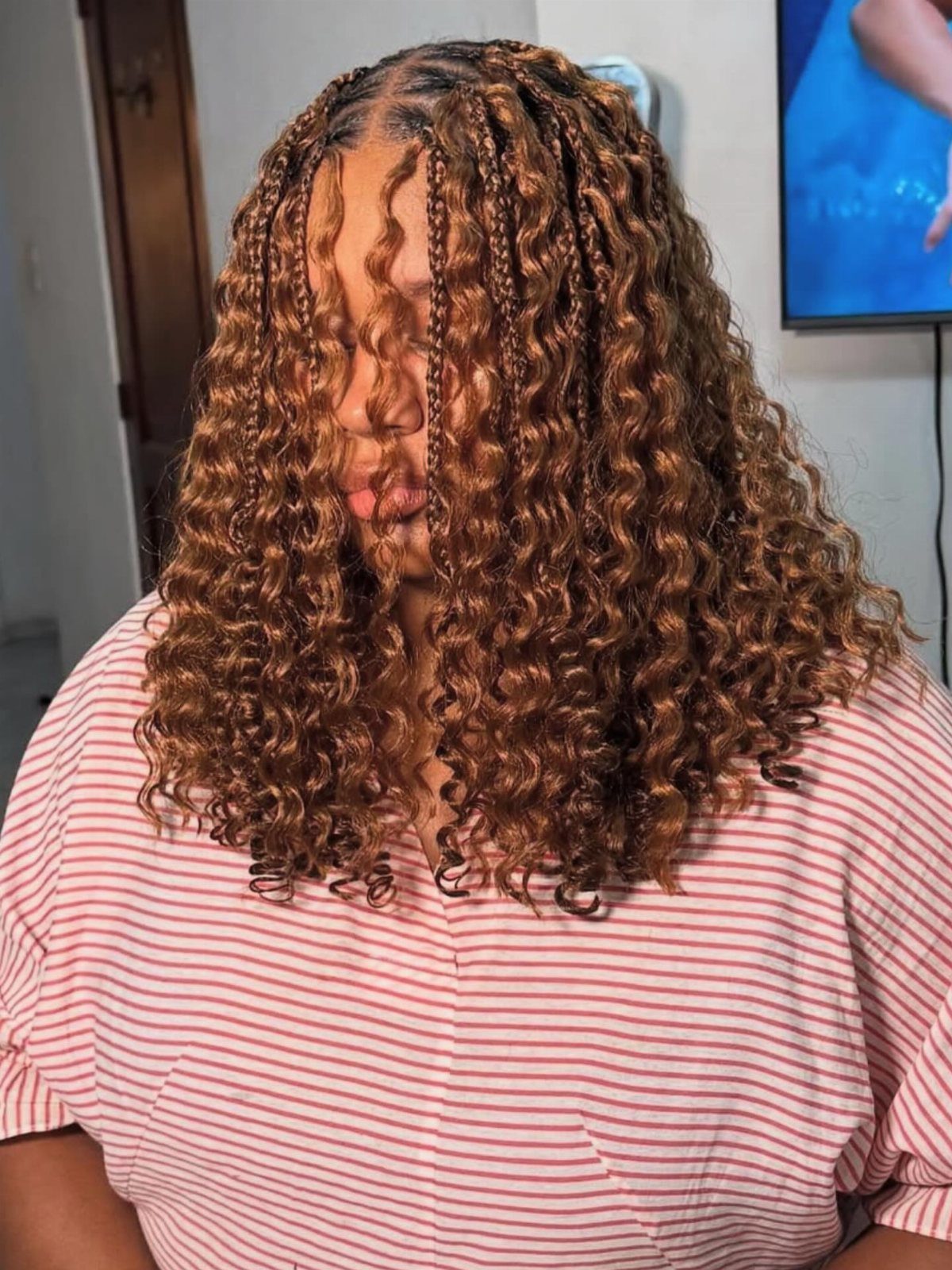
To make crochet braids, a stylist lays the cornrows flat first and then loops the extensions onto them with a latch hook. That means the curly, shoulder-length texture you choose is added hair, not braided from your own.
Pick the curl pattern before you book, since it sets the whole look. I like light brown curls for how easy they are to wear with striped tops and casual outfits.
13. Lemonade Braids
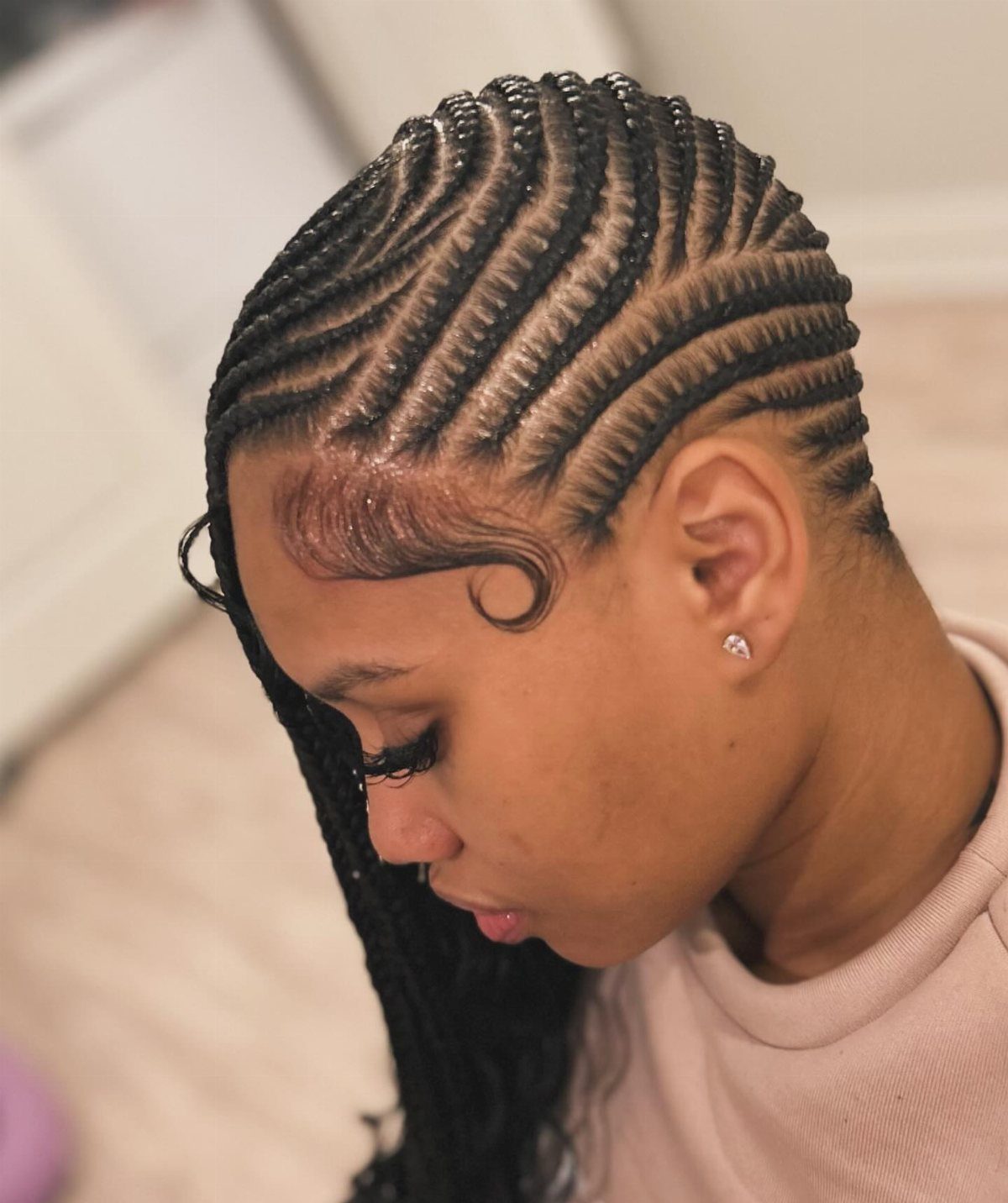
Side-swept cornrows are what define lemonade braids: every row bends to one side, so the whole style has a direction instead of running straight back.
A reference photo of the exact sweep saves you from guessing, because the curve of each part decides how the whole style reads.
Neat, styled edges finish the look. I would wear this with a simple top like a beige shirt, because the pattern already supplies the drama.
14. Boho Braids
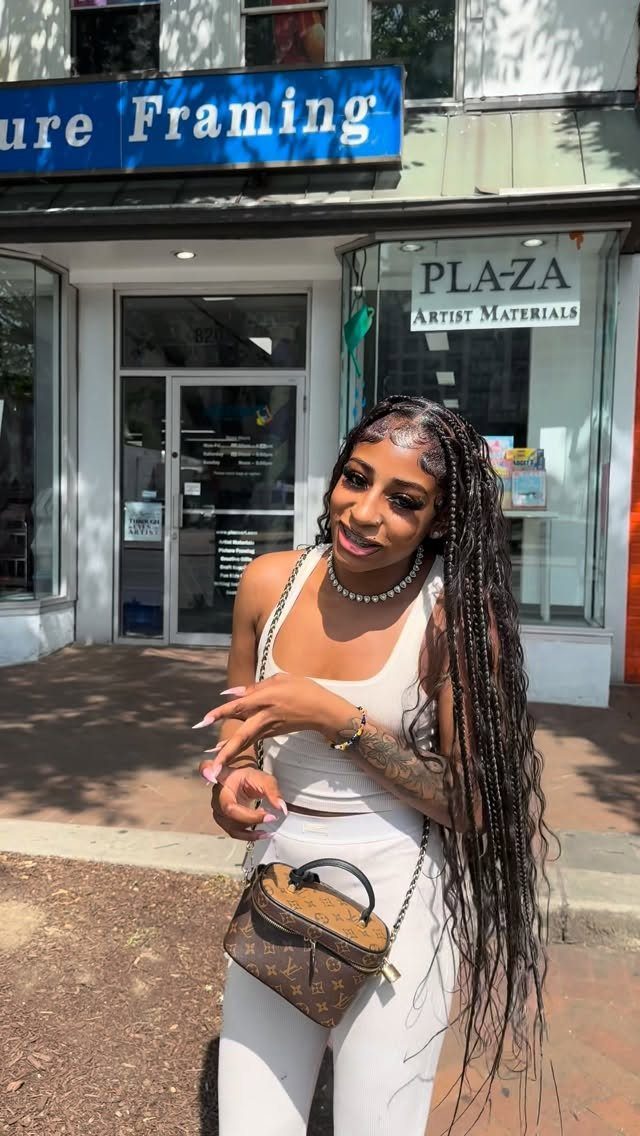
Long braids with curly ends give boho braids their loose, easygoing shape, and the curls keep the length from looking stiff.
Ask for the ends left curly or finished with curly braiding hair.
Clean white pieces and one good bag let the hair set the mood. For a relaxed look that still holds up on errands or at a casual lunch, boho braids get my vote over the sleeker styles.
15. Braided Bun
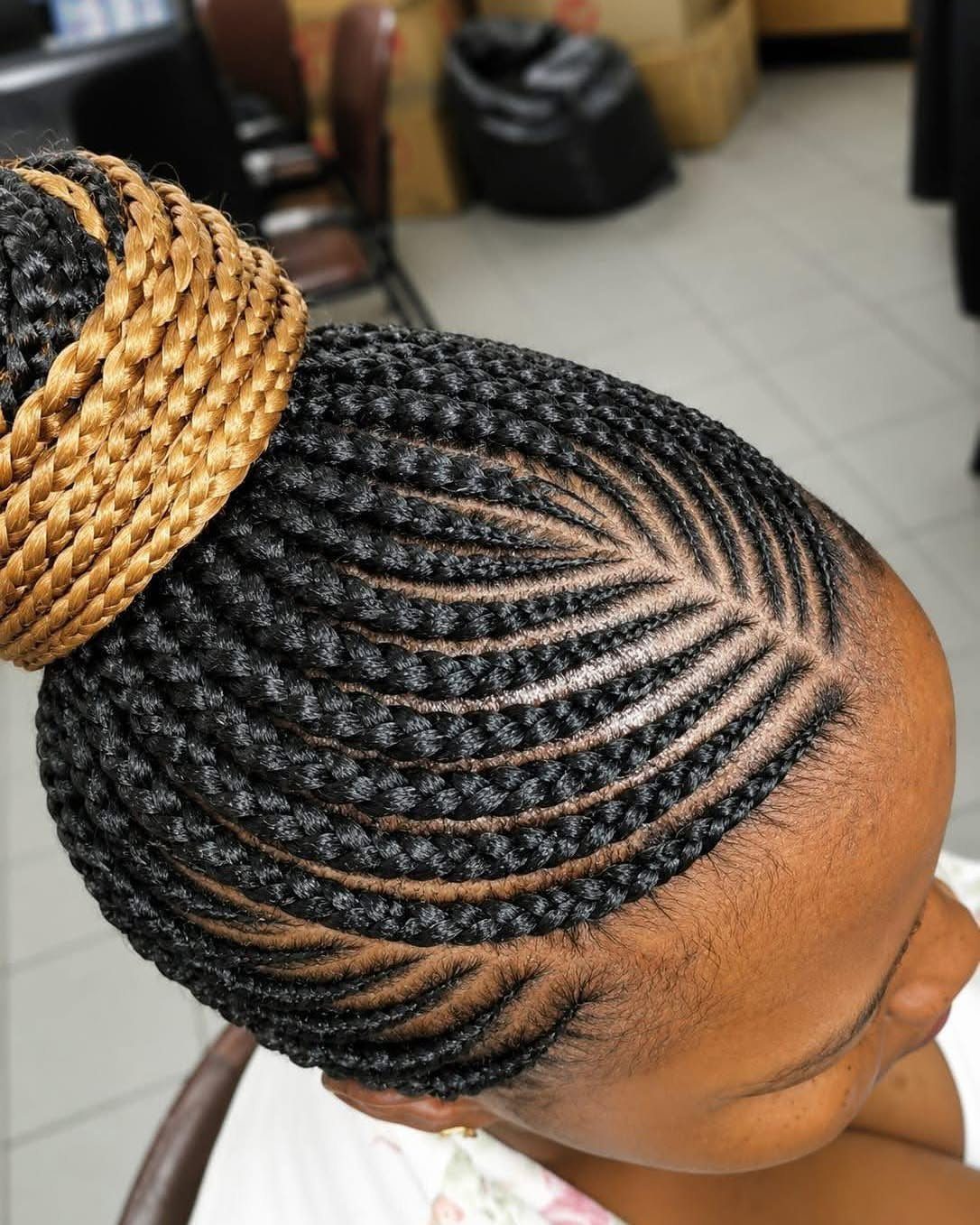
Gathering braids into one large bun on top of the head turns a protective style into something polished. Black cornrows underneath with a honey-blonde bun above, as here, make the 2 parts easy to read.
Keep the bun high and full, and ask your stylist to anchor it securely. A bun like this is neat enough for the office and quick to wear, since the shape is already set.
16. Stitch Braids
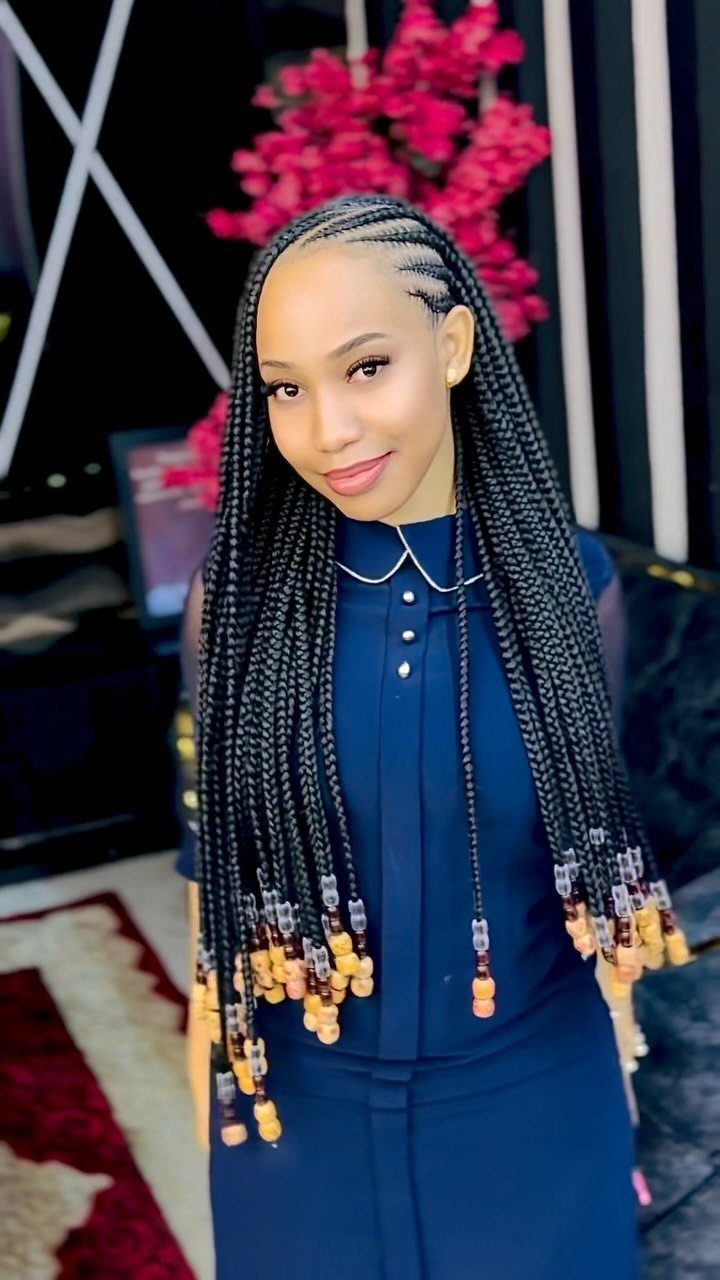
Stitch braids are known for their crisp, stitched-looking parts, and long black braids show those lines clearly. Wooden beads at the ends add weight and a little sound without crowding the style.
Look through a stylist’s portfolio for sharp, even parting before you book, since stitch braids only look right when the lines are crisp.
A solid dress in navy or another deep color keeps the focus on the beads. I would keep the beading to the ends only.
17. Knotless Tribal Braids with Beads
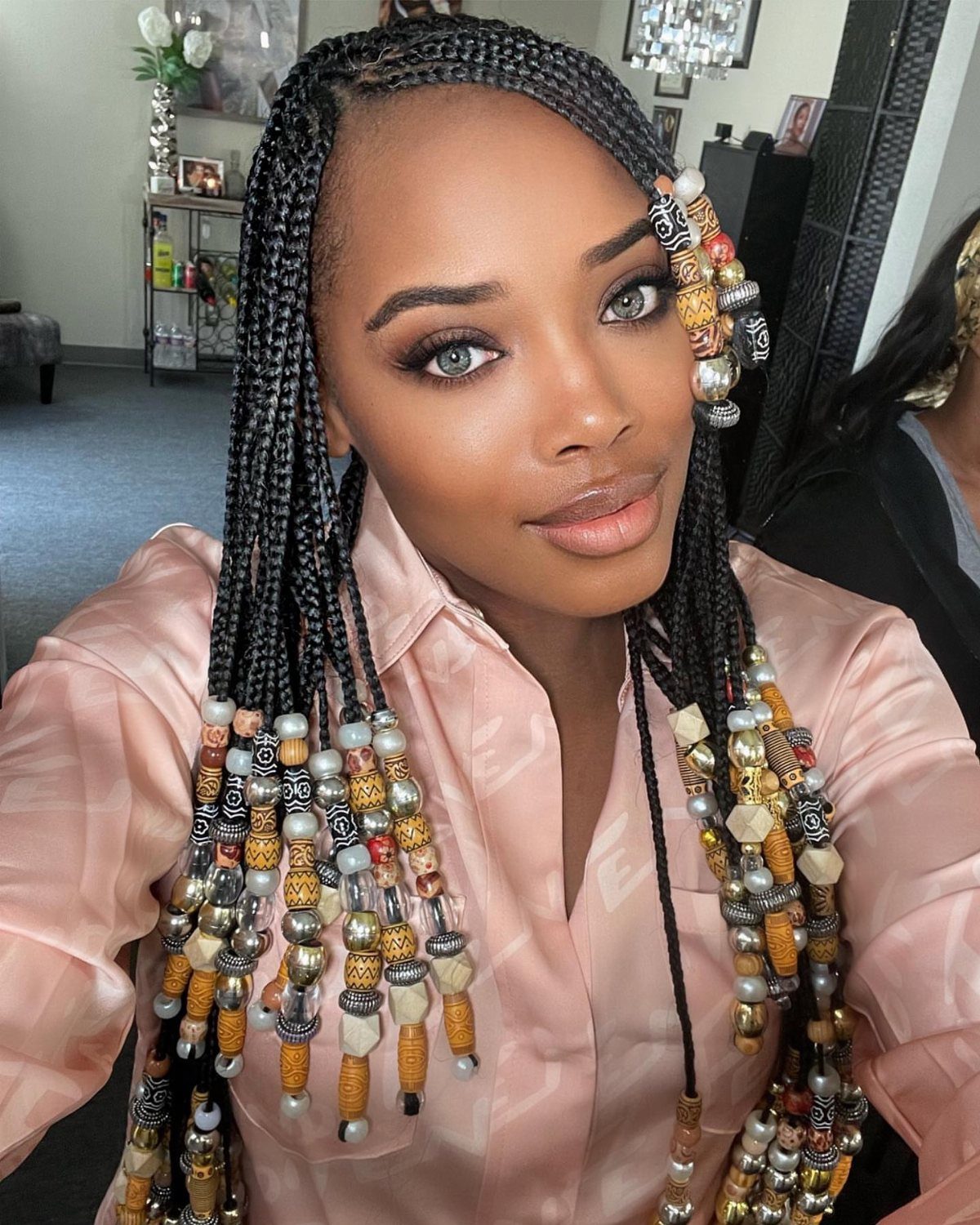
Knotless tribal braids with beads layer 2 details: a flat, natural-looking root from the knotless method, and colorful wooden and decorative beads along the lengths.
Pick bead colors before the appointment and bring them or a photo, so the stylist can plan the spacing.
A satin top in a soft shade, like pink, lets the beads stand out. I would use fewer beads for daily wear and more for an evening out.
18. Braided Faux Hawk
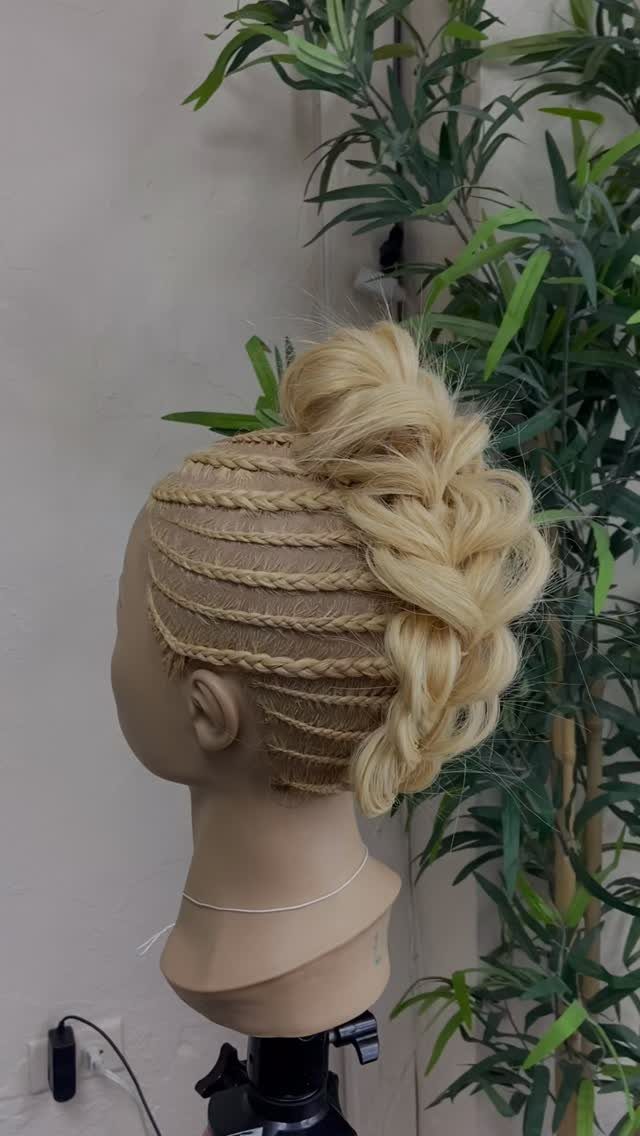
A braided faux hawk keeps cornrows tight along the sides and builds a tall braided crest down the center, so you get a bold shape without cutting any hair.
Ask your stylist how high to build the crest, since volume is the part you control.
This works well when you want length off the face and a style that looks deliberate. I would choose it for a night out, and a blonde like this one makes the crest stand out.
19. Rainbow Colorful Box Braids
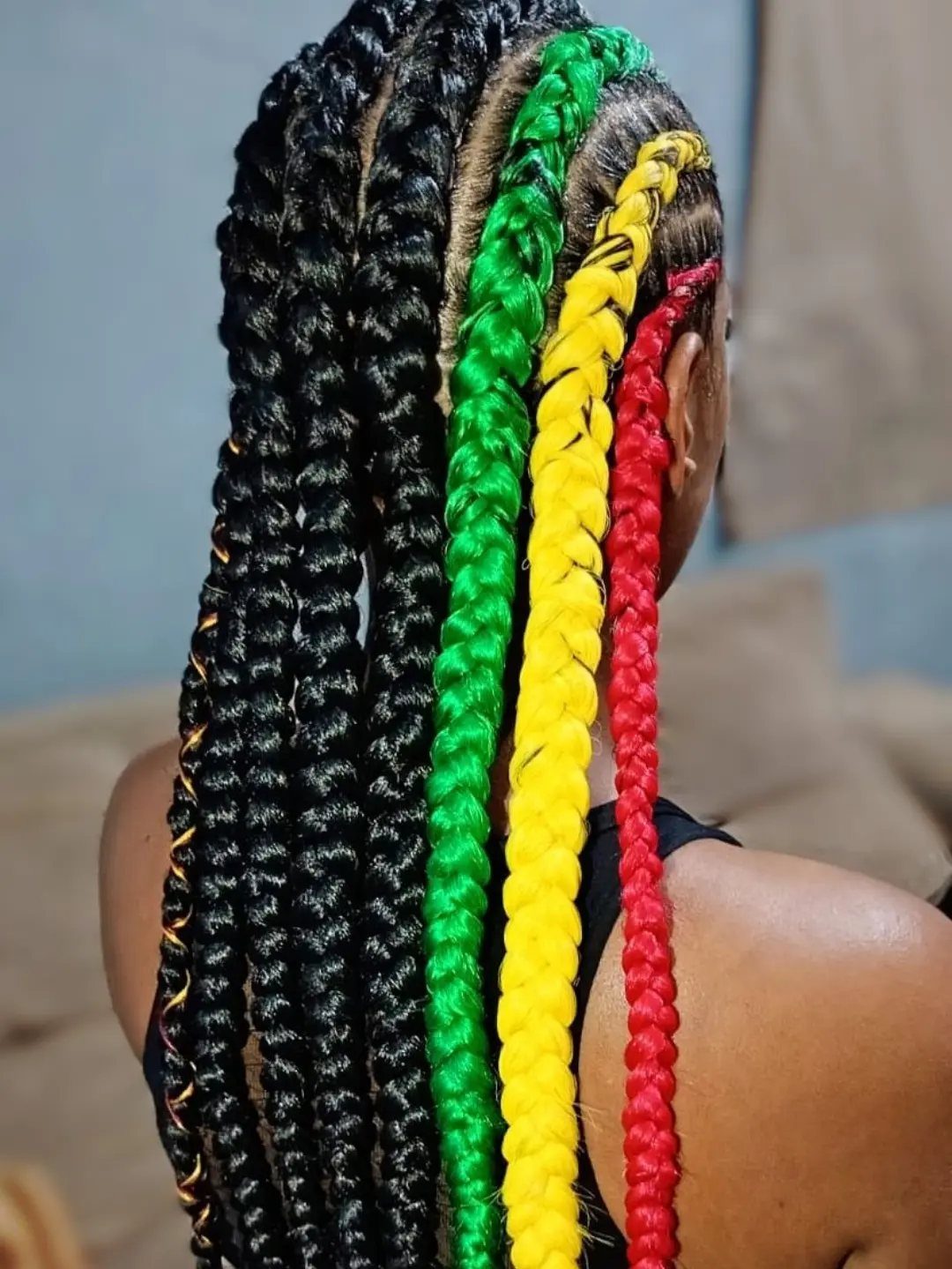
Ask your stylist to blend the colored braiding hair evenly through the length, since clumps of one shade look accidental.
Keeping most braids black, as here, makes the color easier to wear with everyday clothes. I would pick this over a full rainbow for work and errands, and a plain black top lets the strands do the talking.
20. Feed in Braids
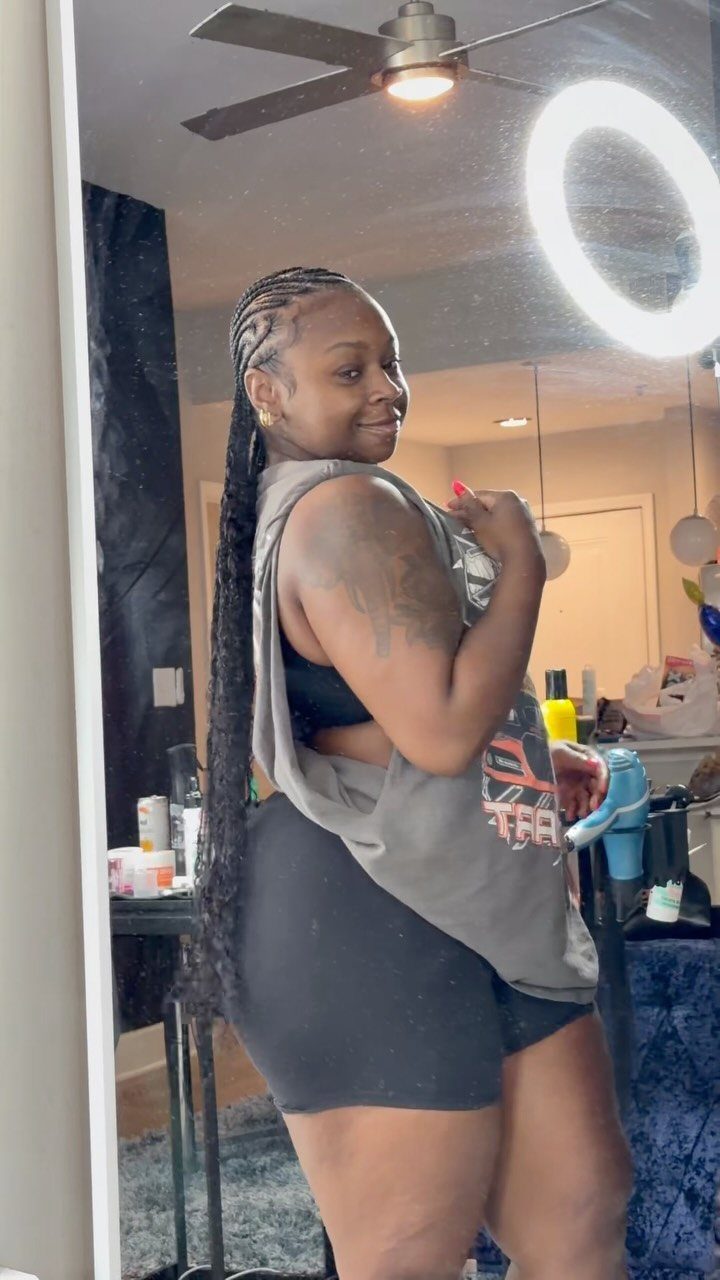
Feed-in braids add braiding hair a little at a time as the braid travels down, so the start at the hairline is thin and the length gets fuller. That gradual build keeps the front flat and natural-looking.
Long and dark, as here, they pair easily with a gray tee and shorts, which makes them a good fit for relaxed days.
Smooth, flat starts at the hairline are what a feed-in braid is for, so look through a stylist’s photos of hairlines before you book. I would choose feed-ins when I want sleek roots without bulk.
How to Prep Hair for Braids
Braids go in easier, feel better, and last longer when the hair is ready, so the prep matters as much as the style.
Start with a wash using a sulfate-free shampoo, then follow with a deep conditioner or a moisturizing mask.
Detangle completely before anything else happens. Any knot left in the hair gets braided in and turns into breakage later.
Finish with a leave-in for moisture. A light blow-dry makes sectioning smoother and easier, though a heat protectant goes on first.
Blow-drying is optional. Skip it if your hair is already soft and detangled.
Caring for Braids
Depending on the style and your upkeep, a few can stretch to 8 weeks.
Leave braids in past 6–8 weeks and the roots can mat, which means more breakage at takedown. I would book the takedown before that point rather than squeezing out extra days.
Thickness changes the timeline. The thicker the braid or twist, the faster it frizzes, while small, tight braids hold up longer.
Scalp health is what keeps the rest on track, so keep following the same natural hair care habits you use the rest of the time.
A braid install takes several hours and can cost a lot, which makes the upkeep worth the effort.
Choosing the Right Braid Style
3 things narrow the choice fast: your hair length, your natural texture, and how long you want to keep the braids in. Settle those before you save a single photo.
Trend should come last. A style that looks great on someone else may behave differently on your hair, so judge it by how your texture will react.
Pick styles that hold moisture and keep tension off the scalp. A braid that pulls at the edges costs you more than it gives.
A stylist who specializes in braiding can ask about your hair history, goals, and daily routine, then match a style to them.
If you can’t decide, a preview app such as HairHunt builds a 360° video from a selfie in about 10 seconds, which lets you see the shape on your face before you book.
The 11 styles worth knowing: goddess braids, triangle box braids, Fulani braids, lemonade braids, spiraled ends, passion twists, knotless braids, braided pony, halo braid, snake braids, and the braided bob. Most last 4–6 weeks with proper prep, care, and takedown.
Frequently Asked Questions
What is the best African braid style?
Box braids, cornrows, and goddess braids are the styles the pages name most often, and knotless braids are my pick for most people.
Starting without a knot lets the hair lie flat at the scalp and look like it grows from the head.
3 things settle the choice: how long your hair is, what texture it has, and how many weeks you want the style to stay in.
How long do African hair braiding styles last?
With good care, most braided styles hold for 4–6 weeks, and knotless braids can often go as long as 8. Thickness matters too: thicker braids and twists frizz faster, while small, tight ones hold up longer.
What are different types of braids?
Common African-inspired types include knotless braids, goddess braids, triangle box braids, Fulani braids, cornrows, passion twists, micro braids, Ghana braids, crochet braids, lemonade braids, and stitch braids.
They differ mainly in parting shape, braid thickness, and how the ends are finished. Most of these can also be gathered into a ponytail or bun, or cut into a bob, when you want a different look.