The shades here run from a dark brown with a warm cherry glow (cherry cola) to near-black with red that only flashes as the hair moves, and the cuts range from loose waves to a chin-length straight bob.
Your starting color and how much upkeep you’ll tolerate decide the pick: a short, blunt bob shows fading fast and needs regular trims, while a glossy black cherry base grows out more gently.
Skin tone narrows the choice further, and the section on the best skin tones for black cherry covers which undertones suit it.
1. Black Cherry Hair Color
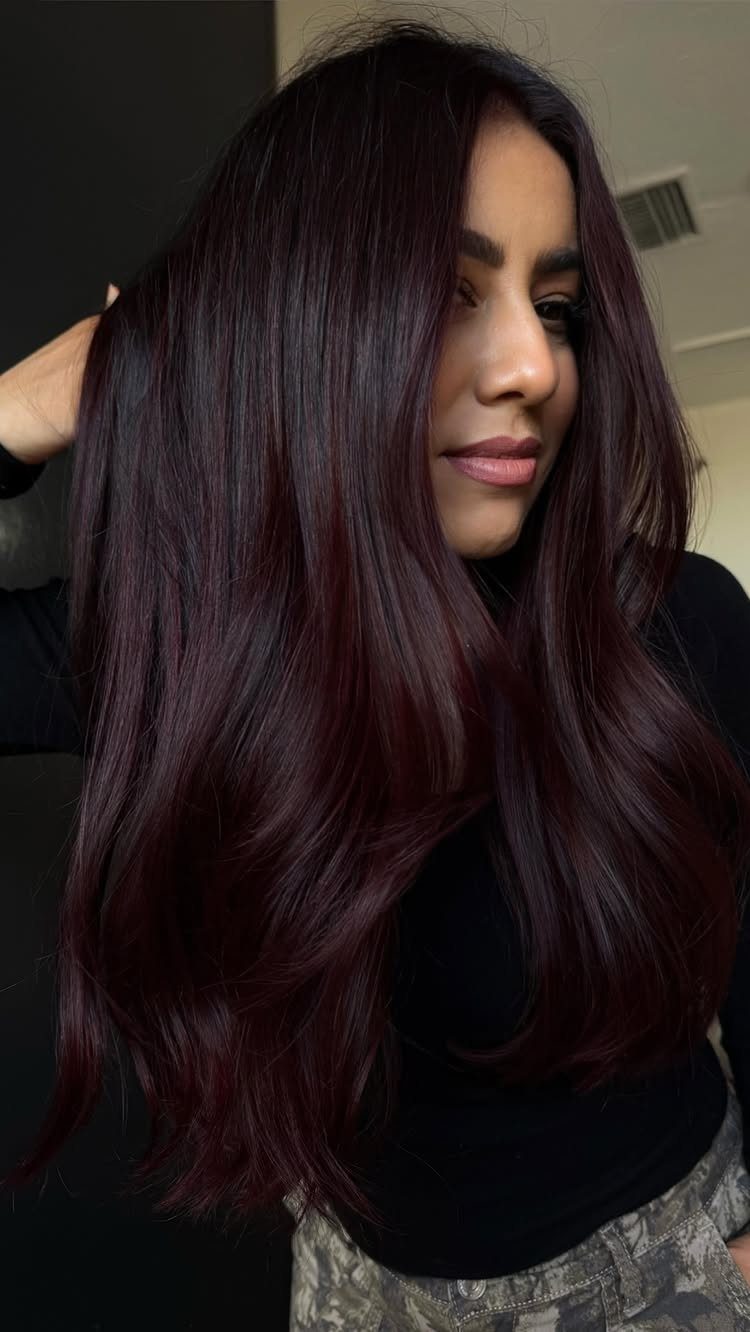
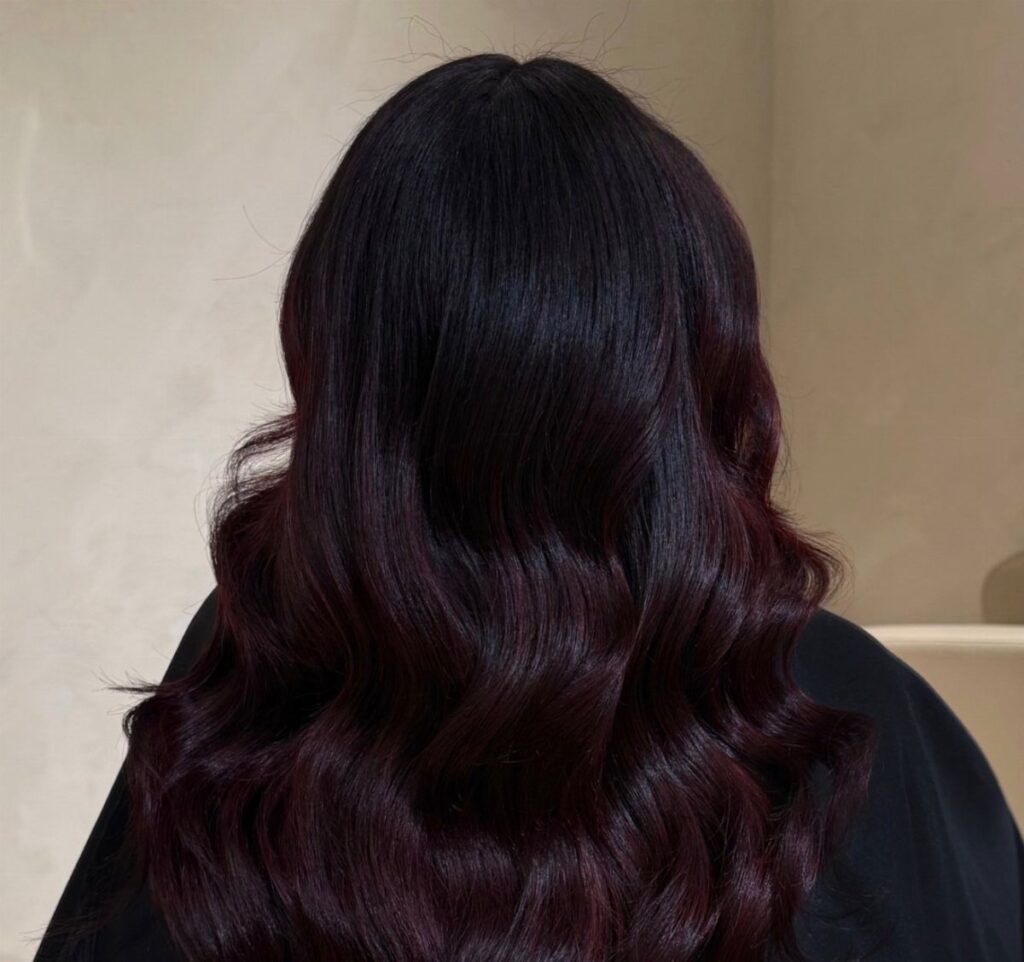
Black cherry sits between black and burgundy: dark enough to pass as black indoors, with a red depth that shows up as the hair moves. Long, loose waves suit it, since every bend catches a little more of the red.
For a first dramatic color, this is the one I’d choose.
It reads as polished rather than loud, and it sits well with black tops and olive or camo pieces. Ask your colorist to keep the red subtle at the roots so the shade looks rich, not patchy.
2. Burgundy and Violet Highlights
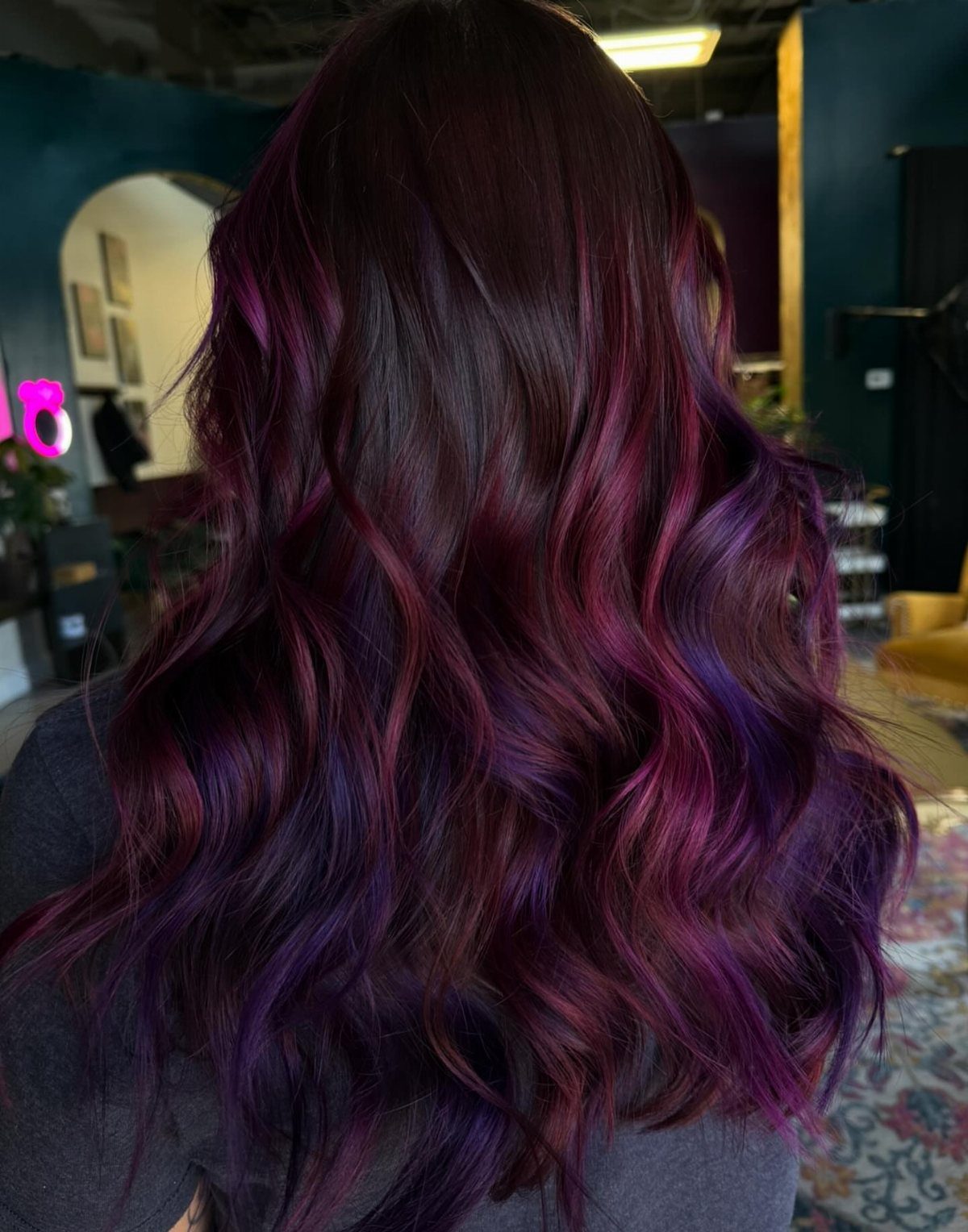
Burgundy and violet highlights make a dark base look layered, with the color showing in strands instead of covering the whole head.
Wavy hair is the best canvas, because the bends scatter the 2 tones and keep them from lying in flat stripes.
If a full color change feels like too much, I’d start here. Ask for fine pieces rather than chunky blocks, and keep the violet placed toward the ends, where it reads as a soft glow instead of stripes.
Show your colorist the photo so the burgundy and violet stay in the same deep range.
3. Deep Burgundy-red Hair Dye on a Sleek, Chin-length Straight Bob Cut
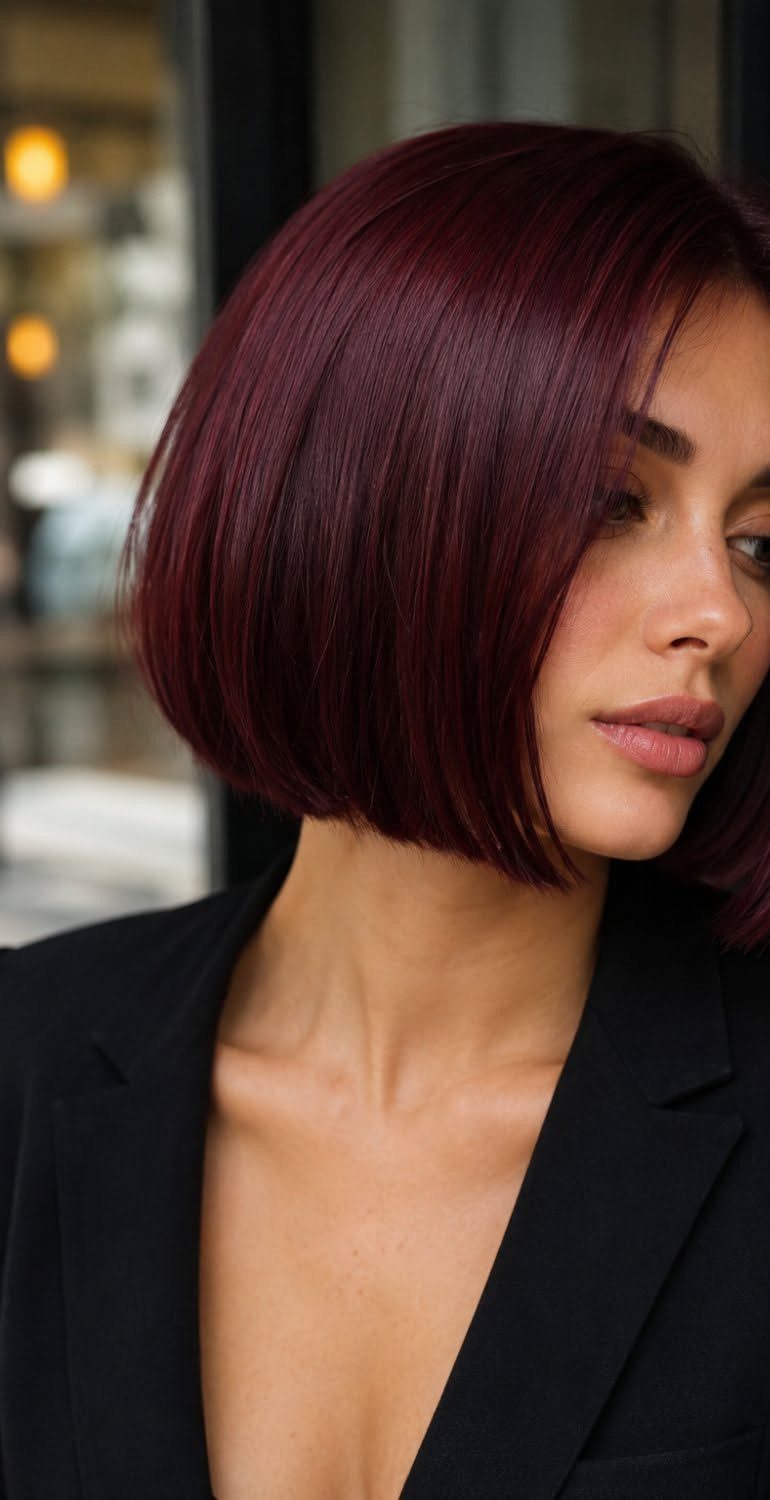
A chin-length straight bob gives deep burgundy-red nowhere to hide, and that is why it works. The blunt, sleek line makes the color look solid and intentional.
Straight hair shows off one flat shade better than waves do, so this pairing suits a clean, tailored look.
It goes well with a black blazer. Upkeep is the cost: a short cut needs regular trims to keep that edge sharp, and fading shows quickly against such a crisp shape.
4. Glossy Black Cherry Hair
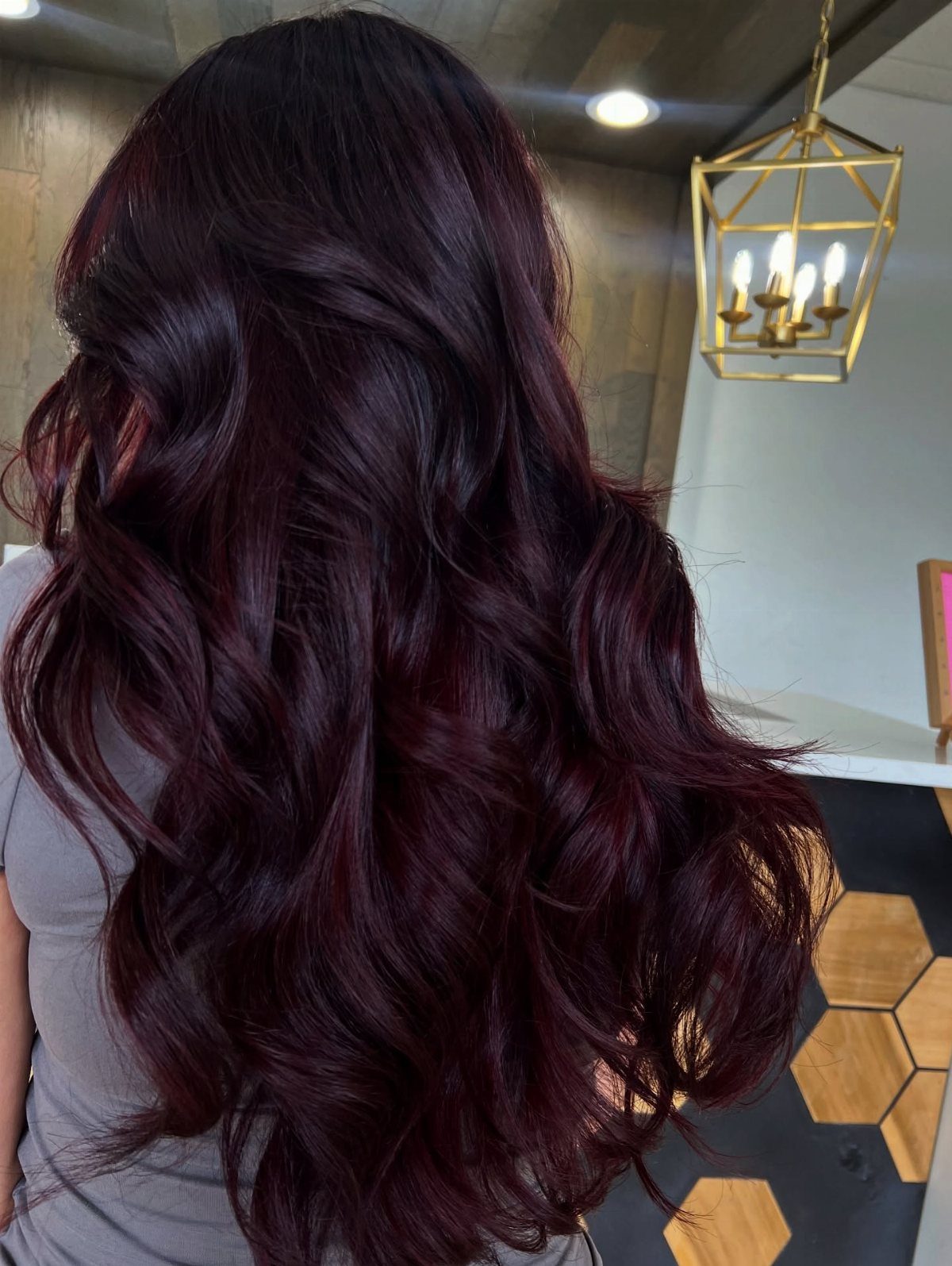
Shine is what defines this version. The black cherry here is less about the exact shade than about a reflective finish that makes long waves look liquid.
To get it, I’d pair the color with a gloss or glaze at the salon, then keep it going at home with a color-safe conditioner.
Dull ends will undo the whole effect, so trim them first. Glossy dark red also looks best in good light, so judge your result near a window.
5. Cherry Cola Hair

Cherry cola is a dark brown with a warm red-cherry glow, softer than true black cherry. On wavy hair it reads rich and a little sweet, and it flatters light, cool-toned knits like a white ribbed turtleneck.
I like it for women who want red without a hard edge. Ask for a brown base with cherry through it, and bring a photo, since "cola" means different things to different colorists.
Maintaining Black Cherry Hair
Color-safe shampoo and conditioner are the baseline, because sulfate-heavy formulas strip deep red pigment faster than any other pigment in a dark shade. Wash less often, use lukewarm water, and finish with a cool rinse.
Plan on regular touch-ups. Black roots that blend into burgundy-red mid-lengths and ends grow out gently, but the red on the lengths still fades first, so a refresh keeps the transition looking deliberate.
With a deep black base and burgundy or dark red dimension running through it, the signal for a touch-up is the dimension going dull; roots can wait a little longer.
Between salon visits, a color-depositing conditioner in a red-brown tone can top up the shade. Test it on a small section first.
Best Skin Tones for Black Cherry
Fair skin is where black cherry gives the strongest effect.
Against a deep shade like this, fair to light skin gets a sharp, clean contrast that brightens the face, while medium skin picks up the same warmth with less of an edge.
On very fair skin, black cherry can look harsh, so I would ask the colorist for a plum-leaning version that sits a shade softer. It keeps the look balanced without losing depth.
Placement matters too. Roots that stay black and melt into burgundy-red by the mid-lengths and ends frame the face more gently than one flat, solid color does.
Styling Tips for Black Cherry Hair
Apply a heat protectant before any hot tool. Dark red shows damage quickly, since rough, dull strands stop reflecting the color, so protecting shine is protecting the shade.
For a soft, romantic look, loose waves are the easiest choice. Use a barrel wider than you think you need, and brush the curls out with your fingers so the color moves together.
Each bend turns the strands over, so the red appears in flashes instead of stripes. Keep the heat setting moderate, and let waves cool before touching them.
Frequently Asked Questions
What is the best hair color for black hair?
Black cherry is the one I’d pick. Black cherry lands between black and burgundy, so indoors it reads as plain black, and the red only appears once the light hits it or the hair swings.
For something gentler, fine burgundy and violet highlights over a dark base add dimension without a full color change.
Which color is black cherry?
Black cherry is a deep burgundy-red with dark undertones, close enough to black that it often reads as black indoors.
Would I look good with cherry cola hair?
Likely yes, as long as you want red that doesn’t announce itself.
Cherry cola runs a shade browner and warmer than true black cherry, with a soft red glow instead of a deep wine cast, and it looks good against crisp, cool pieces like a white ribbed turtleneck.
A saved photo does more than the word "cola" ever will, because every colorist pictures a slightly different shade.
Is cherry red hair natural?
No, not in the deep, glossy form people usually mean. Black cherry and cherry red are salon colors: a dark base with burgundy or red dimension added.
That is also why it fades, so color-safe shampoo, lukewarm water and regular touch-ups matter. The red on the lengths dulls before the roots do.